
The very moment the Boston Celtics traded Jaylen Brown, the five stages of grief ensued. Denial: This cannot be real. Anger: How could they make a trade like this? Bargaining: This is what this article is about.
Even if this was the best possible trade offer the Celtics received for Brown (after the Giannis Antetokounmpo sweepstakes fell through), there has to be another move. Right? The Celtics have to have something planned.
In all honesty, I don't believe that to be the case. Could there be another move? Absolutely. But even Adam Himmelsbach of The Boston Globe reported that the Celtics made this trade without a secondary one in mind.
This was a trade to trade Brown. Not a trade for Paul George. Not a trade to make another trade. Not a trade to spring another option open. This was done with one motive in mind: Move on from Brown.
But this article is not about the trade for Brown. It's not about how unfathomable the entire situation ultimately ended. And it's certainly not meant to excuse what was an utterly confusing (to put it lightly) transaction. This article's sole purpose is to examine what the Celtics could do next. More specifically, what could come next with George?
George is not a bad NBA player. In the context of a trade for Brown, George, as the sole returning player, is a brutal pill to swallow. With his trade kicker, the 36-year-old is going to make $57.7 million next season and will make even more the next year. But if you take the money out of the equation, George is still a quality NBA player.
Last season, he averaged 17.3 points, 5.3 rebounds, 3.6 assists, and 1.7 steals while shooting 43.9% from the field and 39.2% from deep on 6.9 3-point attempts per contest. For a guy who projects to combine with Payton Pritchard and Derrick White as Boston's second, third, and fourth scoring options behind Jayson Tatum, that's not awful production.
However, he also only appeared in 37 games last year. He was suspended for 25 games for violating the league's anti-drug policy, but his injury history is the real concern. Since the 2018-19 season, George has only played in 60 or more games once.
When he's on the court, he's a solid basketball player. Someone who could not only help the Celtics but also fit well with how they play. The problem is, he's never on the court.
That's the biggest issue when considering potential trade options. George's first season in Philadelphia seemed to go as badly as possible, yet the Sixers kept him around. Last year at the deadline, they kept him around. There isn't exactly a huge trade market for a 36-year-old, injury-prone, $57 million man.
So, if I were to guess, George will be on the roster heading into the season. He'll be wearing Celtics green, most likely as a member of the starting lineup alongside Pritchard, White, Tatum, and one of Neemias Queta or Mitchell Robinson.
But if there were to be trade options out there, what could they look like? How much draft capital would Boston have to attach in a deal? Is there even a team around the league that would be willing to take on George's contract?
© Stephen Lew
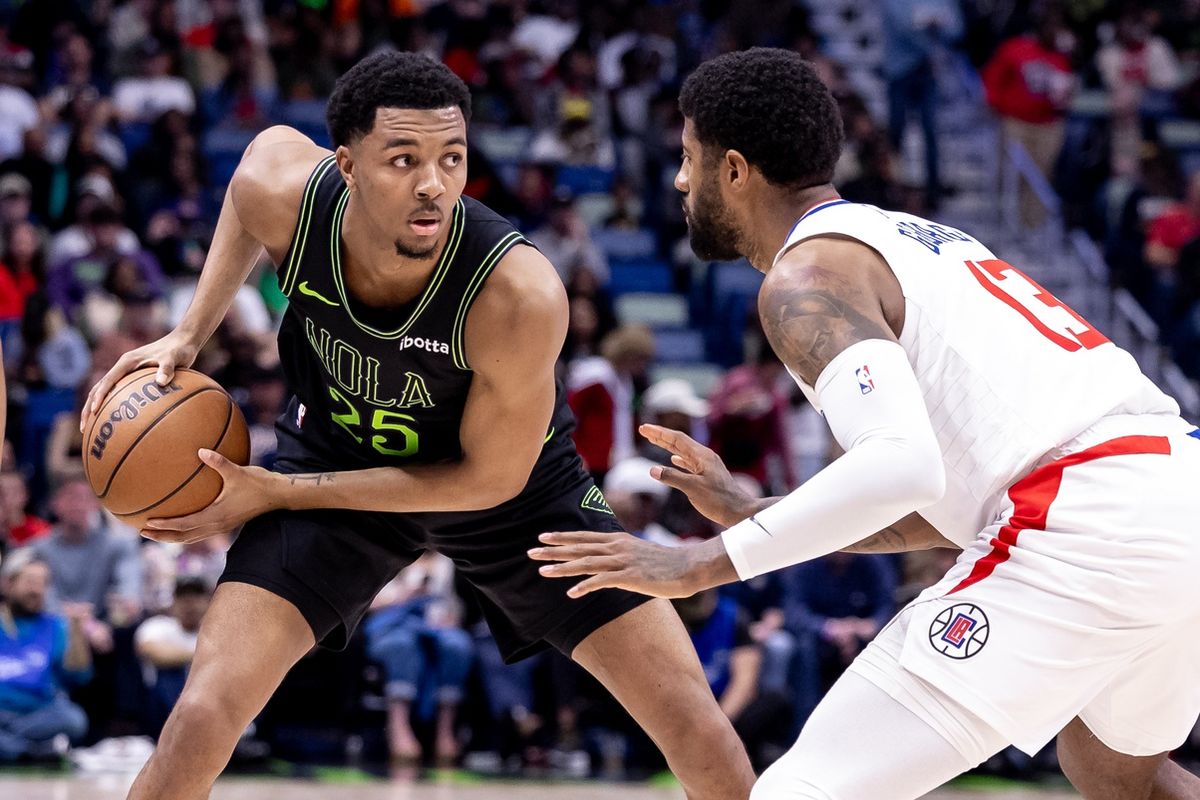
Trey Murphy III and Paul George
New Orleans Pelicans
It feels like the Celtics have been linked to Trey Murphy III for months now. First, he was a TPE trade option. Then, he was a Brown trade option. Now, he's still a potential option via a George trade.
In theory, Boston could send George and a ton of draft capital to the Pelicans for Murphy and one of Dejounte Murray or Jordan Poole. Financially, that deal works. But the Celtics would have to include enough draft compensation to account for the New Orleans Pelicans taking on George's contract and the value of Murphy and any other players they receive.
That would almost certainly include both first-rounders they just received in the trade with Philadelphia, as well as at least one of their own firsts. But they would be left with Murphy.
A trade like this feels extremely unlikely, but maybe the Pelicans would rather take on two years of George than commit to Brown as their long-term solution. Again, probably not, but this is one idea.
The most important thing to note in this scenario is that the Pelicans are in no place to win right now. That's the difference between trading Brown and trading George with draft picks.
With Brown, teams looking to take the next step could have been in the mix (at least in theory). You could sell a team like the Portland Trail Blazers or Atlanta Hawks on Brown being their missing piece. You could also sell a down-in-the-dumps organization on taking Brown as their next centerpiece, especially with the new draft odds in place.
Now, with George as the primary trade chip, Boston's options would almost certainly be down to teams that aren't looking to win. The Pelicans are rebuilding, so taking on George and draft picks wouldn't be a huge issue. The Blazers and Hawks? Why would they want a giant contract like George's? The point is, the number of potentially interested teams quickly diminishes.
Keep that in mind as you scroll through the rest of these potential options. (And also keep in mind that this Murphy idea is far and away the best one of the bunch.)
Sacramento Kings
Speaking of teams that aren't looking to win right away, the Sacramento Kings have been spinning in circles for years. They are simultaneously in a rebuild and trying to compete in the West, though they are spectacularly failing at the latter goal.
That said, there isn't really a deal to be made here. Most of the Kings' money is bad money. Zach LaVine's expiring contract would be better than George's effective two-year deal, but the Kings would have to add someone like Keegan Murray, De'Andre Hunter, or Malik Monk to make the financials work.
Would Sacramento be interested in a LaVine-and-Murray-for-George-and-draft-picks swap? If that were the deal, the better question would be whether or not the Celtics are interested. Because this may be one of the few instances in which there isn't a deal Boston would/should want.
If the Kings were the only suitor, the Celtics might just be best off waiting out the George contract and utilizing his 3-and-D skills (even at 36 and 37 years old). Sacramento just has too much bad, long-term money on the books.
Brooklyn Nets
Another team that probably won't be winning in the immediate future. The problem with the Nets is similar, though not exactly the same, as the one Boston would face with Sacramento.
Michael Porter Jr. is a solid player. He was on the verge of being an All-Star last year. He's a solid rebounder and an elite 3-point threat, especially when playing alongside great spacing. But when you take defense into effect, George is still probably a better fit in Boston.
The health side of things sides with Porter, and he will be on an expiring contract, which would benefit Boston, but the Celtics would have to attach one or two first-round picks to make it happen. At that point, it may not be worthwhile. The gap between George and Porter as players isn't one or two firsts wide.
© Benny Sieu
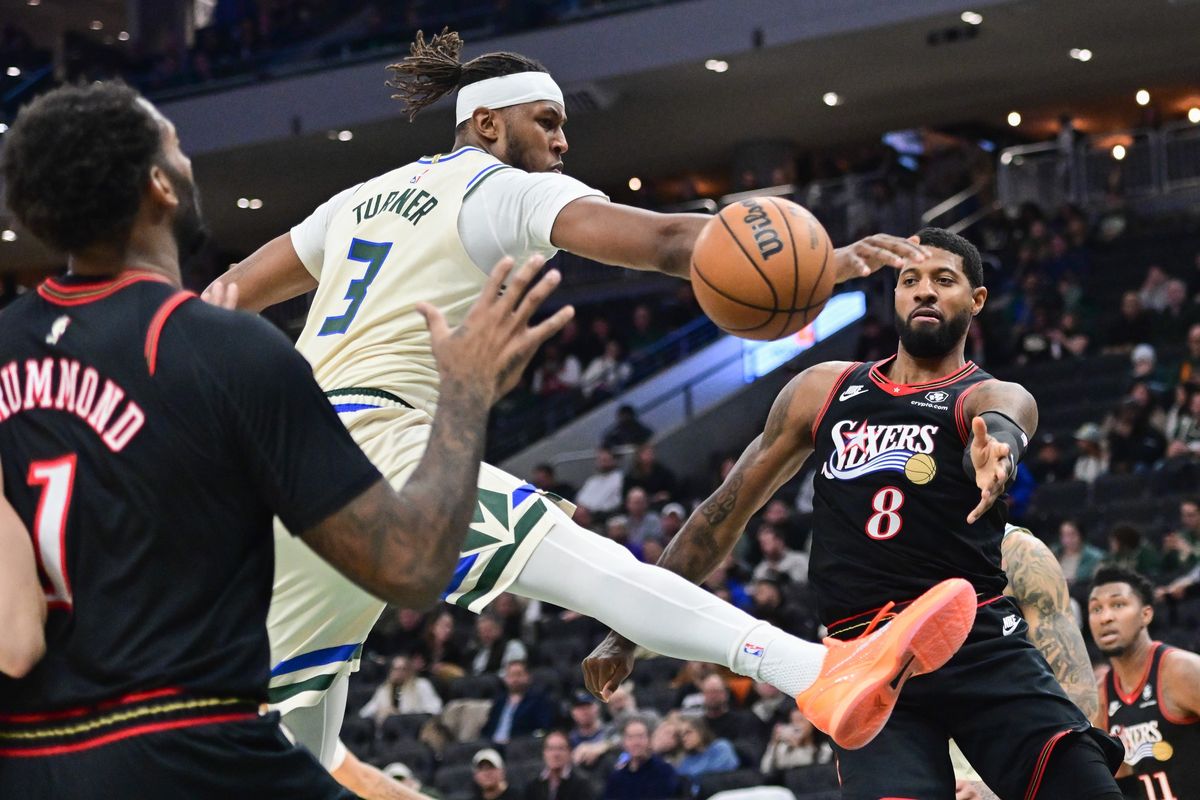
Myles Turner and Paul George
Chicago Bulls
This summer, the Chicago Bulls have begun to completely revamp their roster. They traded for Nicolas Claxton. They signed Norman Powell. And in the draft, they selected Caleb Wilson (No. 4) and Dailyn Swain (No. 15). The Bulls are going to look a lot different next season.
However, because they added Claxton and Powell's money to the books, they wouldn't have quite as much flexibility to take on George's contract. And the pieces coming back to Boston wouldn't exactly be ideal.
Guys like Josh Giddey and Patrick Williams would probably be headlining the move, both of whom are on long-term contracts. Neither of those two guys would be winning assets in Boston.
So, could the Celtics give the Bulls enough draft picks to take on George's deal? Probably. But it wouldn't be worth it, because it would make the team worse (and more unnecessarily expensive in the long run, which would get in the way of future moves).
Memphis Grizzlies
This is a weird option, because a deal with the Memphis Grizzlies might be one of the Celtics' best pathways to flat-out dumping George's contract. Unfortunately, that's not really what they should be trying to do. Again, George is a fine player when healthy, and the Celtics are still a good basketball team.
That said, by trading Santi Aldama for a small contract in AJ Johnson, the Grizzlies now have some cap flexibility. A George-for-Kentavious Caldwell-Pope swap would work, and he is on a $26.1 million expiring deal next season.
Boston's books would be clear of George's money by next summer, giving them a ton of flexibility to build around Tatum. But it would probably cost them two firsts to get a deal done. And again, George can play.
Swapping out George for Caldwell-Pope for the upcoming season would be a significant downgrade for the Celtics. At this point in his career, Caldwell-Pope is effectively an end-of-the-bench veteran. George is still a legitimate rotation piece (even though he's overpaid).
Milwaukee Bucks
The deal that never was. It wouldn't be an Antetokounmpo blockbuster, but since the Bucks probably won't be sniffing the playoffs next year, they could be a team that's willing to take on George's contract.
Financially, trading George to the Bucks for Myles Turner and Kyle Kuzma works. But again, the Celtics would have to give up draft picks, and they would be receiving two players who fit the team worse than George.
Turner has been a name connected to the Celtics for years. But for all the praise he gets as a 3-point threat, he's only shot 38% or better three times in his career (two of which were in the last two years, but still), and his defense isn't as great as it may seem on paper.
Plus, his rebounding numbers have been significantly lacking throughout the course of his career. Queta and Robinson would both likely play over him, and he's owed more than $84 million over the next three years (with a team option in the final year).
As for Kuzma, he's a high-volume, low-efficiency player who leaves a lot to be desired on the defensive end. He would not be a good fit in Boston, especially given the Celtics' current style of play.
A deal with the Bucks just doesn't make sense for the Celtics. They're better off keeping George and their draft picks.
© Jonathan Hui
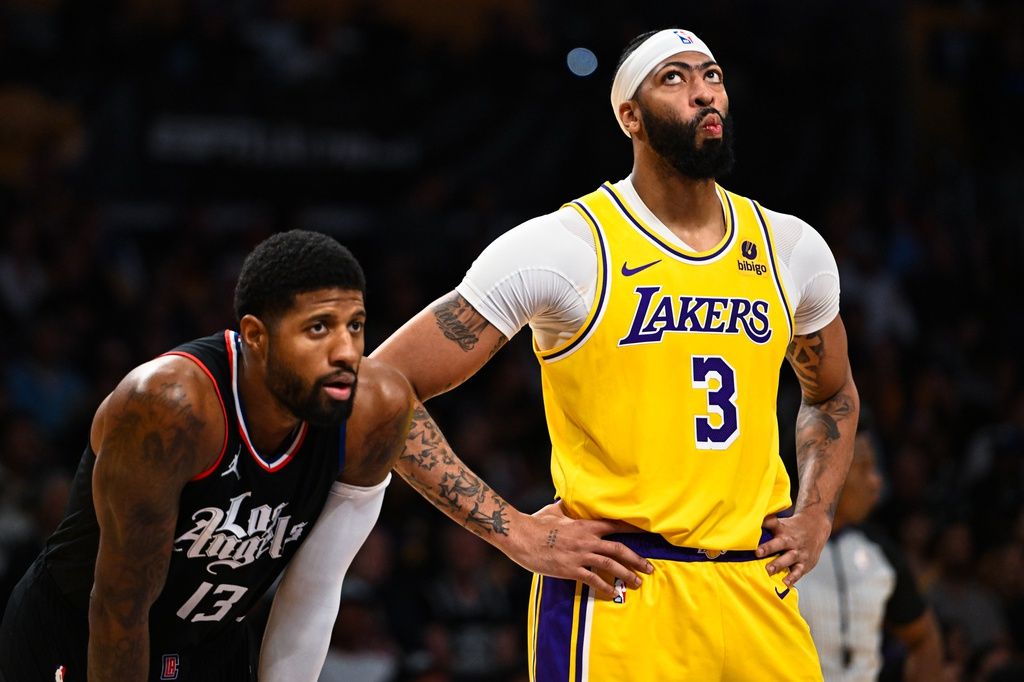
Paul George and Anthony Davis
Dallas Mavericks
The Dallas Mavericks just used up some of their financial flexibility by trading for Aldama, but that also means they have a lot of frontcourt players. Perhaps they actually could be interested in a trade. And there are some intriguing options here.
Dallas could put together a package of PJ Washington, Klay Thompson, and Daniel Gafford. George is probably a better basketball fit in Boston than any of those guys, but when you factor in availability, the package gets intriguing.
Washington would highlight the deal. He's a hard-nosed power forward who can play up to the center position when needed. He can defend multiple positions and shoots the 3-ball at a decent clip.
At this point in his career, Thompson is on the decline. He has been for a couple of seasons now. But that 3-point stroke never truly goes away. He would be a decent bench piece in Boston.
Then, there's Gafford. Similar to the Turner conundrum, Queta and Robinson would both probably play over him. That said, he's not a bad option. Gafford is a solid athlete and rim protector.
As is the case in most George ideas, the Celtics would have to attach draft picks. In this case, lots of draft picks. Probably two or three to get a deal done. But even with Cooper Flagg leading the way, the Mavs don't project to be a playoff team next year.
It's a clunky, imperfect option, but one Boston could consider. I would still lean toward keeping George and the draft picks, because Boston could use his expiring contract next season to make a bigger splash, but this trade wouldn't be terrible.
Washington Wizards
The Anthony Davis idea. Trading one injury-prone star for another, but taking a massive gamble in the process. That's what a trade with the Washington Wizards would look like.
To be clear, the Wizards are reportedly not interested in trading Davis. They just dealt for him last season, and they intend to keep him as part of their core with Trae Young, AJ Dybantsa, Alex Sarr, and company.
However, if there were a world in which the Wizards reconsider, could the Celtics be interested? When healthy, Davis is one of the best two-way bigs in the league, and he could play the power forward in Boston alongside Queta or Robinson.
That said, a deal would require sending out draft picks, and the Celtics would probably have to extend Davis (as that seems to be what he wants). At that point, they should just keep George and wait out the end of his contract. George may not be the most available star, but Davis is the poster child for that concern.
In conclusion, the George trade market is a grim reality. If it weren't, the Sixers probably would have traded him last summer. Barring a magical deal with the Pelicans -- which feels unlikely -- the Celtics seem destined to roll into next year with George both on the books and in the rotation.