
I didn't even see the notification from Shams Charania of ESPN before my brother, Henry, texted me. Apparently, his internet is faster than mine. These are the two texts that I saw:
"That ain't it." "That sucks."
I was sitting with three friends in my living room at the time, watching the conclusion of the Belgium vs. Senegal World Cup game. Before the Charania post even loaded, those two texts told me what had happened. So, I told them. "Jaylen just got traded," I said. They immediately asked what the return package was.
When the post finally loaded and I saw the package, I was already on my way downstairs to my room to begin working. I said, "Paul George," and all I heard behind me were three loud screams: "What?!"
Emotions were, and still are, running at an all-time high. In what very well may be the worst trade in the history of the organization, the Boston Celtics traded Jaylen Brown to the Philadelphia 76ers for George, two first-round picks, and two first-round pick swaps.
Sound dramatic? Well, consider this article from Justin Leger of NBC Sports Boston from a few years ago. It details some of the worst trades in Celtics history. Trading Chauncey Billups. The return package for Antoine Walker. Moving on from Joe Johnson halfway through his rookie year.
None of those trades sit in the same realm of existence as the Brown move that the Celtics completed on Wednesday. It truly lives in a universe of its own. Nothing compares.
There is no arguing with reality: This was a horrendous trade for the Celtics. They got negative value in return for a guy who just led them to 56 wins while enjoying an All-NBA Second Team campaign. A guy who has poured his heart into the City of Boston from the moment he stepped foot off the plane from the University of California back in 2017.
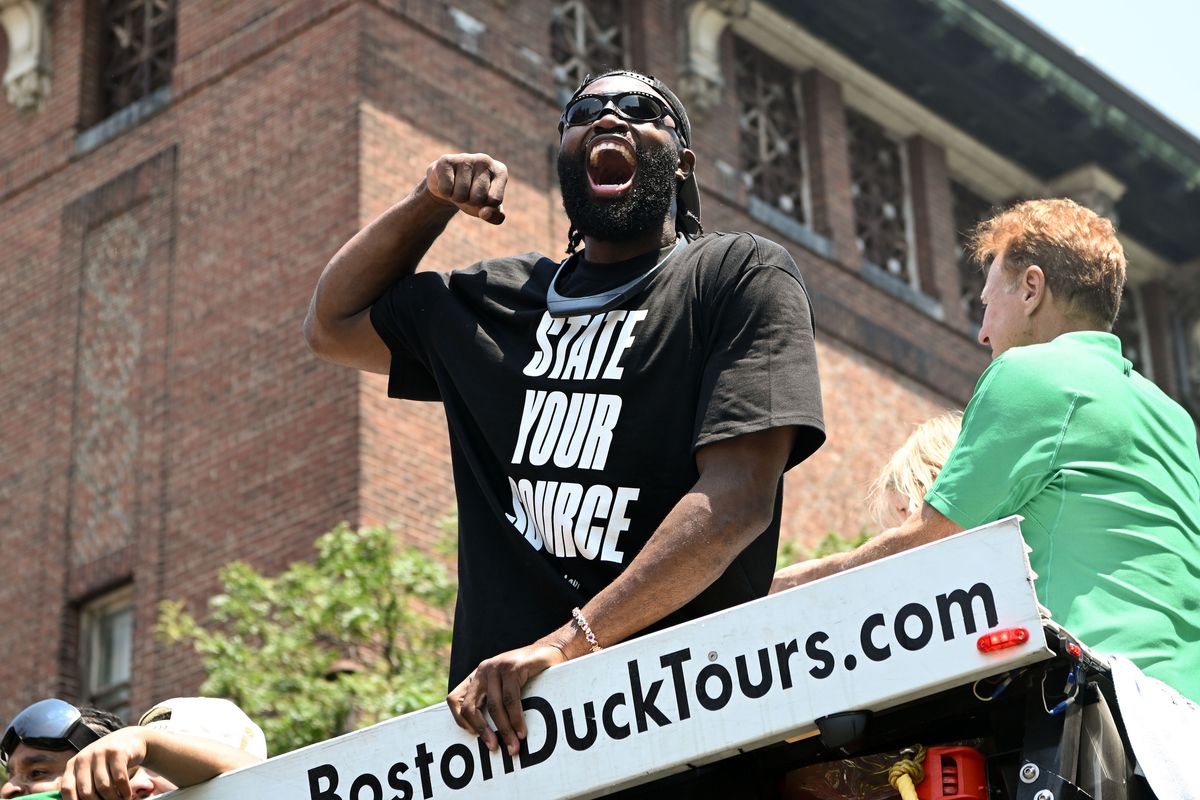
© Brian Fluharty
Jaylen Brown
Boston got back a $54.1 million contract -- which is really $57.7 million because of George's trade kicker -- two first-round picks and two second-round picks. The two firsts are decent. The 2028 first had a good chance of landing in the lottery, and who knows what the Sixers could look like by 2031. But that's not nearly enough to take away from the sting of the deal in its entirety.
Yet the biggest questions being asked right now shouldn't even be about the deal itself. Why did you trade for George? Why did you trade Brown? Why was this the final return? All are valid questions, but none are truly relevant to the bigger picture.
In the immediate aftermath of the trade, my column ran on shock-and-awe. Rather than the sugar and caffeine that often power my writing during late-night post-game sessions, it was bewildermint. The pure disbelief upon seeing the final Brown trade package.
Most of my thoughts remain the same, but the one thing I keep doubling back to is the real question that needs to be asked: How did the situation get to this point?
The point where Brown had to be traded for a negative asset. The point where the deal had to be done on July 1, at the very beginning of the offseason. The point where this was the best offer on the table.
And that last part, in my opinion, is the most intriguing. This was the best offer available for Brown? No team in the entire NBA was willing to shell out more than George, two firsts, and two seconds?
For as much slack as Brad Stevens is going to get for this trade -- and trust me, it's deserved -- his tenure as GM has been littered with great moves. Trades and signings that improved the overall outlook of the Celtics.
The Marcus Smart deal was made at the right time for a phenomenal price, and it brought back Kristaps Porzingis. The Jrue Holiday trade was an in-the-moment move that ultimately helped Boston win a championship. The Al Horford trade was the first of his time in the front office. The Derrick White deal turned out to be a genius move.
Even this season, though some may be upset with the financially incentivized nature, everything he did was with the future of the Celtics in mind. He wanted to set them up to build an even better team in the future, without the luxury tax and apron penalties hanging over them. That could give them a chance to make similar moves to the successful ones he made in 2023.
The point is that Stevens has a track record of accepting the best possible trade at the best possible time. So what could have possibly happened for him to accept a trade this ugly for a player so important to the Celtics organization?
That's the real question, and one that will certainly be asked whenever Stevens holds his next press conference (I'll make sure of it). And it's a question whose three potential answers are all painful to digest.
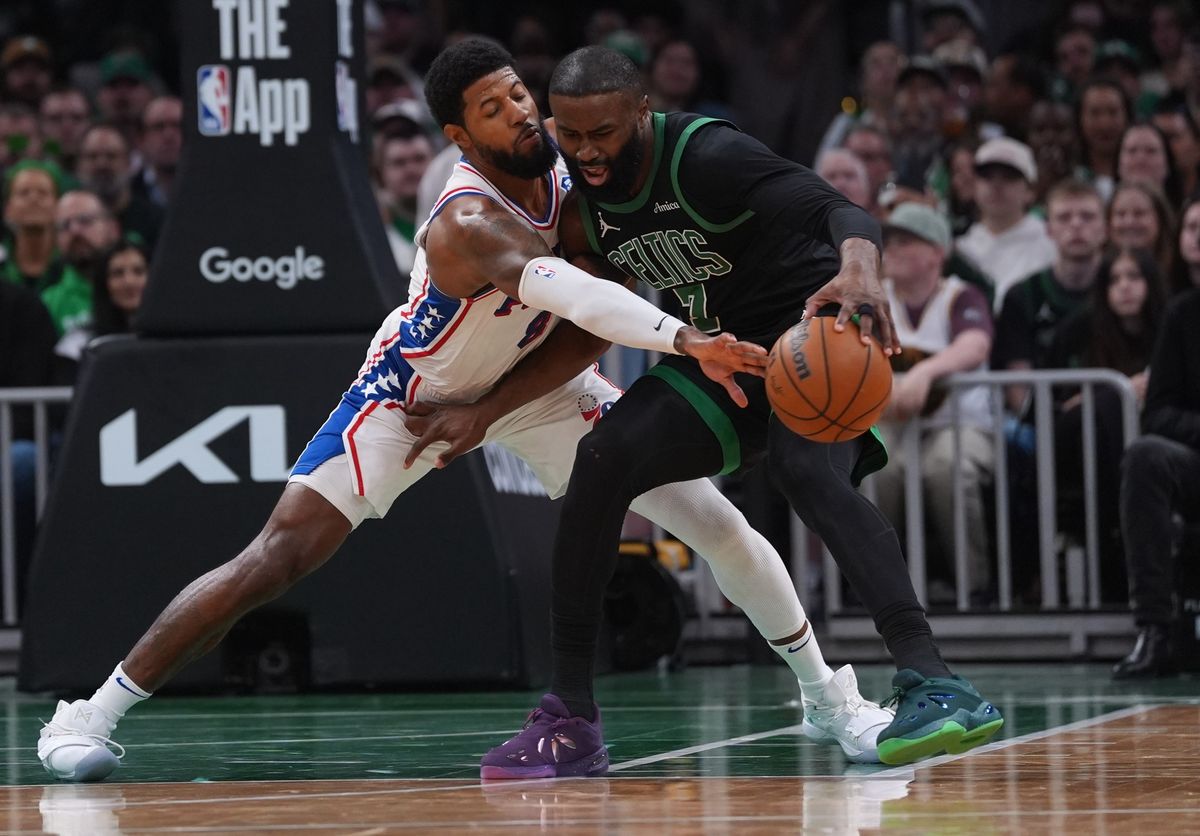
© David Butler II
Paul George and Jaylen Brown
Potential answer No. 1: Jaylen Brown requested a trade.
By all public accounts, this is untrue. All the reporting out there says this was a move by the Celtics, not by Brown. They wanted to trade him. He did not request a trade.
So, unless Boston is trying to protect Brown on the way out -- which seems unlikely, given how strong the reaction has been -- this answer is false. The Celtics made this move because they wanted to.
And when you consider Brown's first official statement since the trade, this answer seems even more unlikely. Borderline impossible.
Jaylen Brown's statement after being traded from the Boston Celtics to the Philadelphia 76ers:
— Shams Charania (@ShamsCharania) July 2, 2026
First and foremost, thank you to the Most High, even in the midst of adversity. I'm here with gratitude.
I’m still processing how this all went down. I’m excited and disappointed at…
Potential answer No. 2: The relationship was so toxic that it had to end immediately.
This cannot be ruled out. Boston's infamous desire to keep things in-house (ironic, considering the current reality we're living in) would try to keep this potential answer as private as possible. It would likely only get out if Brown and his camp decide to tell the story, and at that point, the other side of things would probably have to get revealed.
Maybe the conversations after the Celtics' first-round loss to the Sixers were ugly. Maybe the Celtics told Brown they were going back to how they played before the Jayson Tatum-less 2025-26 campaign. That they needed him to take a step back again to the 2024 version of his game. And maybe he didn't take that well.
If that were the case -- or at least some internal breakdown of the sort -- the timing could make some sense. The relationship between Brown and the Celtics was irreparable, and both sides wanted a resolution as quickly as possible. But even then, it seems illogical for the Celtics not to wait until the offers got better than what they ultimately got.
Potential answer No.3: The Celtics believe their best chance at winning is without Brown, and they didn't think offers would get any better.
My head lives here. This is what I believe to be reality. And as previously noted, it's a truly mind-boggling one to try to wrap my head around.
For a moment, let's pretend to agree with the notion that the Celtics' best chance to win is to get rid of Brown. Let's live in a world where, despite his statistical success, the analytics were right about Brown holding the Celtics back. Just humor me for a moment.
Well, then a trade would be necessary. But how did it get to the point where this was the trade? We're back to that same old question. The big one. It must mean that the entire rest of the NBA vehemently agrees with the same sentiment coming out of Boston: That Brown doesn't actually impact winning at the highest level.
Teams didn't want him. They didn't want his contract. They didn't want his shot profile. They didn't want his defensive lapses. They didn't want the Twitch streams, social media posts, and outspokenness.
For the Celtics to accept a package this dire, not only would that reality have to be true, but Stevens and the front office would also have to believe the situation would not change in the three months leading into the NBA season.
That's what I believe, as unbelievably ludicrous as it may sound. I think the Celtics believe their best chance of winning was to trade Brown at all costs. And I believe that scared the rest of the NBA, to the point where nobody wanted him.
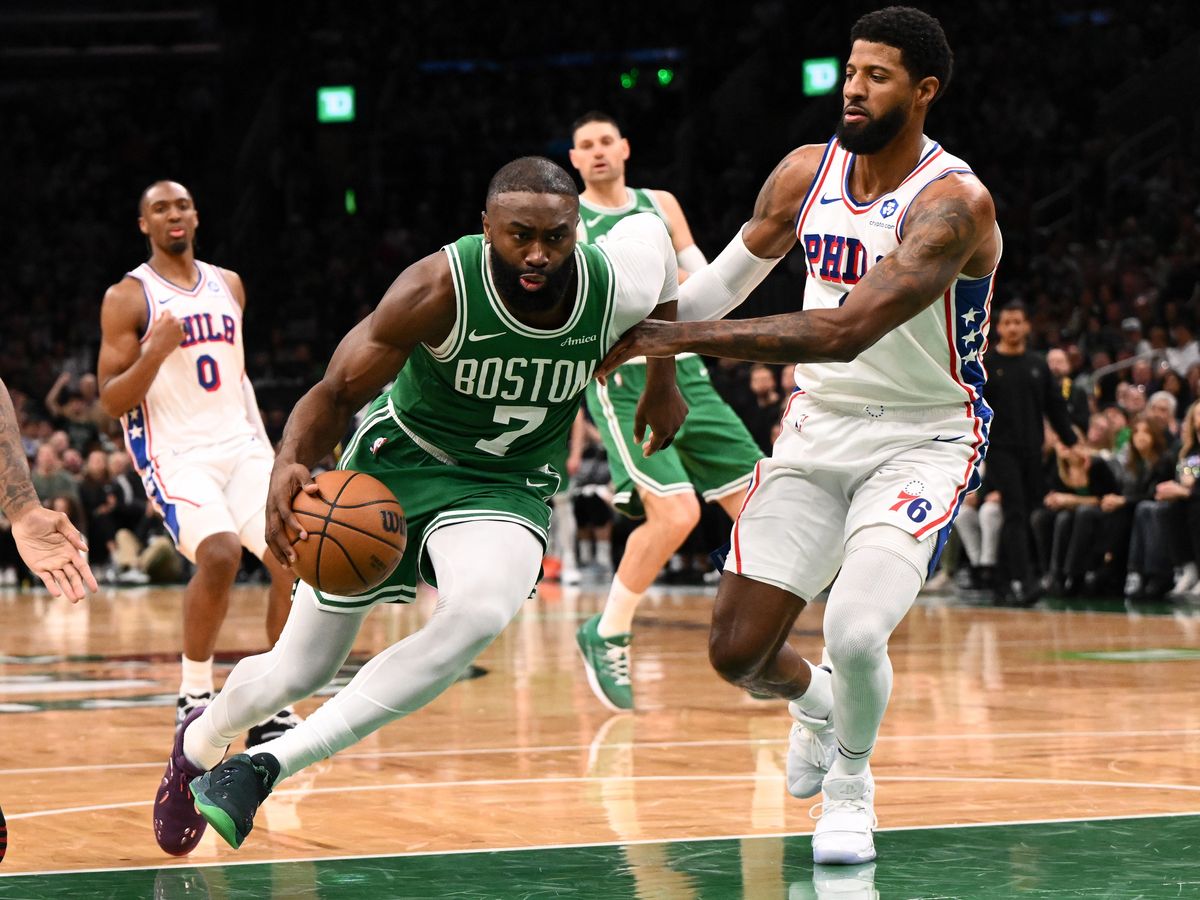
© Brian Fluharty
Jaylen Brown and Paul George
And after all of that, all the basketball and team-oriented financial reasons, there is still the ownership of it all. How much of a factor did Bill Chisholm and the new ownership group play in the decision?
At first, I believed that the answer was 'Very little.' And for the most part, that's still where my head lies. But Bill Simmons mentioned a small tidbit on his podcast that saw some doubt seep in.
Simmons mentioned that Giannis Antetokounmpo was ready to sign off on a trade to the Celtics, but Boston balked when it came to extension talks. He said that Antetokounmpo wanted three years at 35% of the cap, but the Celtics were stuck at two years for 30% of the cap.
When the Celtics wouldn't budge, the Miami Heat eventually threw Kasaparas Jakucionis into the deal, and that's when Antetokounmpo greenlit that trade. If that's the truth, then it's hard not to question ownership's involvement.
Maybe Stevens and the front office just didn't want to take that risk with Antetokounmpo's injury history. But when dealing with long-term money like that, it's impossible to entirely remove ownership from the potential equation.
UPDATE: According to Noa Dalzell of CelticsBlog, the Celtics were fully prepared to give Antetokounmpo a three-year extension at 35% of the cap. That was not a factor in Antetokounmpo trade negotiations.
Again, I firmly believe the decision to trade Brown was a front-office move. Not ownership. Why? Because the Celtics didn't save any money right now. Maybe they saved on a Brown extension, but with George's trade kicker, he makes just as much as Brown for the next two seasons. And by the time that deal is done, I firmly believe the Celtics will spend that money elsewhere to improve the team.
So, that just brings us back to square one: the front office wanted to trade Brown because they believed their best path to winning was to do so. On top of that, this offer was the best they received, and they were so desperate to get a deal done that they sent it to the league office on July 1.
Until the behind-the-scenes story inevitably comes out -- whether it be tomorrow, a year from now, or 10 -- that's the confusing reality Celtics fans must live in. Not because it's the best answer, nor because it should make them feel better, but because they have no other choice.