
The Jaylen Brown trade is over and done with. The Boston Celtics made their bed. They traded Brown to the Philadelphia 76ers for Paul George, two firsts, and two seconds. But apparently, Boston's desire to trade Brown lingered far before the summertime.
According to Shams Charania of ESPN, the Golden State Warriors could have traded for Brown at the deadline if they were willing to give up enough first-round draft capital. In this scenario, the bar was set at around four first-round picks.
"The Warriors could've got in the Jaylen Brown sweepstakes if they wanted to give up four first-round picks-ish, in that range," Charania said on The Stephen A. Smith Show. "They decided not to, from my understanding. Those two teams, the Warriors and Celtics, did talk about a Jaylen Brown trade around the trade deadline, and it was around several first-round draft picks, potential swaps, and seconds. The Warriors decided not to go down that route, and so that's on them. That's the decision they made."
Logan Murdock of The Ringer followed up on that, noting that the organization could not come to an agreement on the deal. And ultimately, the Warriors decided that Brown wasn't the right guy to lead them into the post-Stephen Curry era.
"The Warriors had an opportunity to trade for the former Celtic before the deadline in February but couldn’t build an organizational consensus that Brown would be the right player to carry the Warriors beyond the Curry era," Murdock wrote.
Now, Charania was discussing the move in the context of the LeBron James sweepstakes. Could the Warriors have landed James if they had already traded for Brown? Maybe. And that's its own discussion. But this also says a lot about the Celtics.
At this year's trade deadline, the Celtics were 33-18. They were tied with the New York Knicks for the second seed in the Eastern Conference. Brown was averaging 29.5 points, 7.0 rebounds, 4.8 assists, and 1.0 steals while shooting 48.6% from the field and 36.3% from deep on 5.9 3-point attempts per contest.
Yet he was still on the trade block. The Celtics still tried to trade him. And had the Warriors coughed up enough first-round draft capital, he could have ended last season in San Francisco.
To me, that says one thing: Trading Brown was not a reactionary deal. It was not a huffing-and-puffing decision made after a second straight disappointing playoff exit. It was not something Boston decided to do simply to shake things up.
The Celtics have known that they wanted to trade Brown. In their eyes, as soon as the second apron forced them to disband the Jrue Holiday, Kristaps Porzingis, Al Horford-lined Justice League, that was it. The Tatum-Brown combination wasn't good enough to win a title without that type of infrastructure around them. And under the current CBA, that type of infrastructure is virtually unattainable and wholly unsustainable.
On top of that, the eventual trade package Boston received from the 76ers wasn't what they wanted. If that wasn't obvious already. Considering they were asking for four firsts at the deadline, that means one thing: The market was crashing.
If no one was willing to give up four firsts for Brown at the deadline, why would they after a playoff exit like the one Boston suffered? The Celtics had already made up their mind to move Brown, and they didn't want to risk the market falling even further. So they took the best offer at the time.
None of this is to say that Boston made the right decision. That cannot truly be determined until next season unfolds, and a few more years of context afterward will probably still be necessary. But it is worth noting that, based on this reporting, the desire to trade Brown wasn't spontaneous. Not even close.
© Mark J. Rebilas
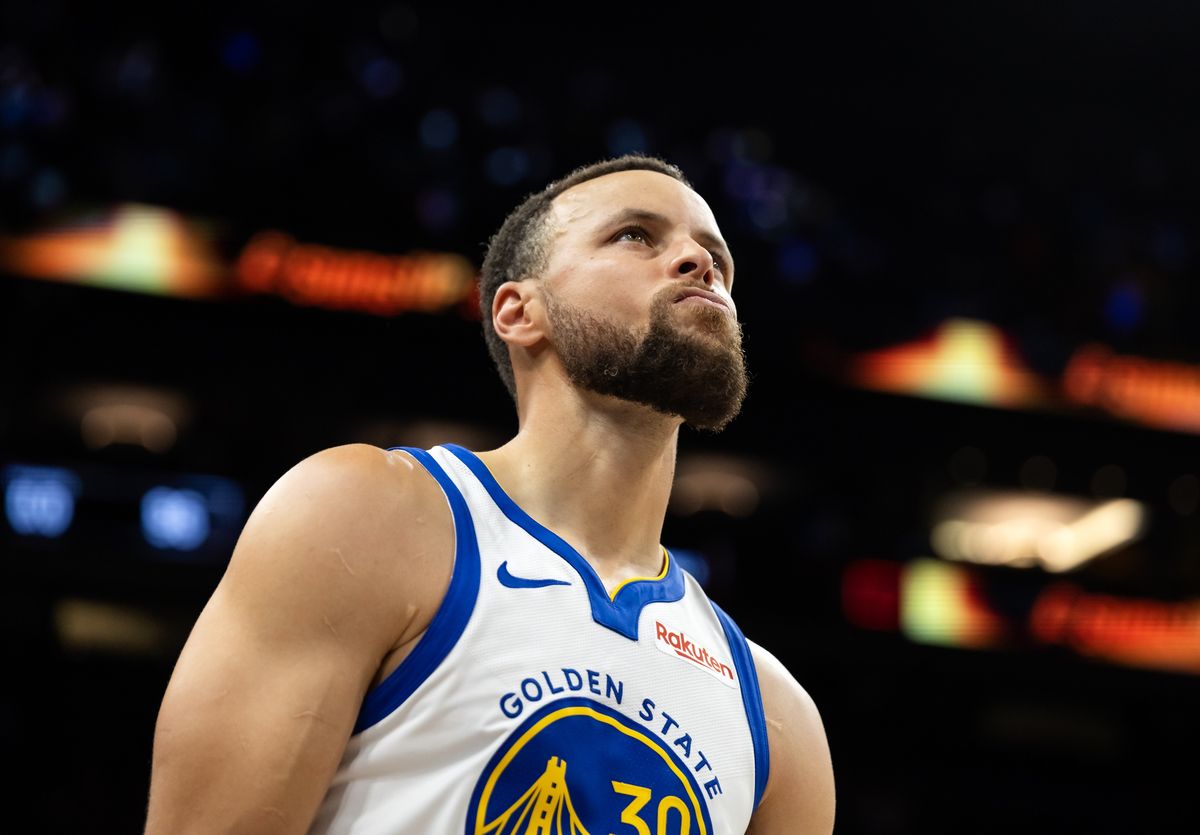
Stephen Curry
1. The Stephen Curry angle
That's the Celtics side of things. But what about the Warriors? Why wouldn't they trade for Brown to help Curry compete for a championship in his final few NBA seasons? In short ... that's not their goal anymore.
Tim Kawakami of The San Francisco Standard, a long-time Warriors reporter, recently noted Joe Lacob's desire to build the next Warriors team in the post-Curry world. That part of his statement went viral, though there was a bit more context behind it.
"Lacob wants to—and this might get Warriors fans mad—he wants to build the next team after Steph Curry," Kawakami said on The TK Show. "I don't know how possible that is. But Lacob has a keen interest in, 'I am going to show, or this organization is going to show what it can do with Steph Curry and then after Steph Curry.'"
Included in that sentiment is the desire to help Curry. But that part of the equation hasn't exactly been reflected in other decisions. The evidence? One: The Warriors' unwillingness to trade for Brown, largely due to a focus on the post-Curry world. And two: Their complete lack of additions this summer.
Outside of the draft, the Warriors have added nobody this offseason. Not a single free-agency signing. Not a single trade. They are running it back with the exact same team that got bounced in last year's Play-In Tournament.
By all accounts, it seems as though the Warriors are content with being a middle-of-the-pack team. They made their moves to try to help Curry. A trade for Jimmy Butler. Another for Porzingis. It didn't work. And now, they may just move on.
Curry will probably finish his days in The Bay. The chances of him leaving seem slim. He's just too loyal. But that loyalty may come with the harsh reality of knowing that the Warriors aren't going to be in the title race anytime soon.
2. The Bennedict Mathurin market
Still a restricted free agent with the LA Clippers, Bennedict Mathurin is reportedly drawing interest from a few teams around the league. Among them, according to Marc Stein of The Stein Line, are the New Orleans Pelicans and Chicago Bulls.
"Late Monday night I reported that the Pelicans have indeed renewed their in-season interest in then-Pacer Bennedict Mathurin by pursuing the LA Clippers' swingman in restricted free agency," Stein wrote. "And now for more on Mathurin: The Stein Line on Tuesday learned that Chicago is Mathurin's other current suitor."
Michael Scotto of HoopsHype also mentioned that the Milwaukee Bucks and Dallas Mavericks have shown interest. That said, in a follow-up post on social media, Stein mentioned that the Mavericks have not been a serious suitor.
Mathurin was traded from the Indiana Pacers to the Clippers last year in a deadline deal highlighted by Ivica Zubac. The 24-year-old wing is a solid scorer, though his 3-point shot is relatively inconsistent. Joining a team like the Pelicans, Bulls, or Bucks would certainly give Mathurin plenty of runway to develop without worrying about high-pressure basketball.
© Rick Osentoski
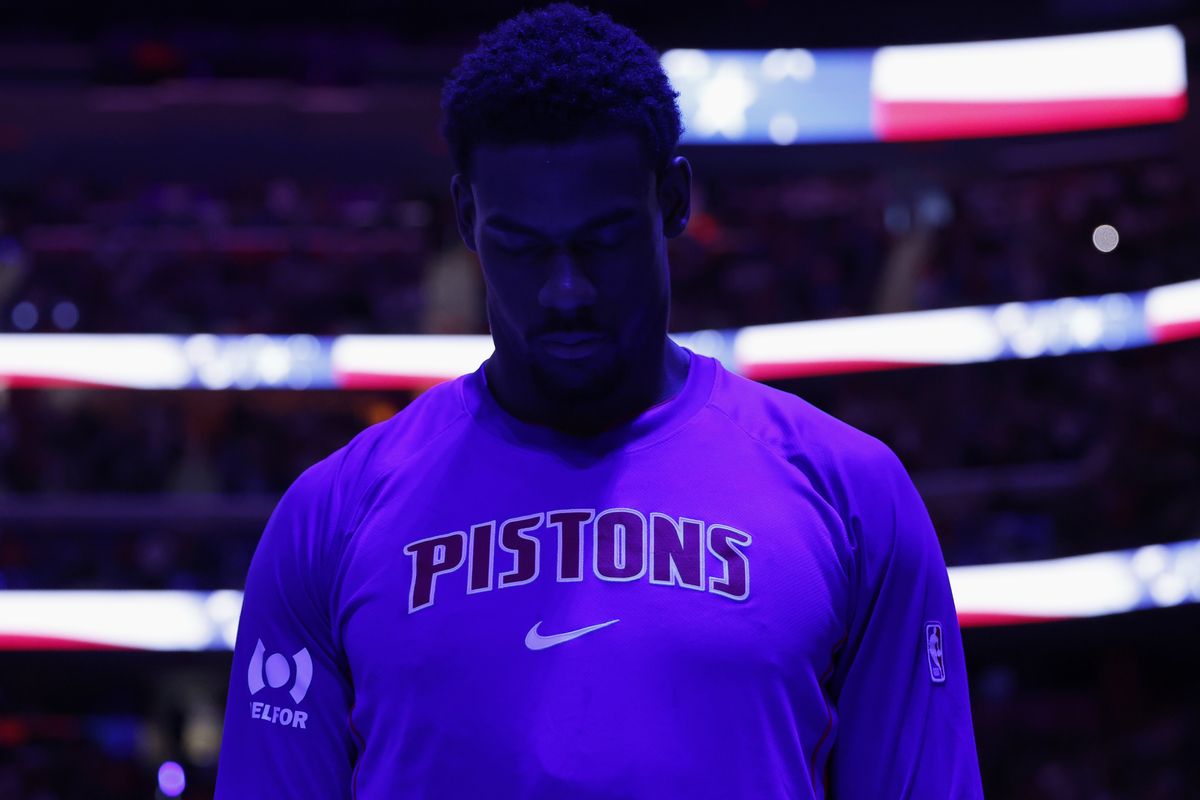
Jalen Duren
3. Peyton Watson and Jalen Duren
Restricted free agency across the NBA has been a very interesting storyline to follow this summer. More than anyone else, the sagas of Peyton Watson and Jalen Duren have captured the attention of the entire NBA world.
The Oklahoma City Thunder's offer sheet for Spencer Jones, which was matched, put the Denver Nuggets over the second apron. Now, they are unable to complete a sign-and-trade (which seems like a possible Watson outcome) unless they duck back under.
In a recent newsletter, Stein noted that the Nuggets have offered Watson a deal in the $16-$18 million per season range. However, he wants one that's worth more than his teammate, Christian Braun's, contract, which was a five-year, $125 million deal ($25 million per season).
Meanwhile, the Pistons would like to keep Duren, but they are being very proactive in avoiding the second-apron situation that has plagued the Celtics and Thunder in recent years. They don't want to have to dump salary unnecessarily.
“We very clearly want Jalen back with us for next year and beyond," a Pistons front office member told Keith Smith of Spotrac at Summer League. "If we didn’t, we could have easily done several different sign-and-trade deals. But the numbers have to be right. You saw what’s happened with Boston and OKC and New York. We don’t want to have to shed talent around Cade (Cunningham) and Jalen a year or two from now.”
But now, as the Watson and Duren situations drag on, both could reportedly consider picking up their qualifying offers. If they did that, not only would they be on a one-year contract next season, but they would also have a no-trade clause. Plus, they would hit unrestricted free agency next summer.
That would put the Nuggets and Pistons in serious jeopardy of losing Watson and Duren, respectively, next summer. And losing them without getting anything in return would be a complete disaster.
4. The Jonathan Kuminga sweepstakes
Unlike Mathurin, Duren, and Watson, Kuminga is not a restricted free agent. He's unrestricted. The Atlanta Hawks declined his team option, so now, he's free to sign with any team he wishes. But it's not that simple.
Kuminga still probably wants a payday. If he didn't, he probably would have signed with a team already. Instead, a ton of reports have indicated that a Hawks sign-and-trade could be on the horizon.
In his recent news dump, Scotto mentioned that the Cleveland Cavaliers are the latest team to show an interest in Kuminga. The Los Angeles Lakers and Minnesota Timberwolves' desire to land him has already been reported.
However, the hiccup in a potential sign-and-trade with the Lakers is that Atlanta doesn't want to take on Jarred Vanderbilt's contract, per Jake Fischer of The Stein Line. That's because it extends into the 2027-28 campaign, and the Hawks don't want that longer-term money on their books. So, in theory, any Kuminga sign-and-trade would have to include only expiring deals going back to Atlanta, or a player it actually values.
5. Mario Hezonja, the LeBron James replacement
All the reporting surrounding Mario Hezonja's return to the NBA was absolutely hilarious. As the James trade was still unfolding, reports emerged that the same teams interested in James were also interested in Hezonja.
Effectively, Hezonja was being tossed around as a backup plan for James. As in, if a team didn't land James, they would then pivot to Hezonja. And that's exactly what happened, as Hezonja recently inked a one-year minimum deal with the Cavaliers.
Hezonja has played well for Real Madrid in recent years after departing the NBA in 2020, just five seasons after being the No. 5 pick in the 2015 NBA Draft. Last year, he appeared in 80 games (71 starts) across four competitions for Real Madrid. He played 23.1 minutes per game. The 31-year-old averaged 15.0 points, 4.4 rebounds, and 2.2 assists while shooting 44.4% from the field and 33.4% from long range on 5.5 3-point attempts per contest.
He should provide the Cavaliers with solid depth next season. But still, the way the reporting came out in tandem with the James rumors was objectively hilarious.