
What the hell are the Patriots doing?!
That's the question I hear the most, from members, friends, and even family members.
From 10,000 feet, I totally understand the frustration. This team was 4-13 last year. There isn't much talent on the roster, especially on offense. The Patriots had $100 million in cap space and have brought in zero top-notch talent, despite Jerod Mayo saying they were going to "burn some cash." The Patriots don't have even an average starting quarterback, left tackle and wide receiver.
Yup, people are rightfully frustrated.
But there is a method to this madness ... I think. At least there is from a historical perspective. And since Eliot Wolf hasn't really laid out his vision for anyone - and why should he, that's not going to help from a competitive perspective - all we can go on is some past markers, namely what went on with the Packers, the franchise where Wolf was in the football offices with his dad, Ron Wolf, and worked for nearly 15 years.
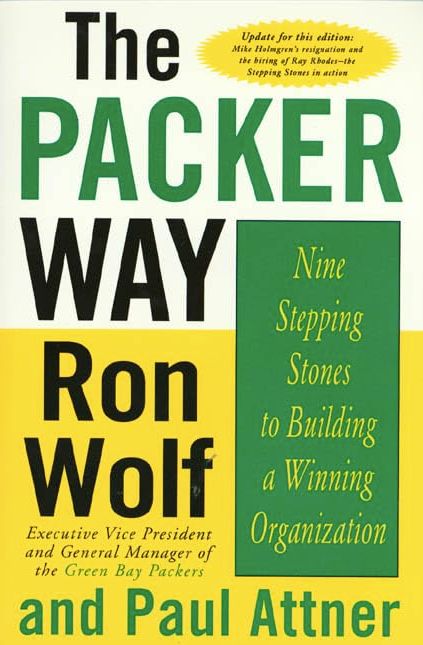
This all looks extremely familiar to me. And reading through Ron Wolf's book, The Packer Way: Nine Stepping Stones to Building a Winning Organization, gives more context.
Before we get started, I just want to say one thing. Can we not hold an entire organization hostage for Mayo's admitted poor choice of words? He's never been in this role, never said much as a player. He made a mistake. Wolf has final say in personnel - what Mayo says has no bearing on what the Patriots should do. They should, if you're being fair, be stricken from Wolf's record. Mayo said it, Wolf didn't. This is not the same as the Red Sox full-throttle comment, although Tom Werner obviously screwed up there as well. To get back into contention in baseball, you have no choice but to spend through the nose and eat bad contracts. That is not true in football, where you can absolutely rebuild mainly though the draft - if you're good at drafting and have premium picks like the Patriots.
This brings us to the Packers, who have done it that way three times now (Wolf, Ted Thompson and Brian Gutekunst. Yes, I realize the latter two had the franchise quarterbacks, which is the key to the whole thing.):
1. When 4-13 isn't 4-13.
Wolf was hired as Packers general manager on Nov. 27, 1991. He didn't come in and make any big changes. He just used the rest of the season to evaluate everything from the top down - all of football operations. Being with the Patriots the past few years, Eliot Wolf was in a similar situation. And if the Krafts made the decision to move on from Bill Belichick after the Colts game, and perhaps communicated that to Mayo and Wolf, the ramp-up timing was almost identical: the Colts game was Nov. 12.
The Packers were 6-10 in 1990 and 4-12 in 1991 under coach Lindy Infante. The Patriots were 8-9 and 4-13. Didn't take Wolf long to realize he needed to move on from Infante. As for the roster:
"I broke down the team ... I was pleasantly surprised by some of what I had discovered, but I also soon realized the huge task that lay ahead," Wolf wrote. "We were more competitive than our record indicated, but we were far from being very good. We had a core of talented players who could carry us and make us presentable while we went about improving the overall quality."
How this relates to the Patriots: It's certainly easy to conclude that New England, off last season, was just an awful football team worthy of their record. I'm sorry, I just don't believe that's the case. I saw a 7-win team before the season and I'm usually pretty accurate in that assessment - that's not bragging, that's just the truth. Were their talent issues? Absolutely. But there's always context. And from talking to people around the team, there were a lot of issues that have been reported here and elsewhere.
The Patriots lost eight games by one score or less. So to scoff that this team could easily have won six or seven games with better circumstances (not to mention a better kicker), is just wrong.
The coaching staff was a mess on the offensive side of the ball. The offensive line coaching was not good enough, let alone Adrian Klemm not being available for half the season ...
I could see Wolf (and Mayo) concluding that if the Patriots just got better QB and line play, stopped turning the ball over, there would be improvement. Enter, for now, Jacoby Brissett who was 8th in the league in QBR the last time he was in this offense as a starter in 2022. Enter a completely new offensive coaching staff that, for the first time in three years, is on the same page as far as scheme.
2. You don't have to tear everything down.
"Instead of wreaking wholesale havoc on the roster, I concluded we could make selective changes. My intention was clear. Keep the players I respected the most, give them as much help as possible during the ensuing offseason, and at the same time, begin adding younger players who eventually could step in as their replacements and dramatically raise the quality of the product. It was a two-tiered approach that would allow us to be competitive soon, while also setting the stage to get much much stronger in the future period.
"I had to prioritize the needs of our team. So I could avoid a helter-skelter approach, where you blindly attack a bunch of weaknesses without ever deciding which is the most important. The shotgun method might help stem the lack of progress over the short term. But without a well-conceived prioritized plan you aren't ensuring the long-term stability and growth of the enterprise.
"Every rebuilding situation is faced with a list of problems as lengthy as the one I was contemplating. You can react one of two ways: you can stare at all the needs and wonder how you'll ever get them fixed or, more intelligently, you can accept the fact everything won't be solved overnight. Then you can methodically prioritize your solutions, knowing all the while that patience becomes paramount in the circumstances. I came away from my study convinced that at best we were a .500 team. I needed to upgrade our quarterback and our secondary. those were the most glaring concerns."
How this relates to the Patriots: Pretty evident from what they've done so far, which is basically re-sign the defensive free agents (plus Onwenu, Henry and Bourne), Wolf looked at the Patriots and said, "Our defense will keep us competitive while we get to work on the offense." The Patriots also separated the results from the individual players. Just because the team was "bad" doesn't mean the Patriots didn't have good players, a good base. Rome wasn't build in a day. You're not going to remake an entire roster in one offseason, I don't care how much cap space you have. That's just not prudent.
3. Up the competition level at certain positions, methodically.
"It was the basis of our decision not to unload a lot more players going into the 1992 season. We needed to establish a solid foundation of veteran players by keeping the best athletes from the 1991 team who were willing to accept Mike Holmgren coaching-wise. These guys didn't necessarily have to be stars, because that team didn't have many standouts, but they had to be good enough to give us a chance to compete. We would use trades and the free-agent options available to fill in the most glaring holes with other veterans at the same time.
And this was the most essential element: we wanted to use the draft to pick potential stars who could be groomed in Mike's system and who eventually would become much better than the starters we currently had on the roster. That was the key to making this work. By the time the youngsters were ready to blend with the best of the veterans. They had to raise our talent level far higher than it currently stood. If they did, we could compete for a title.
How this relates to the Patriots: I mean, look at what they've done so far. It's pretty self-explanatory.
This is about making the roster more competitive with coachable players that will either immediately displace others, or at least up the competition level. If you look at the players they have brought in, they're all good, solid pros who are known to be hard workers and good teammates. That's a good place to start.
Signed
RB Antonio Gibson
OT Chukwuma Okorafor
QB Jacoby Brissett
LB Sione Takitaki
TE Austin Hooper
WR K.J. Osborn
DL Armon Watts
OL Nick Leverett
Returning
WR Kendrick Bourne
TE Hunter Henry
OL Michael Onwenu
WR Jalen Reagor
DE Josh Uche
DE Anfernee Jennings
Transition Tag: Kyle Dugger
Departures
QB Mac Jones (trade)
WR DeVante Parker (Eagles)
LB Mack Wilson (Cardinals)
TE Mike Gesicki (Bengals)
DB Jalen Mills (Giants)
TE Pharaoh Brown
LB Chris Board
Still out there
OT Trent Brown
RB Ezekiel Elliott
DB Myles Bryant
S Cody Davis
LB Terez Hall
4. Find your quarterback - and a great one at that.
"Our most glaring problem concerned quarterback where we were woefully inadequate. I thought we had backup quarterbacks not big-time starters who could win a title.
"But I was convinced that unless we truly found stars to become our quarterback and our coach the Packers would never threaten for a championship. If you find a good quarterback, you can compete. If you find a great one, you have a chance to be great. But have an average one and it's difficult to be more than average.
"I consider Brett Favre to be the first of those potential stars, he probably would be forced to play faster than we might have wanted. But our quarterback situation was so desperate, we couldn't wait for him to learn as a backup. He would have to undergo on-the-field training, which at times became inconsistent and error-prone. Yet I remained convinced once he matured, he would develop into an elite quarterback, which in turn would give our offense a chance to dominate."
How this relates to the Patriots: Ron Wolf was not interested in your signings of Russell Wilson or trades for Justin Fields - and I don't think the Patriots had any thought of doing either.
This is about finding a franchise quarterback. Period end of story. No stopgaps. The Patriots have plenty of ammo in this draft, including the third overall pick. They are finding a quarterback. Brissett is, to them, the perfect backup/tutor who has performed well in this system.
Also, don't expect Wolf to be looking for his Brock Purdy - he wants a stud who is a leader. And doesn't that description of Favre sound a little like Drake Maye?
5. Draft and develop with great coaching, but trades can also be used.
"I was confident we could fill the Packer roster with wonderful players and we could have a terrific staff of assistant coaches.
"I wanted to rely most heavily on the draft because I felt the long-term stability of the roster dependent on the number of young quality players we obtained. And the draft was the best method to acquire these youngsters. I wanted to trade as frequently as possible because this was a solid way of securing a special player or two, particularly if I had to fill a need. I wanted to bring in a limited number of street free agents. Although I was confident that early in our rebuilding program, we could identify players from this category, who would upgrade our roster at the same time.
We needed a solid first draft to initiate our approach to building the roster. I also knew we couldn't forget this was a long-term proposition. We weren't going to remake the Packers overnight. So it was important that we exhibited the patience to allow our system to function properly.
If a guy is in the first round, it's because he's a first-rounder. Period. He's not there because we think he might have that kind of ability.
In the months following the 1992 season, we probably could have rushed to cash in on our early success by signing a bunch of older limited players in hopes we could challenge for the Central Division title. But that approach contradicts our organizational philosophy as we work constantly to improve through our theories, we weren't about to add too many band-aids to our roster. Instead, the spots needed to be filled by younger players who could develop in the Packer stars. We would pursue a division title but only by staying within the context of the structure we had established for roster development."
How this relates to the Patriots: It's hard to exactly compare team building from 1992 because that was the last year of B free agency, and 1993 was the first year of unrestricted free agency.
Wolf tried to hit the No. 1 receiver hole by signing Calvin Ridley, but the Titans went over the top with an incredible guaranteed amount. The Patriots have declared they want to be bold there. I expect them, in the coming months, to be active on the trade front at receiver. Among those who could be available - and it could be more after the draft: Cortland Sutton, Brandon Aiyuk, Deebo Samuel, DK Metcalf.
6. Keep your intentions quiet - that means you Mayo.
"It didn't serve a purpose to announce we will be .500 either privately or publicly. I never gave our short-term future a thought. I just believe strongly that if we followed our approach, we could keep improving until we move to the level we saw. We would bring in Player B and see if he was better than A. If so, B would stay. Then we bring in C and see if he could shove B aside and so forth. We also would mix in draft choices. Player acquisition was my strength and I knew I had to uphold my end before the Packers could realize all of their dreams."
How this relates to the Patriots: Who wouldn't love to hear the plan of the Patriots laid out? But we know that's not going to happen.
There's a plan. Wolf hasn't waited years to get this chance to not have a clear idea of what he's doing or how he's going to do it. It certainly hasn't been flashy. Some might envy the Titans or Steelers or Bears, but this way has worked in the past for the Packers, including Wolf's father.
Whether it works for Eliot Wolf very much remains to be seen.
PS: Two additional quotes that jumped out to me:
"The Packers lack speed almost everywhere and without it, we had no chance of challenging for a title."
"I wanted an offensive-minded head coach. By studying the game over the last decade I was convinced that teams with head coaches who knew offense best had emerged as the most consistent winners."
The book was written in 1998.