
Joe Mazzulla was part of the problem. For the past two years, he has been a part of the problem. The Boston Celtics’ second-round loss to the New York Knicks, their first-round exit (a blown 3-1 lead) against the Philadelphia 76ers this season, and even dating back to 2023: Mazzulla has unavoidably had his fingerprints on the series.
He’s the head coach. At the end of the day, his choices go a long way.
It’s not about the 3-pointers. It’s not about the timeouts – a common criticism in his early Celtics days. It’s about the decision-making.
Mazzulla can’t control the shot-making, but he can control how the Celtics find their shots. He can’t control the actual defense, but he can control how the team sets up. He can’t control his players' literal actions, but he can control who’s on the court.
Just look at this season.
Why did it take until Game 7 for Hugo Gonzalez to earn minutes? Why were Baylor Scheierman and Jordan Walsh relegated to the end of the bench when they were integral to Boston’s identity all season? Why didn’t Luka Garza play more? Why didn’t the Celtics run through Payton Pritchard more?
There are a lot of questions, plenty of which Mazzulla should have sought out sooner. And perhaps the end results this year – and in past years – would have been different had Mazzulla been willing to shift gears sooner.
Since the 2025-26 Celtics’ demise, there have been plenty of calls for Mazzulla’s job. Just like there were in 2023. Just like there were in 2025.
But the Celtics should not fire Mazzulla.
© Gregory Fisher
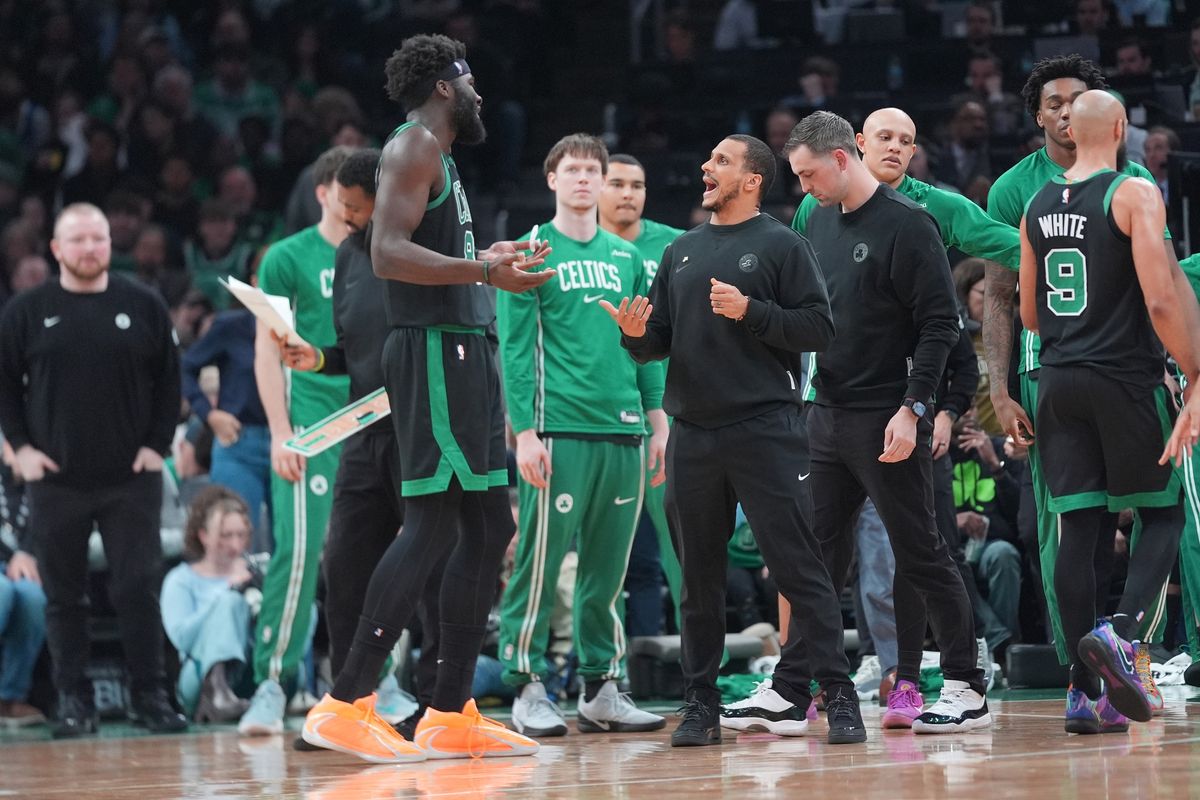
Neemias Queta and Joe Mazzulla
The NBA coaching world is a brutal one. Ruthless. Just look at the last 10 years of Coach of the Year winners.
Last year was Kenny Atkinson, and he’s still with the Cleveland Cavaliers. They just made the Eastern Conference finals. (After trading Darius Garland for James Harden and adding proven depth at the deadline this year.)
Before that, Mark Daigneault won. He’s still the coach of the Oklahoma City Thunder, and they are looking to become the first back-to-back champions since the 2017 and 2018 Golden State Warriors.
Ironically, after Daigneault, Steve Kerr, in 2017, is the last Coach of the Year winner still with the team he won with. And most of the victors were ousted within a couple of seasons of taking home the award.
Mike Brown won for the 2022-23 season. The Sacramento Kings fired him in December of 2024.
Monty Williams won for the 2021-22 season. The Phoenix Suns fired him in May of 2023.
Tom Thibodeau won for the 2020-21 season. The Knicks fired him in June of 2025.
Nick Nurse won for the 2019-20 season. The Toronto Raptors fired him in April of 2023.
Mike Budenholzer won for the 2018-19 season. The Milwaukee Bucks fired him in May of 2023.
Dwayne Casey won for the 2017-18 season. The Raptors fired him in May of 2018 – over a month before he was even announced as the Coach of the Year. He was fired in the same season he won the Coach of the Year award.
Mazzulla is likely going to take home this season’s Coach of the Year award. Should Brad Stevens decide to fire him, he would be the first coach since Casey in 2018 to be fired the same season he was voted as the league’s best head coach.
But look at all of those cases. Was the coach really the biggest issue? Or was it the roster, and the team just needed a change of scenery?
Casey’s 2018 Raptors? Well, they won the year after he left, so surely the coaching change made the difference, right? Or was it a superstar named Kawhi Leonard who created the change Toronto needed?
Budenholzer’s Bucks won a championship in 2021, and since Milwaukee fired him, things haven’t exactly gone swimmingly. They’re about to be on their third head coach since Budenholzer, and neither Adrian Griffin nor Doc Rivers won a playoff series.
Nurse’s Raptors won the title in 2019, but then Leonard left. This season was the first time the Raptors made it back to the postseason since Nurse’s departure. They completely rebuilt their entire roster to get there.
Thibodeau’s Knicks made the Eastern Conference finals in 2025 and lost to the Indiana Pacers. He was fired right afterward. Now, the Knicks are back in the same spot with the same roster. Maybe Brown can get them over the hump, and maybe the coaching style made a difference, but at this point, he hasn’t gone any further than Thibodeau.
Williams’ Suns made it to the Finals. Then Kevin Durant and Bradley Beal came to town. They failed. Two other head coaches failed. Then Phoenix finally shifted the roster, and they made it back to the playoffs after a one-year drought.
Lastly, Brown’s Kings. The Kings. Was Brown the problem? With the current-day Kings? Absolutely not.
The trend is, and almost always has been, roster construction.
But coaches can still be the problem. This year’s Knicks are a solid example of that. Brown’s willingness to play New York’s bench may have taken a necessary load off Jalen Brunson and Karl-Anthony Towns.
Jordan Ott's coaching helped the Suns this season. JB Bickerstaff has given the Detroit Pistons a much-needed boost.
Mazzulla did it for the Celtics in the regular season. He and his coaching staff found a way to get the most out of a group of guys built to endure a gap year. Boston sold at the deadline to duck the tax, played most of the campaign without its superstar, and still was second in the East.
Then, it all fell apart. The Celtics’ stars didn’t make enough shots, the big-man rotation was not ready for the moment, and Mazzulla didn’t push the right buttons. Boston blew leads in eerily similar spots to the ones they’ve encountered in years prior.
But that’s just as much on the superstars leading the way as it is on Mazzulla.
And firing the head coach to inspire a team, change the culture, or fix a problem only works in a couple of very specific instances. One, when the issue is solely the head coach (it’s not), or two, when the coach has lost the locker room.
Mazzulla has not lost the locker room.
© Paul Rutherford
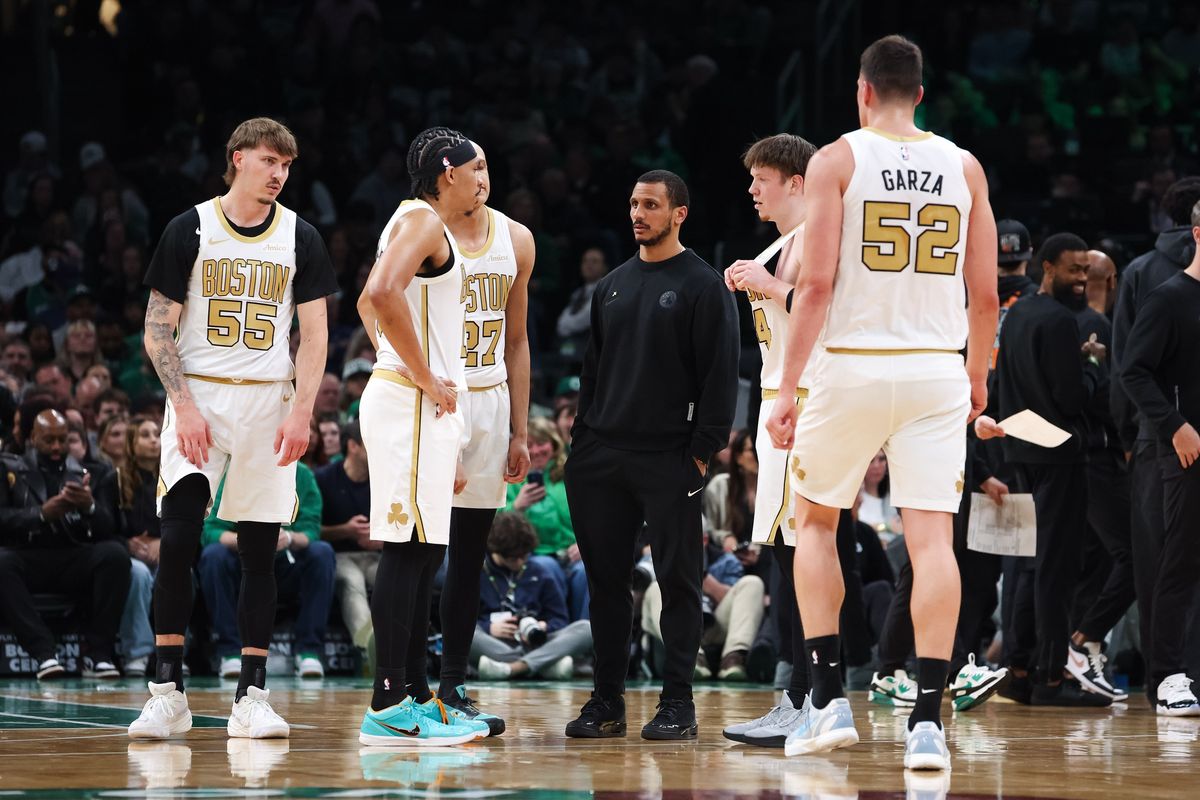
Joe Mazzulla
He and his staff have created a culture that creates buy-in. Everyone respects Mazzulla and his staff. They listen. They believe they can improve while playing in his system. They believe they can win.
That’s not something to give up on so easily. That’s not true for most teams around the league.
It’s not a coincidence or happenstance that Mazzulla is most likely going to win Coach of the Year this season. It’s a testament to how Boston performed compared to external expectations heading into the season.
All of the credit he would have gotten had he won the award before the Celtics’ untimely elimination should still go his way. But it won’t. And that’s fair.
Boston underperformed in the playoffs for the second straight year. They lost to a team they were widely expected to beat. And again, as noted at the beginning of the column, his fingerprints were absolutely all over the losses.
But so were the players’.
The Celtics shot 26.3% on wide-open threes in their four losses to the Sixers in the first round this year. Was that Mazzulla’s fault?
Some will be quick to say, ‘Well, he shouldn’t have had them shooting so many!’
Or, if the Celtics made the same shots they made at a 10 percent higher clip in the regular season, the conversation wouldn’t be necessary.
Or, if they shot above 60% in the paint in any of those four losses, maybe they could have had a better safety valve.
Those inefficiencies are due to the players underperforming.
But go back to these questions:
Why did it take until Game 7 for Gonzalez to earn minutes? Why were Scheierman and Walsh relegated to the end of the bench when they were integral to Boston’s identity all season? Why didn’t Garza play more? Why didn’t the Celtics run through Pritchard more?
In Game 7, none of those first four players made a single three. What if they weren't ready for the moment? What if Pritchard-first-option-hoops also failed? Then, would Mazzulla still be to blame, because why didn't he trust the top guys? It's an endless cycle of blame that somehow always lands on Mazzulla.
Coaching in the NBA is a lot of sitting, standing, and decision-making, all as a pathway to ultimately take the blame for likely failure.
But again, Mazzulla is not void of blame. In fact, this year, more than ever, blame should be sent his way.
He wasn’t quick enough to adjust. He abandoned the philosophies that helped this Boston team win in the regular season. He didn’t try enough new things. And the Celtics blew a 3-1 lead.
Yet in today’s NBA, it’s hard to find a coach around the league who has earned as much trust from his team in such a short amount of time as Mazzulla has.
And consistency is an underrated thing.
© Winslow Townson
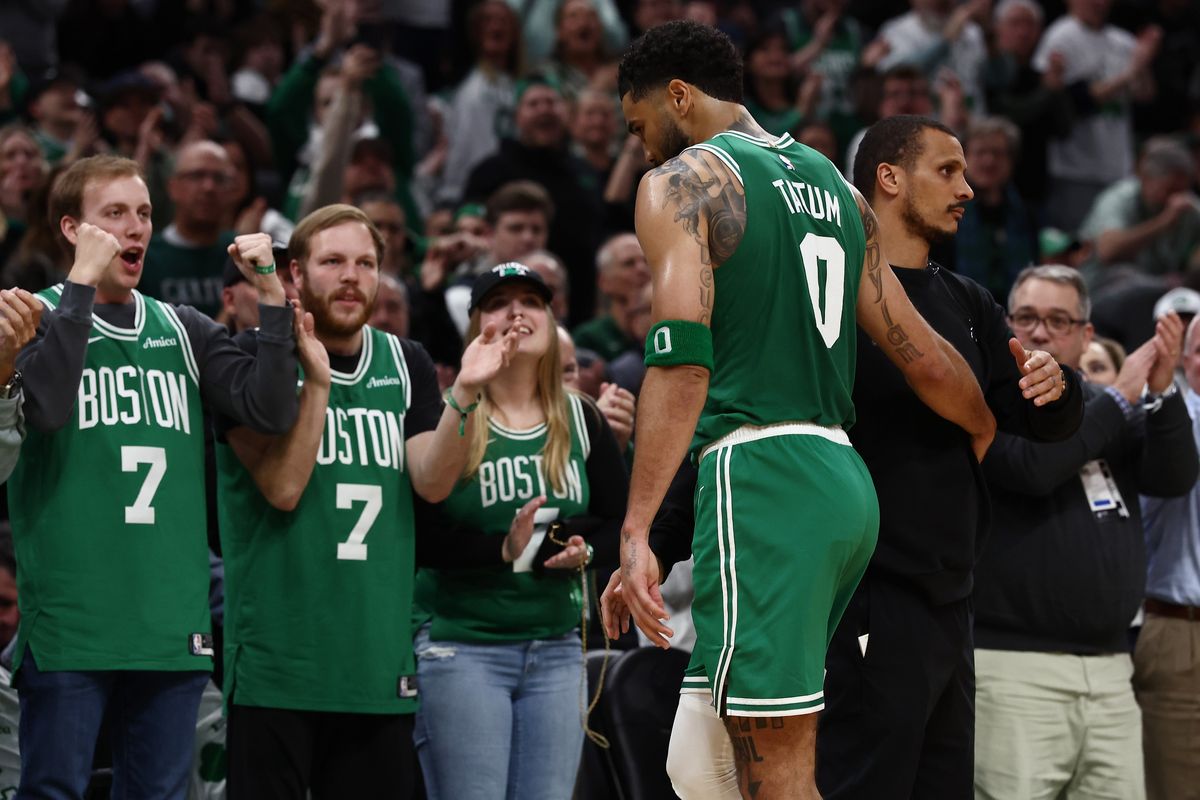
Jayson Tatum and Joe Mazzulla
As hard as it may be to contextualize with the current situation in mind, this year’s Celtics team was never built to win a championship. It was built to duck the tax, remain somewhat competitive, and see what the young guys had to offer.
Throughout the season, title expectations began to build, and the team showed it was capable of more than the front office likely thought. That’s, in part, because of the players, but it’s also because of Mazzulla and his staff.
He was a big reason the expectations were what they were. Because he overachieved. He was also a big reason why the expectations weren’t met.
But throwing away four years of built trust and culture-setting isn’t the solution. Especially when a new head coach would come with just as many question marks as potential answers.
Will Jayson Tatum and Jaylen Brown get along with him? Will he see eye-to-eye with the front office? Who even are the potential candidates? Is it worth trusting a first-time guy? Why would a former head coach be back on the market in the first place?
Instead, the Celtics should reconstruct the roster. Reshape what the team looks like. Improve the big-man rotation. Bring in more shot creation. Add additional means of offense that will help Boston be less three-point-dependent in the postseason again. Give the coaching staff more talent.
Work with Mazzulla. Help him improve as a playoff coach while building on all of the things he’s already been able to excel at in the driver’s seat.
It’s easy to just toss out head coaches and hope the next one works. But when it comes to Tatum and Brown’s prime – what most Celtics fans are eager not to waste when mentioning Mazzulla’s potential firing – bringing in a new, unknown variable would be even more dangerous than helping Mazzulla continue to develop as a coach.
Players aren’t the only people in the NBA world who can grow and improve.
Mazzulla should not be fired. He’s far from perfect. But few people are. And the pros outweigh the cons. The relationships built, trust gained, and impressive organizational culture are crucial pieces of the puzzle. No matter how ugly the past two seasons were.