
BOSTON -- Game 7 wasn't the problem.
For the first time in franchise history, the Boston Celtics blew a 3-1 lead. They did it against a Philadelphia 76ers team that is almost unrecognizable from the one that had to fight its way into the playoffs in the play-in tournament.
When Saturday night came around, the Celtics were already on their heels. And shortly before tip-off, they got word that Jayson Tatum would be out. Left knee stiffness.
"Found out, probably like 45 minutes before the game," Jaylen Brown said. "Nobody told me anything which, you know. But mindset was the same."
For the first few minutes of the game, it seemed as though Philadelphia would breeze to a blowout. Joe Mazzulla rolled out an unconventional starting lineup of Brown, Derrick White, Ron Harper Jr., Baylor Scheierman, and Luka Garza.
"I thought there was a couple of things we saw tactically we wanted to test out," Mazzulla said of that decision. "Obviously, give the series a little bit of a different feel. Take advantage of the roster that we had, and take advantage of the guys that can impact plays and whatnot. So, I thought it was great by the guys, and we came up short."
That lineup gave the Celtics some great energy. But it also failed to put points on the board.
Mazzulla quickly adjusted at the 7:58 mark, putting Payton Pritchard into the game for Harper, who did not see the court the rest of the evening.
Still, the Celtics' offense fumbled around. Brown looked destined for a repeat of his Game 6 mess. White was the only Celtic providing anything close to consistent offense.
But runs were the name of the game.
"I felt great about how our team responded, obviously down one of -- our best player," Brown said. "Our superstar, Jayson Tatum wasn't there, which could have helped, but I'm proud of my team."
A second-quarter run lifted Boston back into the game. A third-quarter run took them back out of it. And then a fourth-quarter, Brown-led surge brought the Celtics on the doorstep of a comeback. They cracked open the door, just for the Sixers to slam it in their face.
Two missed shots -- a Pritchard corner three and a Brown mid-range jumper -- could have gotten Boston over the hump. But both missed. And thus, the season ended.
But again, Game 7 wasn't the problem.
If anything, Game 7 was the solution.
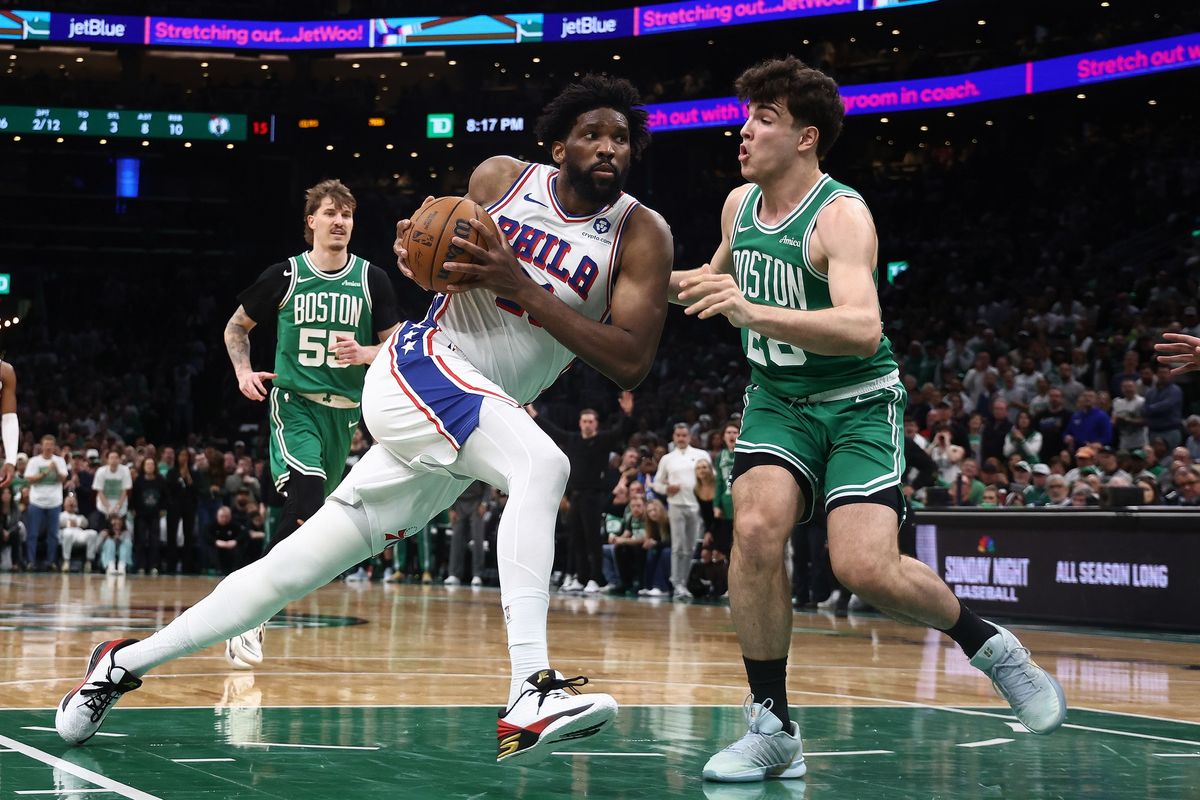
© Winslow Townson
Joel Embiid and Hugo Gonzalez
For the first time in three games, the Celtics got back to playing Celtics basketball. The basketball that worked all regular season. The hustle. The energy. The effort.
Hugo Gonzalez screaming to the TD Garden crowd after drawing an offensive foul. Scheierman gobbling up multiple offensive boards in a single possession. Harper stopping a transition opportunity by putting his body on the line.
Brown's shift-over blocks under the basket. White's All-Defensive Team-caliber help defense at the rim. Fast-paced, movement-based offense that kept defenses on edge.
Those are the defining characteristics of this Celtics team.
Or, they were.
What unfolded in Games 5 (mostly the second half) and Game 6 wasn't that. Game 7 was. It just wasn't enough.
"Tonight, I wish we played that style and trusted that style more even throughout the playoffs," Brown said. "Even through wins and through losses. Obviously, it's not always the easiest decision, but I wish that style for our team was how we empowered the rest of our group, and you saw tonight, how everybody came out and they played their tail off. I wish we trusted that more."
"At no point during that game did I think we were going to lose it, just because of who they are as competitors and what they've done throughout the entire year," Mazzulla said. "And I thought we had two, three great looks and just didn't knock them down. But the result of that is not going to get in the way of who they are as competitors and what they've done in this game, but also what they did throughout the season."
In the following days, blame will be spread. Conversations will unravel about what Boston's best course of action will be this summer.
Fire Joe Mazzulla? Break up the Jays? Trade Derrick White?
There will be plenty of time for all of that discourse. But in the wake of one of the most disappointing defeats in recent Celtics memory, the blame deserves to be shared.
Boston couldn't stop Joel Embiid. Not even a little bit. He saw Boston's defense, ate it, chewed it up, and spit it back out.
"They're a totally different team with him," Neemias Queta said. "Great player, makes a lot of plays, makes it hard on every player on the court, whether you double or whether you can be more aggressive out there with the reaches and stuff like that. And yeah, they look a lot better with him."
Mazzulla tried Nikola Vucevic earlier in the series. He didn't log a single second in Game 7.
He tried Queta. He tried Garza. He tired Gonzalez, Scheierman, and even Brown. Nothing worked. Boston's only prayer was hoping he took a three.
Boston couldn't shoot, either.
"I feel like this sport is such a rhythm, and scoring could be at highs and lows, and sometimes you just got to get lucky and be scoring the ball really well, and go on stretches," Pritchard said. "And we hit a three-game stretch where we just didn't score the ball well, and shooting threes was just -- we weren't on. But it's something we got to continue to work on and get better for."
In the Celtics' three losses, they shot just 49-of-179 from beyond the arc. That's just 27.4 percent.
And for those who will complain about Mazzulla's game plan -- after two straight years of 3-point-induced elimination, not a foul callout -- here is another stat to consider.
The numbers aren't out for Game 7 yet, but through the Celtics' first three losses of the series, they shot just 14-of-58 on wide-open threes. Just 24.1 percent.
Wide-open threes are threes taken with the closest defender at least six feet away. The Celtics couldn't even make a quarter of them.
They shot 40.2 percent from deep range on wide-open attempts in the regular season.
Boston's players -- the guys actually on the court -- slumped in the biggest moment of the year.
"I don't know," Pritchard said. "I don't know. I can't put my finger on what the shooting variances and all that, how that happens. But yeah, momentum does play a part. How people are feeling. The swagger you play with, that all has a part in it."
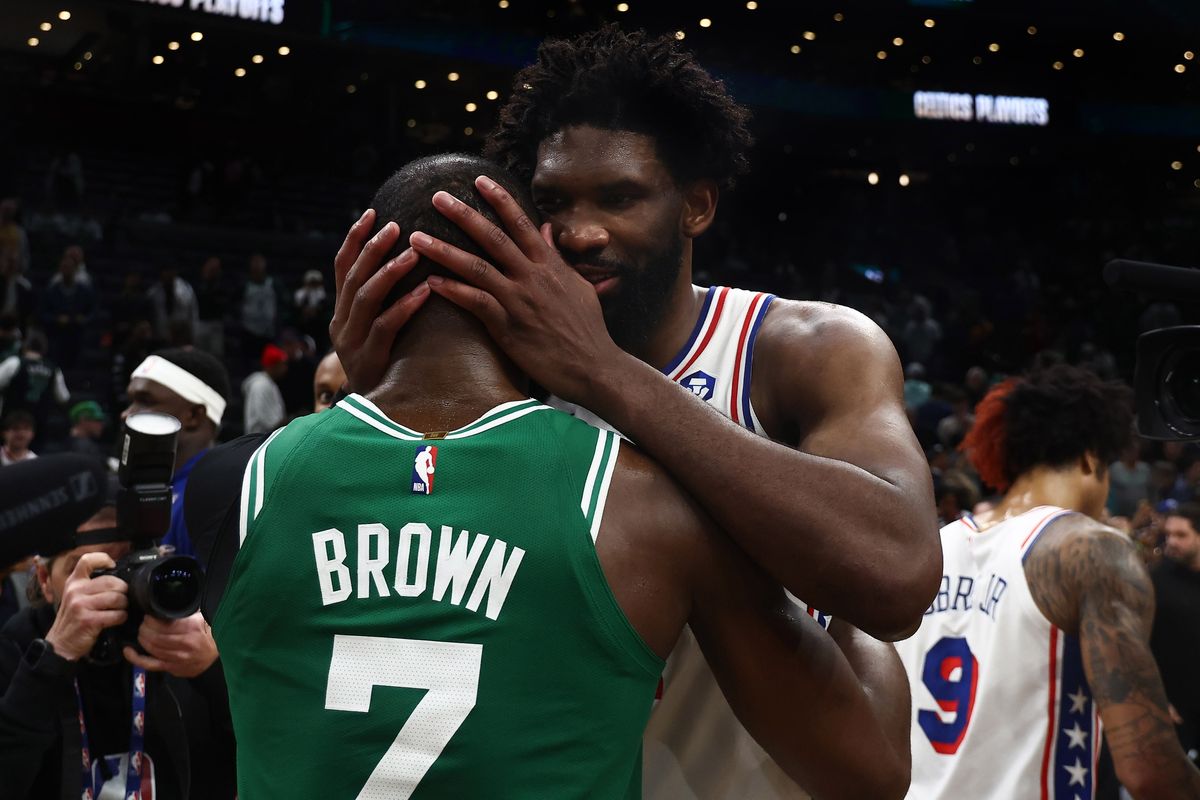
© Winslow Townson
Jaylen Brown and Joel Embiid
Brown also didn't come with his best basketball.
Game 6 was a mess. He forced the issue, missed open passes, and got blown by on defense. With a chance to close out the series, he fumbled.
And in the first half of Game 7, it was the same story. He just didn't look like himself.
A few big-time shots and impressive defensive plays in the fourth quarter -- combined with a deceivingly decent box score -- masked an otherwise disappointing final game to what was an All-NBA-caliber season for Brown.
White's shot completely escaped him for the first five games of this series. It wasn't until Game 7 that he was revived.
Queta, Garza, and Vucevic were all unplayable at times. Unable to stay out of foul trouble, and in the case of Garza and Vucevic, without the usual scoring touch that makes them so valuable.
Even the role players -- the very guys who were supposed to be the difference -- couldn't score. For all their energy-boosting greatness, they couldn't put the ball in the basket.
Only five Boston players scored in Game 7. Scheierman, Gonzalez, Harper, Walsh, and Garza combined to shoot 0-of-11 from 3-point range.
As for Mazzulla, his unwillingness to test different solutions early in the series was a major reason Boston found itself in the trenches of Game 7.
Perhaps if those role players had received a bit more faith earlier in the series, they would have been in a better flow. Or, the Celtics may have even closed things out sooner.
But that there. That's it.
Closed things out sooner.
At the end of the day, it was the Celtics' inability to get the job done earlier in the series that led them to this point.
The energy Boston brought in Game 7 was too little, too late.
Gonzalez was a game-changer, so why did he get his first chance at minutes in Game 7? And why did he barely play in the second half?
Where was Scheierman? Harper? Walsh? More Garza? Why were the energy guys who helped Boston all year glued to the pine?
Why didn't Mazzulla give them a chance? Why didn't Mazzulla try to play Queta off the ball on defense earlier, giving Gonzalez or Scheierman a crack at Embiid?
Why didn't he test out small-ball lineups or faster-paced groups? All are fair questions.
But at the same time, the guys who made Boston's best run of the game on Saturday night were the regulars: White, Pritchard, Brown, Hauser, and Queta.
They played with great energy, impressive hustle, and an unrelenting desire to win.
So, why didn't that show up in Game 5 or Game 6? Why did they play so stagnantly?
Why was the offense so slow? Why didn't they get the ball up the floor quicker? Mazzulla made plenty of questionable mistakes, but where was his Ole Reliable group when he needed it most?
Feelings of disappointment were painted all over the faces of Boston's stars postgame. Nobody was happy. Nor should they be.
You could see it in their eyes. Mazzulla. Brown. Pritchard. Everyone absolutely gutted.
But in classic Celtic fashion, there was a touch of forward thinking (though they were specifically asked about forward thinking).
"No feelings of regret whatsoever," Brown said. "Obviously, we would have liked to close it out and win in five games or win in six games, but Philadelphia is a is a good basketball team, and they've gotten better since the regular season. Embiid is playing at a high level, and it's the playoffs. We knew it was going to be a fight, and we didn't expect nothing less. Nothing to hang our head over. I got no regrets. I don't think my teammates should have any regrets. We had good games, we had bad games, that's the storyline. And we had an opportunity to win tonight, and we just came up short."
"I thought a lot of people had a lot of growth this year, so that's positive," Pritchard said. "And like I said, just because you don't win a championship one year, it doesn't mean that it didn't build for the next championship. So, when we won, I think it was Banner 18, the four years before that, we lost four straight. We lost to Miami, lost in the Finals. So, those might have been disappointing years, but maybe those led to the championship. So that's how I look at it."
And in typical Mazzulla fashion, perspective took a front seat.
"The year we won, I felt just as empty as we did when we lost," Mazzulla said. "And the duality of going after something bigger than yourself with a group of people is you're always going to have -- there's two sides to every point, and when you go after greatness, you have to accept the other side of that.
"And too many times, it's all about winning, winning, winning, but you have to surrender to the idea that when you're going after that, you're going to fail. And we've failed by not winning, but we stick to the process of being able to do that. But I think that's just kind of the duality of how things work. It's not an either-or thing. It's both. And you feel both of those things."
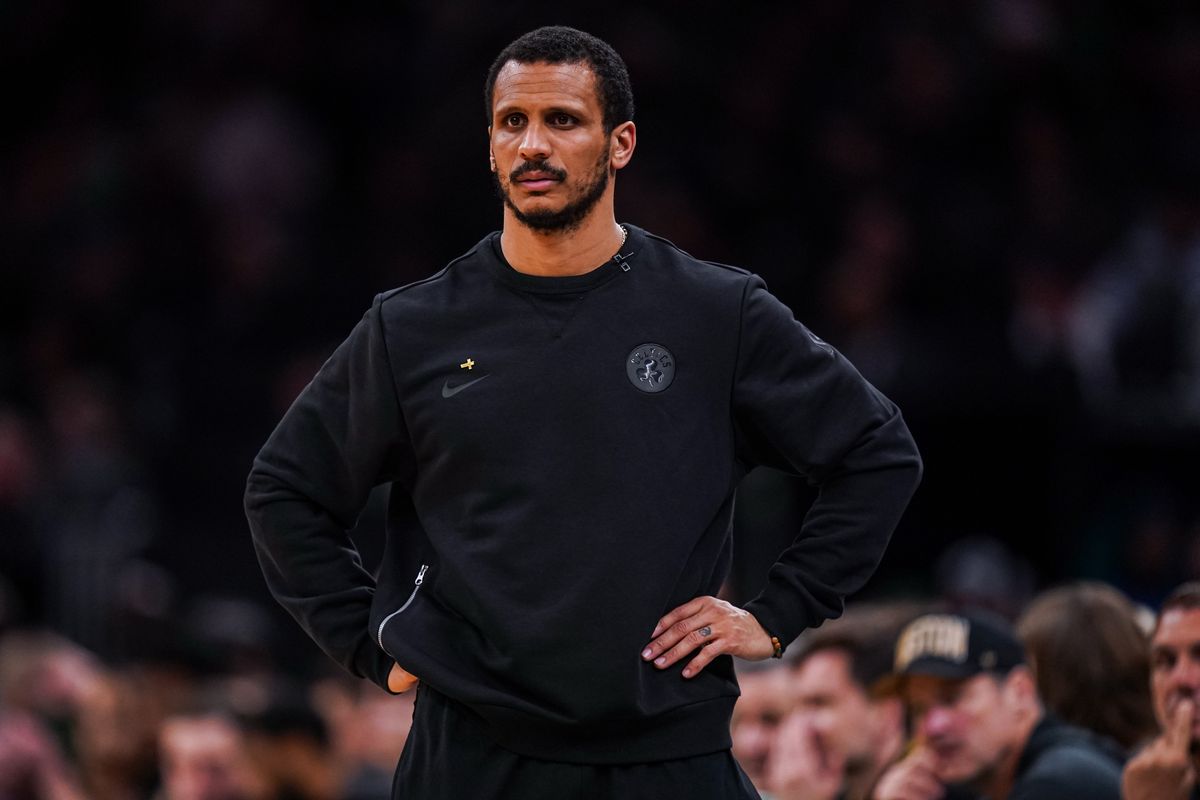
© David Butler II
Joe Mazzulla
Forward thinking is important. The Celtics aren't going to stop playing basketball because they lost in the first round this year. There's another season. And another after that one.
But right now, their most recent season is over. And it ended in a bitter defeat, with lots of failures along the way.
Mazzulla failed to stray from his ways soon enough to make a significant difference in the series. Brown failed to step up in the same manner he did in the regular season. White failed to make the shots that could have won Boston the series.
Boston's role players failed to make shots when given the chance to play. Its big man rotation failed to execute on either end of the court.
Changes seem inevitable this summer. The level of those changes? To be determined.
But in the meantime -- before all the offseason talks and inevitable question marks pop up -- the Celtics have to sit in their failure.
Game 7 wasn't the reason the Celtics are done for the year. It was everything that led them to that point. And perhaps that's an even bigger issue to have to deal with.