
It’s been one week since the Red Sox shockingly fired Alex Cora and five members of his coaching staff.
I say “shockingly” not because the on-field product didn’t warrant change, it did. The Red Sox have flat-out struggled through the first month of the season. What’s surprising is that principal owner John Henry was willing to eat the remaining $14-15 million owed to Cora.
Which raises an obvious question: if you’re willing to eat $15 million on a manager, why not allocate that same money in the offseason to help facilitate a Masataka Yoshida trade? Doing so could have freed up the roster and prevented the current logjam of four starting-caliber outfielders for three spots.
To be clear, Yoshida is not the reason Cora was fired. There were multiple factors behind the decision. The flawed roster construction is part of the equation. Chief baseball officer Craig Breslow wanted a change in the dugout after watching a roster he constructed stumble out of the gate, including a sweep at Fenway Park by the Yankees and a lopsided loss in Baltimore to open a series against the Orioles. At some point, he saw enough. Or he acted decisively to protect his own position. In this case, both can be true.
Instead, Boston is now essentially paying its former manager to sit out, whether that’s staying home in Puerto Rico for the summer or elsewhere until his contract expires or another club hires him, at which point the financial terms would be adjusted.
The Red Sox nearly caught a break when the Phillies showed interest in Cora last weekend. He hadn’t even taken off his Red Sox hoodie before Dave Dombrowski was reportedly eager to reunite with the manager who led Boston to a World Series title in 2018. Dombrowski moved quickly, parting ways with Rob Thomson as the Phillies, like the Red Sox, have stumbled out of the gate.
“I think Alex Cora is one of the finest managers in the game of baseball,” Dombrowski said. “I’ve been fortunate to work with Hall of Fame managers like Tony La Russa and Jim Leyland... I think if (Cora) decides to keep managing, he has a chance to be in that same category, that’s how good he is.”
Cora declined the opportunity to take over as manager of the Phillies, opting instead to spend the summer in his native Puerto Rico with his fiancée, Angelica, and his twin sons, Xander and Isander, who turn nine in July.
That doesn’t rule out a reunion down the line, whether later this season or in the offseason, but for now, Cora isn’t interested in managing. In the interim, the Phillies will move forward with Don Mattingly.
In the wake of Cora’s firing, Trevor Story has emerged as something of a de facto leader in Boston’s clubhouse. He publicly questioned Breslow’s decision the Sunday after the dismissal, voicing support for his former manager.
Story was also disappointed with the organization’s initial explanation to players regarding the firings and made it clear he wanted a one-on-one conversation with Breslow.
“They spoke,” Story said. “There just have to be more conversations had. I wouldn’t say it was satisfactory. We’ll have our talk. We haven’t had it yet.”
Garrett Whitlock also spoke up.
“They made it very clear that we get paid to play baseball and we need to just focus on playing baseball,” Whitlock said.
Story and Breslow did have their conversation about Cora.
“We talked about it. We hashed it out,” Story told NESN’s Jahmai Webster. “Obviously, you heard how I felt yesterday about the whole situation. It’s part of the process. It’s having the conversations, having these tough conversations. Whether you agree or disagree, at the end of the day, we agreed that we want the Red Sox to win.
“Baseball’s a crazy game and it’s a game that is a business at the end of the day. We talked. Obviously, those conversations will stay between us.”
BABIP Gods finally returning the favor. Trevor Story badly needed something to fall after killing rallies in his first 3 AB. pic.twitter.com/nZ6ctmvQfO
— Tyler Milliken (@tylermilliken_) May 2, 2026
Breslow said he has met with “a number of players” since the team meeting, including Story, who initially questioned “the true direction of the franchise” after Sunday’s discussion.
"Trevor and I had a conversation," Breslow said. "Trevor obviously is a very important part of this team. He's also a leader on this team, and he's incredibly well respected in the clubhouse and by the staff and by me. I'm grateful for the chance to have the conversation with him."
Despite speaking up more publicly, Story continues to find himself at the center of attention.
During Saturday’s 6-3 loss to the Astros, NESN cameras caught Ceddanne Rafaela showing visible frustration after a play in the fourth inning. Following José Altuve’s double off the center-field wall with no outs, Rafaela fired a throw to second that reached Story on one hop. Story, positioned a few feet off the bag toward the outfield, was unable to make a tag attempt on Altuve, prompting Rafaela to throw his hands up in frustration.
Ceddanne Rafaela appeared to be annoyed that Trevor Story did not make more of an effort to tag Jose Altuve out at second base pic.twitter.com/mFAm6GP6Je
— Jomboy Media (@JomboyMedia) May 2, 2026
After the game, Story acknowledged he and Rafaela had not yet discussed the moment.
He declined to elaborate on how he felt about Rafaela’s reaction.
“We’ll keep it between us,” he said. “We’ll keep it between us and that’s what I think good teams do. We’ll handle it.”
Rafaela’s reaction on Saturday is just the latest example of frustration shown by Red Sox players over the past several games.
During Brayan Bello’s start in Toronto, he repeatedly shook his head as Chad Tracy came to the mound to remove him with two outs in the fourth inning. Back in the dugout, Bello paced, talked to himself, and continued shaking his head. He later slammed his fist against the railing after reliever Greg Weissert allowed a two-run homer that pushed the Blue Jays’ lead to 5-1.
The frustration has been building. In Baltimore, Bello had another outburst after surrendering five home runs, taking it out on a bucket of bubble gum in the dugout.
When asked whether the Red Sox need to display better body language, Story defended his teammates.
“I mean, there’s a human aspect to it and there’s an emotion side to this game and to kind of everything that’s gone on,” Story said. “That’s part of being a professional. You learn ways to handle those things, and I think it’s as simple as that. You’re not going to catch me talking bad about any of my teammates.”
Since Cora’s dismissal, the Red Sox are 3-3 under Tracy. Through no fault of the interim manager or the new coaching staff, not much has changed. It’s largely the same roster that has Boston sitting in the cellar of the AL East.
And that’s the bigger issue, something still feels off, and it goes beyond the on-field results. The Red Sox lack a clear, steady voice in the clubhouse. Story has been one of the more vocal players publicly, but the impact hasn’t translated into results or direction.
The 33-year-old is hitting .208 with a .245 on-base percentage, .300 slugging percentage, and a .545 OPS over 32 games (139 plate appearances).
When Story is locked in, the lineup tends to follow. When he’s struggling, the offense often mirrors it, a reflection of both his role in the lineup and the current state of the team.
“I just haven’t found the rhythm on a consistent basis that I’m looking for,” Story said. “And this is a tough game. You gotta find a way to get it done. Whether it’s about the times you’re not feeling good and you scrap out a hit or you scrap out a walk or put down a bunt or find a way to help the team when you’re not being the player that you know you can be. So similar to last year. And I’m confident that I’ll get it rolling like I did last year.”
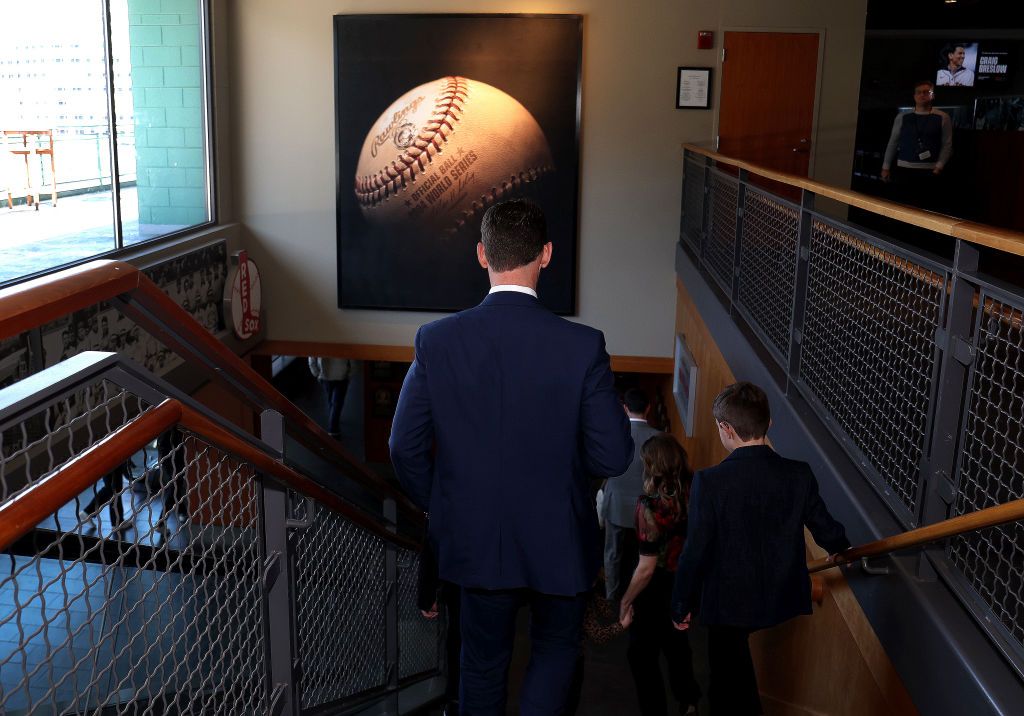
IMAGN
The month of May is critical for the Red Sox. They need to get back into the race, or at the very least claw their way to .500. If not, the climb in June and July could become too steep, and their season may slip away early.
Health is a major part of that equation and the rotation is battered. Garrett Crochet is on the injured list with left shoulder inflammation, though it’s not considered serious. Bello has struggled mightily, there’s no sugarcoating a 9.12 ERA through six starts, yet the Red Sox have little choice but to keep running him out there. Sonny Gray could be back as soon as Wednesday. With Kutter Crawford, Johan Oviedo, and Patrick Sandoval all sidelined, Boston’s pitching depth, once viewed as a strength, is being pushed to its limit.
Which goes back to my bigger point: this team lacks a true leader, a face of the franchise.
Not since the days of Pedro Martínez and David Ortiz has Boston had a clear, unquestioned centerpiece. Right now, if you ask who that player is, there isn’t an obvious answer. The organization may hope it becomes Roman Anthony, but with just 99 career big league games, he’s not there yet. He hasn’t had the time, or the platform, to command a clubhouse.
With the team scuffling, bigger questions start to surface. If little changes over the next month, ownership may need to take a hard look at Breslow’s future. His vision has produced mixed results across the organization. While he has reshaped the pitching infrastructure, the lack of position player depth is now creating real issues at the big league level.
Breslow shouldn’t be given unlimited runway. The idea of allowing him to oversee another MLB Draft, navigate the trade deadline, and then shape yet another offseason under the same blueprint deserves scrutiny.
In his roughly two-and-a-half years as chief baseball officer, the results have been uneven. The Red Sox did reach the postseason last year, and the trade for Crochet, which cost four prospects, is the type of move most front offices would have made given the system’s depth at the time.
But there have also been missteps. The handling of Rafael Devers’ positional situation ultimately led to his departure, and three of the four players acquired in return have already been moved. While Breslow did sign Alex Bregman, the team is clearly missing his leadership presence.
Reporting from Alex Speier of The Boston Globe further underscores the tension behind the scenes. Cora effectively gave Breslow an ultimatum regarding the hitting staff heading into 2025: if changes were coming, Cora would be gone too.
Whether Cora would have actually walked away from the $14 million remaining on his contract over hitting coach Pete Fatse is debatable. But Breslow called the bluff, and in doing so, made one thing crystal clear: For better or worse, this is now his team.
“In recent years, the Red Sox have overhauled their training and development processes throughout the minors, with a significant infusion of employees either from Driveline, a baseball training organization, or versed in its training methods,” Speier wrote. “At the heart of the processes the Sox sought: The collection and use of information and player tracking in both games and training to help players improve. Are players working on the right things, and in the right way, to get better?”
Breslow has fully embraced the Driveline approach, aligning the organization around an offensive philosophy centered on pulling the ball in the air. But according to CBS Sports’ Julian McWilliams, there have been internal questions about whether that approach fits the hitters on the current roster.
According to @enosarris, Craig Breslow has hired Kyle Boddy (@drivelinekyle), the founder of @DrivelineBB, as a Special Advisor for the upcoming season.
— Tyler Milliken (@tylermilliken_) January 18, 2024
He’ll be helping with pitching R&D. Previously worked with the Reds.
That’s a hell of an addition for an organization trying… pic.twitter.com/ko0YlEz0OS
McWilliams also reported that some of the team’s younger players haven’t fully bought into the Driveline model.
“Inexperience within the coaching staff was also cited as a concern,” McWilliams wrote. “While Driveline’s impact is growing across the sport, some questioned whether the experience level of those implementing it aligned with the demands of major-league roles.”
Driveline, founded in 2007 by Kyle Boddy, now part of Breslow’s staff, uses advanced technology and data-driven methods to improve the mechanics, consistency, and power of both pitchers and hitters.
Boddy, the company’s chief technology officer, joined the Red Sox in 2024 and works closely with Breslow. The chief baseball officer, who has shown a willingness to take risks and implement sweeping changes — most notably with the dismissal of Cora has placed significant trust in Boddy and his methods.
That influence extends to the coaching staff. Hitting coaches John Soteropulos and Collin Hetzler, both shaped by Driveline principles, are now among the organization’s leading voices on offensive approach and development.
Breslow has acknowledged the stigma surrounding Driveline and believes the company’s methods haven’t always been given a fair evaluation.
“In my opinion, if you take a step back and think about Driveline as more of a mind-set or an approach to development and training, where you’re trying to be very clear in assessing where a player is, you’re trying to identify the goals that would allow them to realize major league value, and then you set up consistent programming and training with measurable progress toward that, to me, that’s what Driveline is,” Breslow said, per The Athletic.
Breslow’s hitting philosophy isn’t the only thing under scrutiny. His ability to manage relationships has also been a recurring concern during his tenure.
He drew attention for firing longtime scout Carl Moesche after Moesche called him a “f—ing stiff” during a Zoom call, apparently unaware he could be heard. The incident only added to a growing perception around Breslow’s leadership style.
There have also been reports that Breslow has become increasingly isolated within the organization. Last year, Joon Lee reported that some within the Red Sox described the front office as “losing cohesion.”
“Staffers who helped build four championship teams — veterans of the Theo Epstein, Ben Cherington, Dave Dombrowski and (Chaim) Bloom regimes, now feel shut out of the operation” reported Lee, last year. “The collaborative spirit that once defined Red Sox baseball operations has frayed.
"The discontent intensified in May 2024, when Breslow brought in sports consulting firm Sportsology to conduct an organizational audit. The stated purpose was to streamline baseball operations. In practice, it triggered a wave of firings and accelerated the marginalization of some of the longest-tenured voices in the building, "characterizing the cultural shift to align more with Wall Street efficiency.”
Breslow right now is in the business of saving his job, but it might already be too late.
The Red Sox can’t afford to have him leading another offseason, trying to sell free agents on Boston after firing one of the most respected managers in the game. There’s limited star power on the roster, and the perception of how the organization operates is becoming a concern.
It’s fair to wonder: did Bregman see the writing on the wall and choose Chicago? Would Ranger Suárez, with the benefit of hindsight, tell the Red Sox “thanks, but no thanks”?
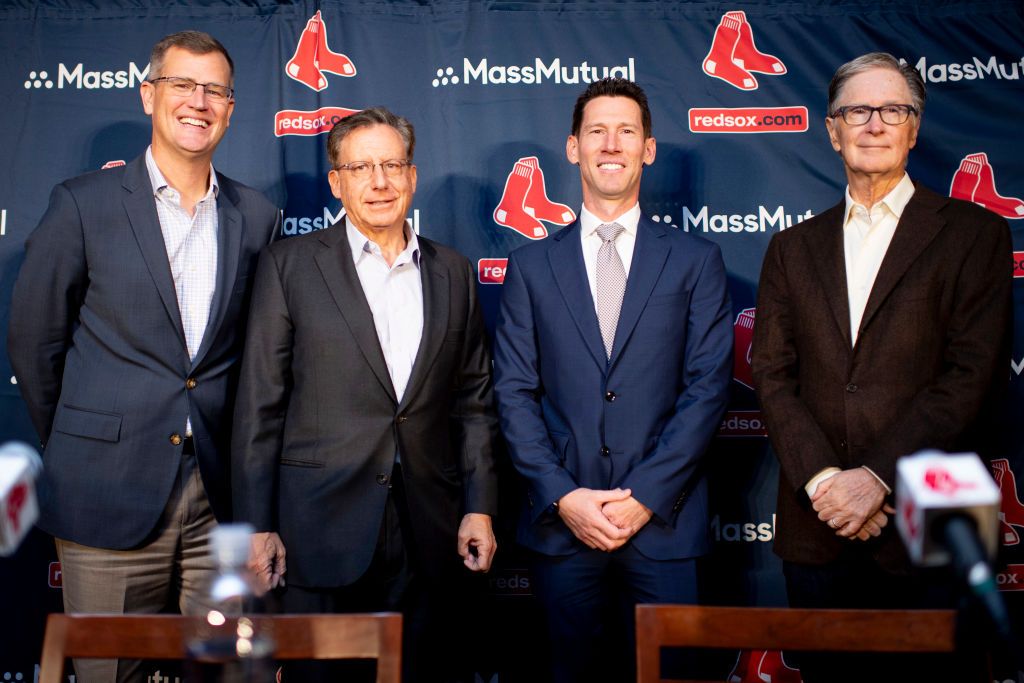
GETTY IMAGES
Right now, Boston lacks a clear identity, and the one it had in Cora is gone. Story hasn’t emerged as the steady public voice the team needs, and Breslow, for better or worse, has become the face of the organization.
At the moment, the Red Sox look less like the franchise that’s won four World Series titles since 2004, and more like a team searching for direction.
The Red Sox need change, again, and they can’t worry about the optics of their history with front office turnover. Henry needs to get this hire right and bring in someone who can unify the organization with a clear, collaborative vision. Player development and winning at the big league level don’t have to be mutually exclusive, the best organizations do both.
Boston says it wants to win championships, but lately it has operated more like a mid-market club, hiding behind the financial security of Fenway Park and the Red Sox brand.
If Breslow were to be dismissed, internal options like Eddie Romero or Brian Abraham could steady things, but it’s fair to question whether either brings the external presence needed to reset the culture. That kind of impact hire, someone like Dombrowski once was, isn’t easily found, and with him entrenched in Philadelphia, a reunion feels unlikely.
Ultimately, this falls on Henry. He needs to show he’s fully invested and willing to act decisively before it’s too late. Because right now, the Red Sox look less like the franchise that’s won four World Series titles since 2004, they look more like the NFL's New York Jets, dysfunctional to it's core, and more like a team searching for direction.