The road to Celtics losses is paved with good intentions.
The NBA Finals return to Boston after a 12-year hiatus with the Celtics and Warriors now locked in a best of five series. On one hand, Boston has played well enough to win one game and be in another one until a late barrage. That can give them confidence in the upcoming games.
On the other, the Warriors can say the same thing.
This makes Game 3 a critically important game between two evenly-matched teams. And when that's the case, it simply comes down to which team can make fewer mistakes.
Boston’s mistakes often follow the same script which starts with an astounding number of turnovers.
“Majority is over-penetrating, playing in the crowd as I talk about quite often. Just not keeping it simple,” Ime Udoka said. “We look at the numbers overall, we're 13-2 when we have 15 or less turnovers in the Playoffs, and we're 0-5 when we have 16 or more. That kind of tells a story.”
Jaylen Brown has a knack for over-penetrating and turning it over. He’s trying to make a play, he has good intentions, but he is one of the Celtics who routinely gets himself into trouble without an escape route.
“For the most part it's usually the same things: spacing, we get on top of each other, or we don't move with purposeful actions all the time,” Brown said. “Don't set screens the way we need to, get jumbled up together, which allows them to guard us a lot better or a lot easier than they should be.”
The Celtics get away from the easy plays and end up trying to make the harder ones. On this play in particular, Brown could have easily pulled up for a midrange shot, using Gary Payton II's momentum against him, if he wanted to shoot or made the pass to a cutting Al Horford much sooner.
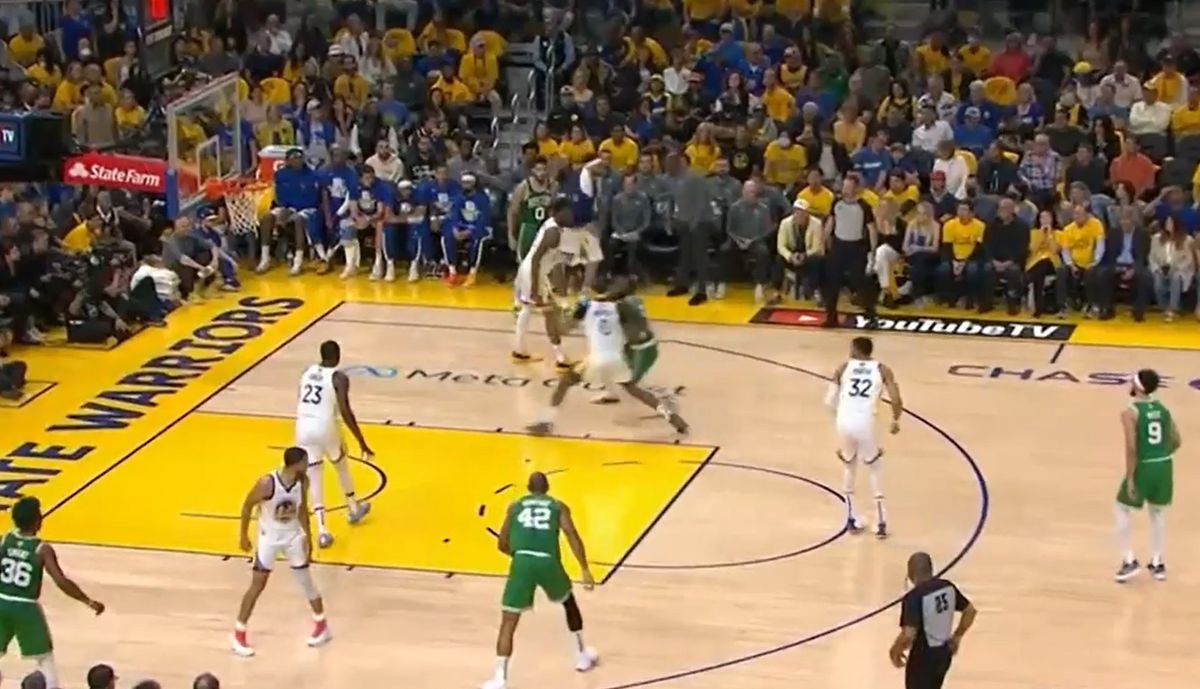
The consistent problem of trying to do things themselves has been tempered over the course of the season, but it hasn’t been eliminated. As I’ve written before, the Celtics get themselves in trouble that way, and it’s happening on both ends of the court.
The Celtics have been swarming Curry defensively but this is just too much, Grant needs to drop down to Looney, Smart is already walling up Curry, White is already on the corner. No one is covering Looney. pic.twitter.com/2LM4w3rskQ
— Mo Dakhil (@MoDakhil_NBA) June 6, 2022
Grant Williams admitted that he was freelancing on this play, and again on a later one that cost Boston an open corner 3. and that it’s an example of the discipline the Celtics need to show on the floor to win games. Williams has drifted away from his assignments before, sometimes with success, and sometimes without.
And that's at the heart of what hurts the Celtics in their losses. They make less than ideal decisions that can help them when they work, but hurt them when they don’t. For example, the early shot-clock 3-pointers early in Game 2.
This is one of those make-or-miss things. If you pull up from there early in the shot clock like that, that thing had better go through the net. When it does, we all say “wow,” tweet out a “man on fire” gif on Twitter, and hope he stays hot.
If the player misses, though? Now we’ve got issues.
NBA players can be like a group of kids who see a friend with a new toy; there's a lot of “oh I want that! Can I play with that” going on. When the Celtics saw Brown pulling up and draining bombs in transition, they seemed to wonder if the magic shooting fairy sprinkled her dagger dust on the whole team.
With the score 13-5 and Boston riding the momentum of another stop, Jayson Tatum tried his hand at it. He failed.
It’s hard to resist this temptation, but let’s start with the most basic choice Tatum could have made.
Brown is the one with the hot hand. Brown is Mr. First Quarter. Why not find him again?
Tatum is driving down the right side of the floor with a retreating Andrew Wiggins and Klay Thompson on Brown. Instead of rushing to pull up for his own heat check by proxy, a simple crossover dribble while maintaining his speed into the middle of the floor would have drawn two defenders so Brown could spot up in the corner.
And hey, if Thompson decided to stick with Brown, then that would have been a driving lane for an easy two points. But the quick shooting obsession was already evident in the Celtics, and because Brown had been rewarded for his shots, Tatum thought he might also.
He was not alone.
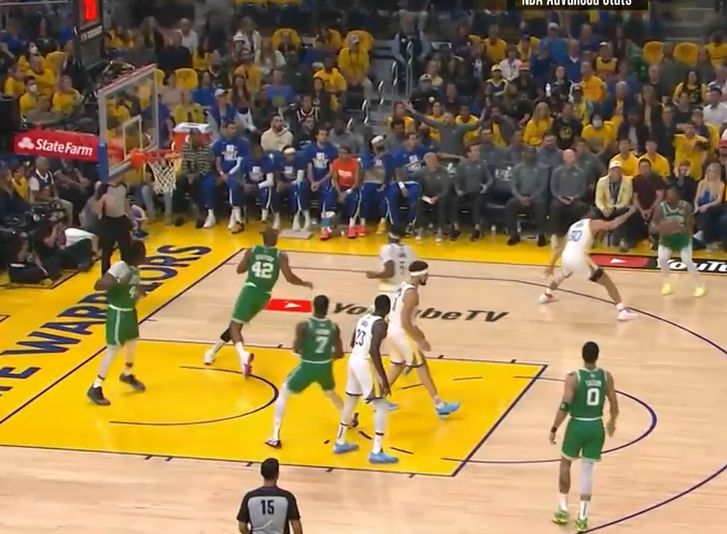
After Horford blocked Wiggins the Celtics got this shot from Marcus Smart.
Hey, at least there was a pass this time.
Another quick 3-pointer, this one contested, and it’s clear the Celtics have a hair trigger at this point. The issue is that he could have also drove and tried to find one of the three Celtics underneath the basket at the time.
This is the tough give-and-take with NBA basketball and players of this caliber. They are capable of things that defy the conventional notion of what’s good and what’s not, and very often the analysis and processing of games is simply based on whether shots went in and whether a certain team wins.
For Boston, though, it’s been made clear that no matter how well-intentioned some plays are, trying to do too much often leads to iffy results. When they keep things simple, move the ball, and stay disciplined on defense, the results are more consistent and favorable.
“Just staying together. Trusting each other, staying connected, being patient,” Robert Williams said. “Setting screens. All around, things that we need to clean up. I think the biggest thing is communication and trust in each other.”
If there's anything Celtics fans can take solace in, it’s that Boston tends to bounce back and understand the task at hand after bad games. The Celtics do a lot of things right, and then they’ll just go a step or two too far.
Udoka’s biggest coaching challenge is, in a sense, herding the chickens on a daily basis. There's always one or two that break free and have to be reined back in. The Celtics' natural inclination is to lean on their talent to make the big play when their greatest strength is in the collective. The reminders to keep it together have to be constant, but they’ve been effective, because the guys on the floor have good intentions.
“I mean, you have a bad day at work, the next day you want to have a better day at work,” Tatum said. “I think everybody can understand that. You lose a game or don't play well, you want to come back and have a better game. I'm sure everybody can relate to that, whatever you work at. It's all the same.”