
By the time Ray Bourque finally saw his No. 77 sweater lifted up to the Garden rafters in 2001, the franchise blueliner had capped off a career headlined by 1,518 games in a black-and-gold sweater.
Johnny Bucyk? 1,436 games with Boston — spread across close to three decades.
Terry O’Reilly? 891 games. Rick Middleton? 881.
Eddie Shore only donned a B’s jersey for 541 games … although in that era, 500 games might as well count as 1,500 given the punishment inflicted, night in and night out.
And even though injuries sapped both Bobby Orr and Cam Neely of extensive careers with the Bruins, tenure doesn’t always tell the story when it comes to determining greatness.
Willie O’Ree stands at the forefront of such sentiment.
Up in the NHL ranks, O’Ree only logged 45 games — all in a Bruins sweater.
But what the New Brunswick product lacked in terms of reps at hockey’s highest level, he made up for countless times over in terms of his impact.
Because when he stepped onto the ice at the Montreal Forum on Jan. 18, 1958, those first few strides meant more than anything that could be accomplished over 15+ years in the NHL.
“When I started playing hockey, I just wanted to play hockey and have fun,” O’Ree declared on Tuesday night.
Even through a Zoom broadcast originating 3,000 miles away from Boston, O’Ree’s emotions were easy to glean as he fielded questions from the media.
For those lucky enough to have met the 86-year-old O’Ree, it was what you’d expect: Humble, gracious, classy. Perhaps even reluctant to harp on his own accomplishments and the chapter that he penned in hockey’s history with indelible ink.
Exactly 64 years after a then 22-year-old O’Ree made those first steps out on the ice up in Montreal and broke hockey’s color barrier, the pioneer was finally bestowed a long-overdue honor on Tuesday — becoming just the 12th Bruins player in franchise history to have his jersey number retired.
And although O’Ree was unable to attend Tuesday’s ceremony in person due to travel and COVID concerns — his face beamed with resolute pride as he watched from his home in San Diego as the No. 22 joined esteemed company high above the Garden ice.
"To the Bruins fans, I am honored to have had the pleasure of playing before you. Thank you for your tremendous love and support," O'Ree said in his virtual address. "This is an unforgettable day. I am overwhelmed and thrilled to be a part of the Bruins, forever."
Tuesday’s festivities served as the culmination of a career paved with hardship.
Like the many individuals in other sports who took those first steps on the ice/court/diamond/field, O’Ree had to solider ahead despite the venom spewing around him — be it from fans or opposing players and coaches.
In those ugly moments in which his mere presence on the ice was ridiculed and mocked, O’Ree found solace and steeled himself thanks to the words shared by his older brother, Richard.
“He was not only my brother and my friend, but he was my mentor,” O’Ree said. “And he taught me a lot of things that I would need to know if I was going to choose hockey. He knew the type of individual I was.
“And the racism and prejudice and bigotry — he knew I could handle that. And he just said 'Forget about what other people think about you. If they can't accept you for the individual that you are, then that's their problem.' He said 'Just go out and stay focused and work hard' — and basically that's what I tried to do every time I put on the Bruins jersey."
Beyond the mental fortitude and will required to persevere in such an environment, O’Ree was also hampered by physical limitations. Unbeknownst to the Bruins or pretty much anyone else, O’Ree played his entire pro career despite being legally blind in one eye — the result of an injury sustained while playing junior hockey in 1955.
But that didn’t stop O’Ree — who, after 45 games with the Bruins, went on to score 639 points in 785 games with the Los Angeles Blades and San Diego Gulls of the Western Hockey League from 1961-74.
"The doctor told me the impact of the puck completely shattered the retina and I would be blind and I would never play hockey again,” O’Ree said. “The doctor didn't realize the two goals that I had set for myself — playing professional hockey and playing in the National Hockey League. I told myself: 'Willie, forget about what you can't see and focus on what you can see'. Three years later, I was called up with the Bruins to play my first NHL game.”
In some respects, it was fitting to see O’Ree looking down from the Garden video board as other individuals such as B’s alum Anson Carter and SCORE Boston representatives Dallas Jackson, Toryn Jackson, Austin Nelson and Donald Craft pulled on the ropes that lifted his jersey skyward.
Because O’Ree’s true legacy doesn’t lie in his playing career — but rather with his impact on others as a trailblazer within the sport and his efforts to make the game he loves more inclusive for all.
Right where it belongs.#NHLBruins | #Willie22 pic.twitter.com/AlJ60HYcgi
— Boston Bruins (@NHLBruins) January 19, 2022
Since 1998, O’Ree has served as the NHL’s director of youth development and diversity ambassador — spending close to three decades traveling across North America and hosting hockey clinics, conducting speaking engagements at schools and establishing community-focused programs designed to grow the game of hockey.
"I think of the excitement I felt skating on the ice,” O’Ree said. “Now, I think about the next generation of hockey players who are now getting ready to make their debut and the excitement they must feel. I've always wanted to help the next generation of hockey players.”
In total, O’Ree has played a hand in establishing close to 40 different grassroots hockey programs across the U.S. and Canada — while the NHL’s “Hockey Is For Everyone” campaign that O’Ree has been active in has inspired thousands to pick up a stick and lace up their skates.
For his efforts, O’Ree was inducted into the Hockey Hall of Fame in 2018 as a “builder” - with Tuesday’s accolade serving as yet another well-deserved honor.
Of course, O’Ree’s campaign of making hockey a more inclusive sport for all is far from over.
But the strides that O’Ree has made — be it on that fateful night in Montreal or over the countless years spent cultivating these hockey programs — have inspired others within the game to carry on that same fight.
“As a coach, different situations come up in hockey and we try to encourage the players to do the right thing,” Bruce Cassidy said. “I'm fortunate to have Patrice Bergeron as a leader who is already on top of all that. Different situations have come up in hockey with race, with Mr. Beach's story in Chicago …. We haven't crossed paths with even the female role in hockey, and more people getting an opportunity there.”
“So the game is growing and I think people are realizing it's for everybody. We're all-inclusive here. I think the players have supported that for years and we're going to continue to be right there behind them.”
O’Ree’s path to the NHL might have been born out of a desire to just “have fun”, but he never expected it’d lead to where he is now.
For many black NHLers across the league, both past and present, he stands as hockey’s Jackie Robinson — the first man in that broke down doors and stood as living, breathing proof that they could accomplish their dreams at hockey’s highest level.
Tonight my idol Willie O’Ree’s number 22 will be hung from the rafters (Finally). I can’t stress how much Mr O’Ree has meant to me and millions of other BIPOC kids who love the game of hockey… Congratulations MR O’Ree
— Wayne Simmonds (@Simmonds17) January 18, 2022
And that legacy should only continue to grow.
Because for years to come, more and more young fans will see No. 22 adorned alongside other stitched digits like No. 4 and No. 77 in the Garden rafters.
And as all inquisitive young sports fans are, they’ll ask about No. 22 — Willie O’Ree.
The determined, brave man from Fredericton, New Brunswick who accomplished more in one shift than many individuals have in their whole lives.
"I think that when these boys and girls come in the arena and then look up there, it'll give them the idea that you can do anything you set your mind to do if you feel strongly within your heart and within your mind,” O’Ree said.
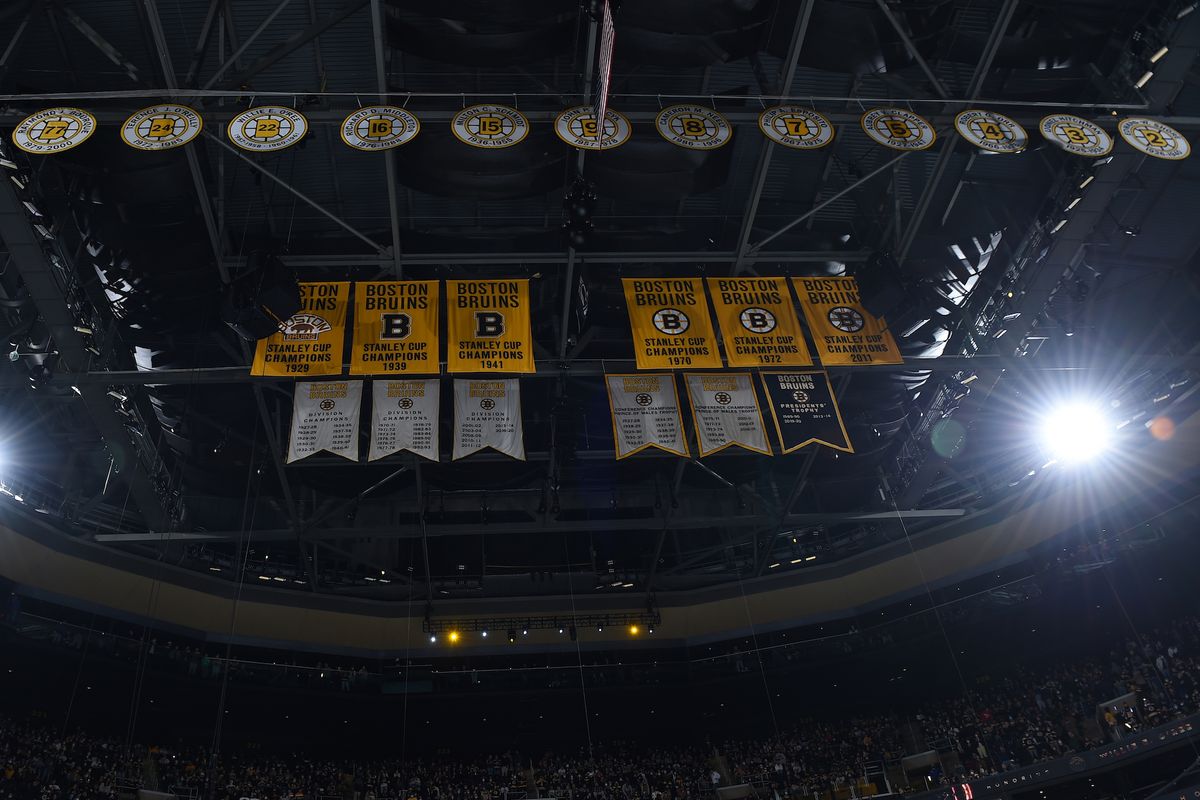 BOSTON, MA - JANUARY 18: The banner placed in the rafters for Willie ORee #22 of the Boston Bruins before the game against the Carolina Hurricanes at the TD Garden on January 18, 2022 in Boston, Massachusetts. (Photo by Steve Babineau/NHLI via Getty Images)