
Having covered the Red Sox on a full-time basis since 1989, I can state unequivocally: there's no such thing as a dull Red Sox season.
When the Sox are good, they're interesting. When they're bad, they're sometimes more interesting. And even when they're mediocre, they still manage to hold your attention.
But as we enter 2022, there's a good chance 2022 is going to be more interesting than most. Even against the backdrop of a lockout that currently threatens spring training and the regular season to follow -- we're exercising good faith here and assuming that the two sides figure things out on the labor front -- the franchise finds itself at something of a crossroads.
Here's why:
1. Chief baseball officer Chaim Bloom has completed a turnaround of the Sox in near-record time.
The Red Sox went from having the fourth-worst record in 2020 to the fourth-best in 2021, and any way you cut it, that's an impressive rebuild. A little more than a year after finishing in the division basement, the Red Sox qualified for the postseason for the first time since 2018, ousted the two-time division champion Tampa Bay Rays and seemed to be headed for the World Series before stalling in the ALCS against Houston, falling two wins shy of the pennant.
As important, the Red Sox became relevant again on the local landscape. Fenway was often packed again and filled with a decidedly younger fan base. I'm not one to join the chorus which suggested that the energy in the postseason last October was the best its ever been at the ballpark -- chalk that up to a classic case of recency bias -- but there were times when the noise and the atmosphere rivaled 2004 and 2013, and that's plenty good enough.
Now, however, is when it figures to get real interesting,
When Bloom took over, he cited the need to not only improve the product on the field (check), but also to restock a minor league system that had been plundered in exchange for the 2018 title (double check). The Red Sox don't yet have one of the handful of best farm systems in the game, but they have migrated to the Top 10 -- at least as evaluated by, among others, Baseball America and MLB.com. The system isn't quite back to the point where it was in the final days of the Cherington Administration, but it's at least headed in that direction.
That puts Bloom in a fascinating position.
Not only do the Sox now boast a handful of premium prospects at the top (Marcelo Mayer, Triston Casas, Nick Yorke, Jarren Duran), but they also have vastly improved depth. Not long ago, a good prospect coming over from another organization would immediately vault to near the top of the Boston system. That's no longer the case.
Assuming the Red Sox are in contention after the All-Star break -- barring something unforeseen, it's hard to imagine otherwise -- Bloom will be in position to be more aggressive at the trade deadline. That doesn't mean that he'd move Mayer or Casas or Yorke; but it does mean that he could include some other Top 10 prospects for the right piece that could put the Sox over the top.
As Bloom has admitted more than once, he's unlikely to ever be satisfied with the minor league system's inventory of talent; it can always be better. But not every prospect matriculates to the parent team and becomes a fixture. Sometimes, those prospects are utilized to acquire established players, Kyle Schwarber fit that bill last July. This summer, there could be multiple moves like that because the Sox are far better equipped to sacrifice multiple prospects -- either in separate deals, or grouped together in exchange for one huge piece (think: this year's version of Max Scherzer).
Naturally, how aggressive Bloom will be, that will be determined by other variables. Will one (or two) players turn the Red Sox into World Series favorites? What does the rest of the American League look like? And then there's the role that injuries could play.
Those will be answered at the proper time.
But the possibilities are limitless. The foundation has been strengthened. Now's the time to go about the work of completing what's already been built.
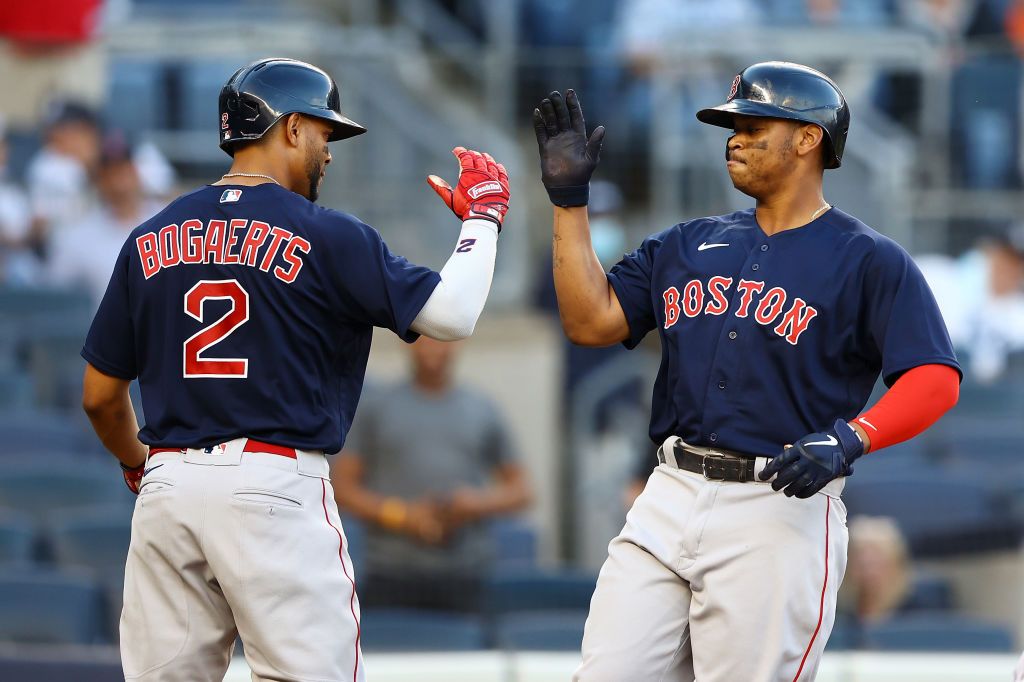
2. The left side of the Red Sox infield faces an uncertain future.
One of the most important questions for 2022 could well be answered before the start of the regular season: Can the Red Sox get Rafael Devers to sign a long-term contract extension?
Typically, these deals get done toward the end of spring training or soon after the start of the season. Chris Sale was extended as the team prepared to leave Fort Myers in 2019, while Xander Bogaerts' deal was completed four games into the start of the season, about a week later.
Getting a deal done with Devers is critical -- both in terms of having Devers be part of the team's nucleus for the next six, seven or eight seasons, but also in restoring the franchise's credibility with the fan base.
To the first point, Devers is one of the game's premier hitters. It seems impossible that he's just 25, and there's at least a chance that he continues to improve his game. It's hard to make the case that anyone in the game is on the same plane as Washington's Juan Soto from an offensive standpoint, but surely Devers is in a class just below the Nats' slugger.
The team's inability to extend Mookie Betts -- and his resulting trade to the Dodgers -- was a black mark on the franchise. No team with the Red Sox' resources should ever be in a position where it's dealing off a homegrown superstar. The Red Sox aren't the Kansas City Royals or Milwaukee Brewers. They're flush with cash and charge among the highest ticket prices in the game; in return, the fan base expects it to act like a big-market team.
The club got something of a mulligan on the Betts debacle. But it's one thing to grudgingly accept one star not being extended; it's another altogether if the scenario repeats itself with Devers. Failing to get Devers done -- preferably in the 2022 calendar year -- will send the wrong message: that the Sox are more interested in controlling spending than they are putting the best possible team on the field.
If that's the case, the fan revolt will be swift and loud. The brand will suffer irreparable harm.
While they work at resolving the Devers situation, there's also the matter of Bogaerts, who can opt-out of his deal following this season. When you look at the contracts that have been handed out to other shortstops ($341 million to Francisco Lindor; $325 million to Corey Seager), it's impossible to believe that Bogaerts is going to be satisfied with earning "just'' $20 million annually for the rest of his current deal.
How much more is Bogaerts worth? And can he continue at shortstop, or must the Red Sox start thinking of him at another position?
These are not easy questions to answer, especially when you consider Mayer won't possibly be ready by 2023. For that matter, moving Bogaerts to second base would result in Yorke being blocked at his best position.
Do the Red Sox want to avoid having two players earning $30 million annually? Because it's possible that retaining both Devers and Bogaerts on the roster would mean that kind of commitment.
No easy answers here. But that doesn't mean they don't have to be addressed.
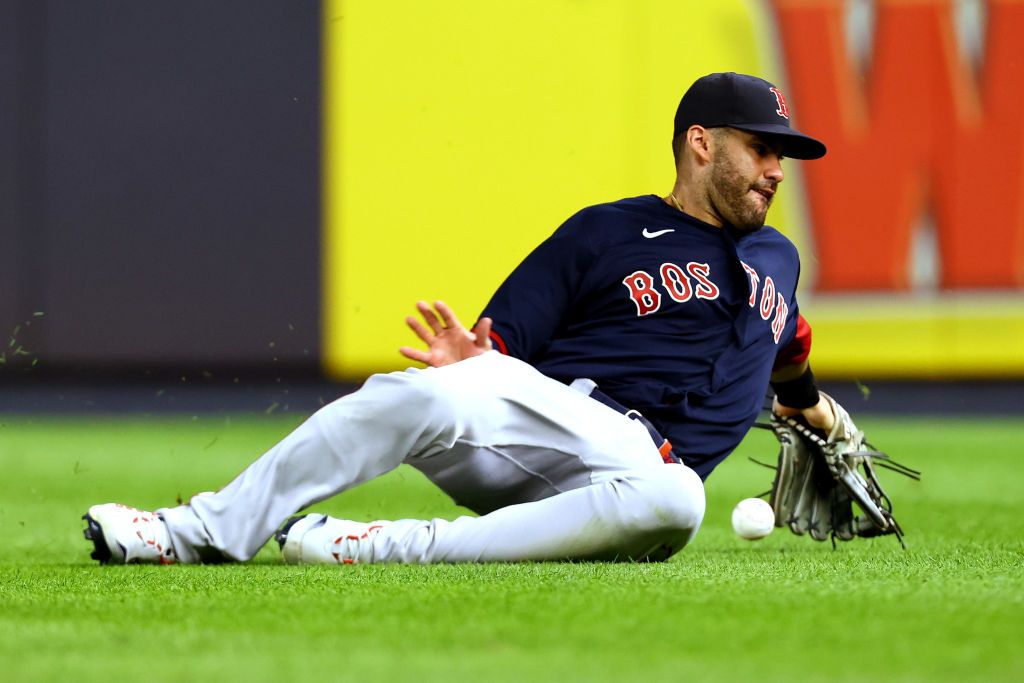
3. The 2022 Red Sox will be a team hurtling toward transition.
In addition to the opt-out for Bogaerts, Nathan Eovaldi, J.D. Martinez, Kiké Hernandez and Christian Vazquez are all headed to free agency at season's end. That's a lot of talent potentially heading for the door, representing a big power bat (Martinez), the team's best starting pitcher last year (Eovaldi), the offensive spark plug who supplied superb defense at a key spot (Hernandez) and the starting catcher (Vazquez), for whom there's no obvious in-house replacement.
In the unlikely event that the Sox aren't in contention, that group will give Bloom plenty of deadline chips to trade, but that's a scenario that no one wants since it would mark the 2022 season as a big step backward.
Will the Red Sox be aggressive in their effort to re-sign any of the players? Martinez, while still productive, has shown some signs of regression, and we already know that the Sox were interested in trading for a catcher (Jacob Stallings) to replace Vazquez, so it's hard to imagine either being offered extensions. Hernandez and Eovaldi, however, are still in their prime and would be worthy of retaining.
Still, how Bloom treats these potential exoduses will be fascinating. Will it spur him to be more aggressive, knowing that an era is coming to a close? Will it result in a big foray into free agency after the season, thanks to all the payroll that will be cleared?
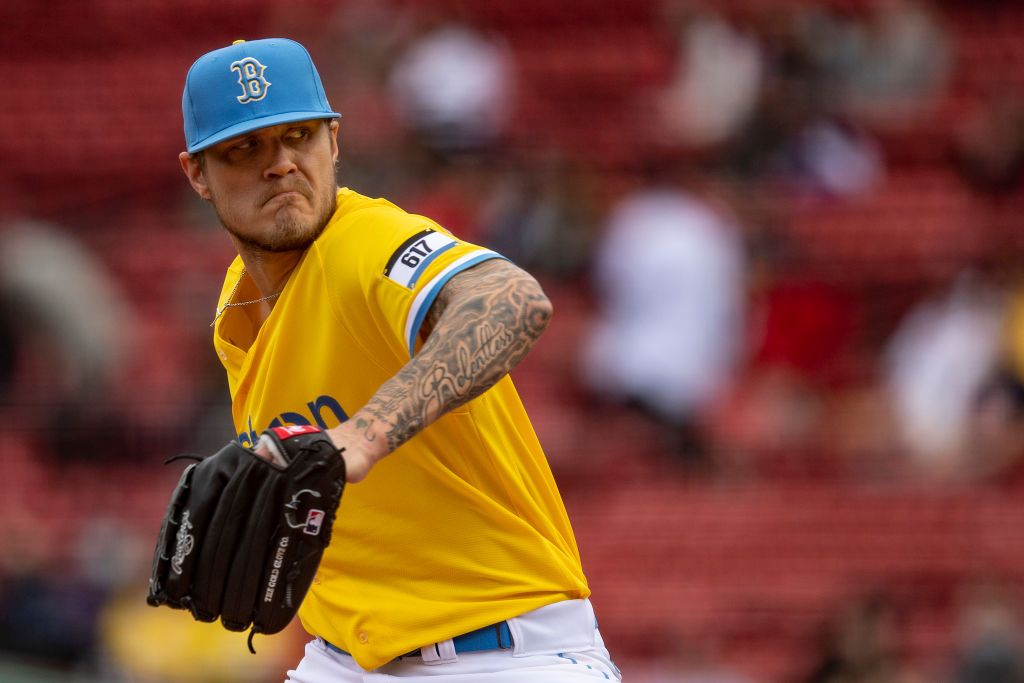
4. The single biggest failing of the franchise in the last dozen or so years has been its inability to develop quality starting pitching.
Last year saw the emergence of two young pitchers -- Tanner Houck and Garrett Whitlock. (Whitlock wasn't developed by the Red Sox per se, but they did oversee his successful transition to the big leagues).
More will be expected of both pitchers this season. Will both Houck and Whitlock make the successful jump from utility pitchers to reliable starters?
The added depth represented by Rich Hill, Michael Wacha and (eventually) James Paxton provides for some insurance, and might allow the Sox to slowly integrate Houck and Whitlock into the rotation. Or, it may be that the organization keeps them in hybrid roles, focused on providing multiple innings at a time. But eventually, the Sox are going to want to discover whether the duo can succeed as full-time starters.
Meanwhile, a number of pitching prospects who might otherwise have been ready for their major league debuts will, instead, be finishing their recovery from Tommy John procedures. Bryan Mata and Thaddeus Ward won't be ready to contribute anywhere until mid-season at the earliest.
Finally, there's the uncertain status of Noah Song, whose Naval commitment should soon be winding down. Does Song wish to resume his baseball career? And if so, how long might it take for him to make up for lost development time?
There are others on the horizon, too, including Brayan Bello and Jay Groome. They, too, need more time in the minors, but with Eovaldi on his final year and Sale approaching his mid-30s, the Red Sox need to find building blocks for their next starting rotation.
Hill, Wacha and Paxton are mere placeholders in the big picture. Eventually, the Red Sox are going to need to rely on their development system to provide them with quality (and cost-controlled) young arms.
The results -- as viewed with the improvement of Bello and others -- are encouraging, but the Sox have been fooled before. Remember how Henry Owens was going to be a mainstay in the rotation for years to come?
Part of what attracted the Red Sox to Bloom was the success that his former organization, the Tampa Bay Rays, enjoyed in developing young starting pitching. Bloom has put programs in place at the minor league level. Soon, we'll need to see that paying dividends in the big leagues.
Seeing tangible results in the rotation from Houck and Whitlock will be an important first step. Seeing evidence that others are ready to soon follow in their footsteps will be critical, too.