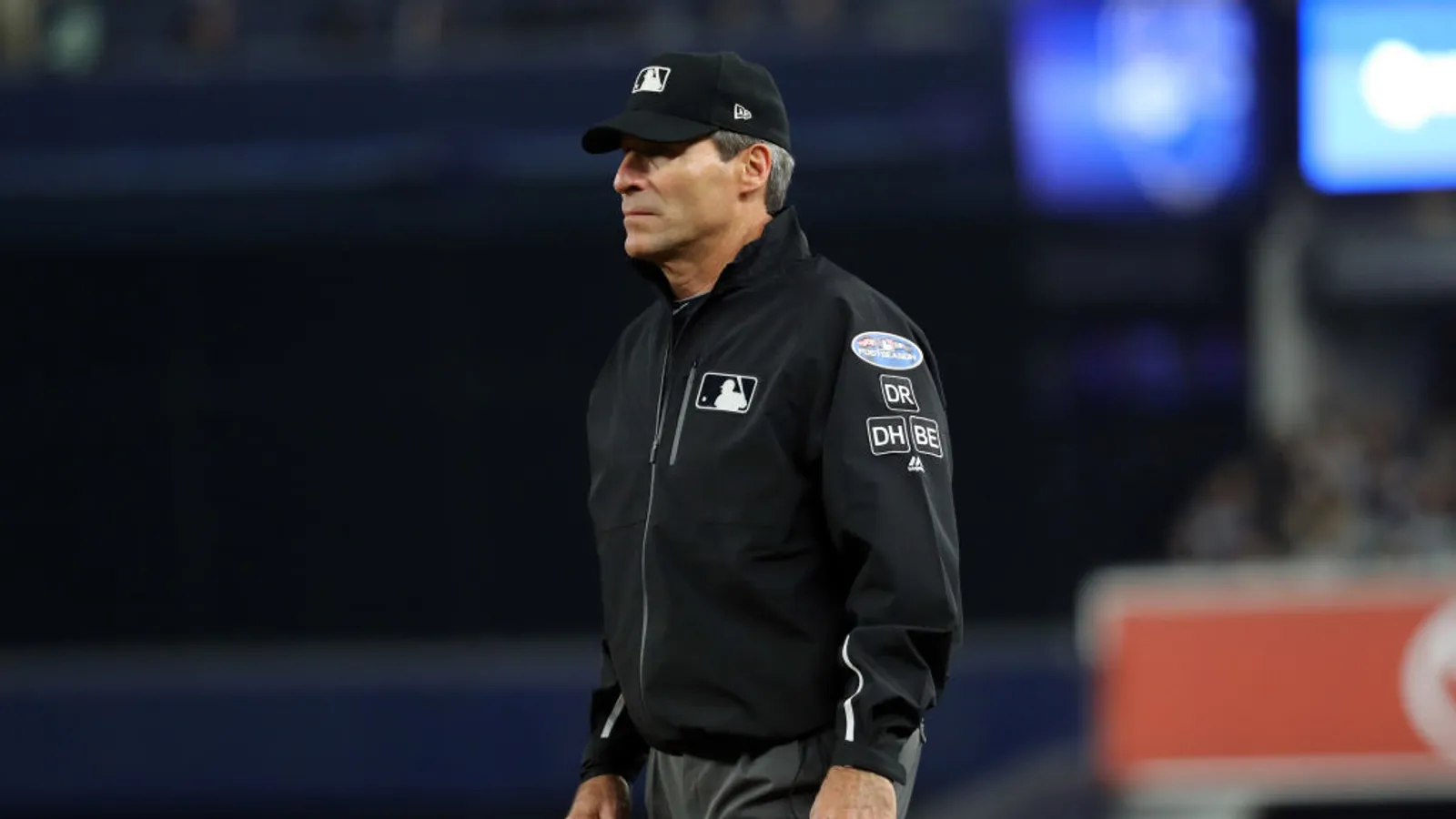
The last few weeks have not been kind to umpire Angel Hernandez.
In Toronto two weeks ago, he was roundly mocked -- by players, fans and media alike -- for missing an obvious strike, right over the heart of the plate, in a game between the Yankees and Blue Jays.
Replays of the pitch -- and the reaction of players on the field -- were repeated endlessly on social media and TV.
Then, Tuesday night, Hernandez drew the ire of both the Red Sox and Texas Rangers -- in the same half-inning. First, fellow umpire Vic Carapazza felt duty-bound to eject Andrew Benintendi for badmouthing Hernandez as he walked to the dugout. Then, minutes later, Hernandez enraged the entire Texas dugout by disallowing a replay challenge, claiming that Rangers manager Chris Woodward had exceeded the 30-second time period to launch a review.
The missed pitch could be chalked up to human error, a mistake any umpire could make (though Hernandez seems to make them more frequently than others). The decision to cut off Woodward's replay challenge, however, speaks to a certain institutional arrogance on the part of Hernandez. Umpires routinely warn managers that their time is close to expiring in order to hasten the replay process; Hernandez didn't do so, then unilaterally cut off the ability to challenge.
So, why does Hernandez get away with his poor on-field performance and demeanor? The answer is a complicated one, involving, among other things, the current umpires' contract with Major League Baseball, Hernandez's pending lawsuit against baseball and other factors, industry sources claim.
Thanks to the current labor deal between the umpires' union and MLB, it's become virtually impossible for umpires with Hernandez's tenor to be disciplined, much less dismissed.
Umpires are graded on their work on the bases and behind the plate, with their performance on balls and strikes graded against StatCast, which determines the accuracy of their calls.
An umpire who falls below a 92 percent grade on balls and strikes is subject to probation. But a source with knowledge of the situation said that currently, no umpire -- Hernandez included -- has graded out below 96 percent accuracy.
The introduction of replay has provided another evaluating tool for MLB supervisors, though it's not known what Hernandez's history is here, or his rate of overturned calls.
Still, the absence of any empirical data to suggest that Hernandez is performing below standards means he can't be disciplined or reprimanded.
Further complicating matters is Hernandez's lawsuit alleging that, as a minority -- Hernandez is Cuban -- he was discriminated against when it came to postseason assignments and becoming a crew chief. (Ironically, Hernandez is operating this year as an "interim'' crew chief due to a season-ending knee injury to Jerry Meals and last year was selected to work the Division Series). The title of crew chief, according to a source, is worth another $100 daily.
While the lawsuit is awaiting resolution, MLB has its hands tied.
Hernandez, 57, has plenty of reasons to keep umpiring. Now in his 26th year, he earns a base salary of $400,000; with 30 years of service time, he would jump to $430,000, the current top step on the pay grid. The base salary does not include the umpires' annual share of MLB's current TV deals, worth another $30,000 each. And, of course, there are the bonuses earned for postseason assignments, which are worth tens of thousands more, depending on the event.
(Nominally, postseason umpire assignments are based on merit, and given Hernandez's reputation, players, managers and executives are perplexed by Hernandez's presence on the October stage. But another source suggests that, more than anything, MLB values experience for its playoff and World Series games, helping to partly explain Hernandez's presence in the postseason.)
Thanks to the protection offered by the union contract, it's virtually impossible for an umpire to lose his job. Major League Baseball began to take a harder line against the umpires during Sandy Alderson's tenure as executive vice president of baseball operations from 1998-2005. Alderson asserted himself more fully in dealing with umpires and helped ensure a less confrontational approach by the umps on the field.
But since he left the post -- umpires now come under the jurisdiction of chief baseball officer Joe Torre and senior vice president of baseball operations Peter Woodfork, who once worked in the Red Sox front office under Theo Epstein -- the commissioner's office has appeared less assertive with its umpires.
There are two avenues of possible relief for Major League Baseball.
The current umpires' contract with MLB expires this winter, and the Commissioner's office could push for tougher language in the next pact to make umpires more accountable for their on-field performance and interactions.
Further, it's expected that the retirement benefits under the new deal -- with a more generous pension and health benefits for retirees -- could induce Hernandez to call it a career. Baseball officials are already braced for a slew of its veteran umpires -- perhaps in double digits -- could retire before the start of 2020, paving the way for the hiring of many new, younger ups currently working in the minors or as fill-ins among its 78 full-time slots.
Until then, Hernandez remains on field, largely unaccountable and untouchable.
____________________
____________________