
BRIGHTON -- If you ask Joe Mazzulla himself, he was never a great basketball player. By NBA standards, that may be true. But from a normal person's perspective, it's anything but.
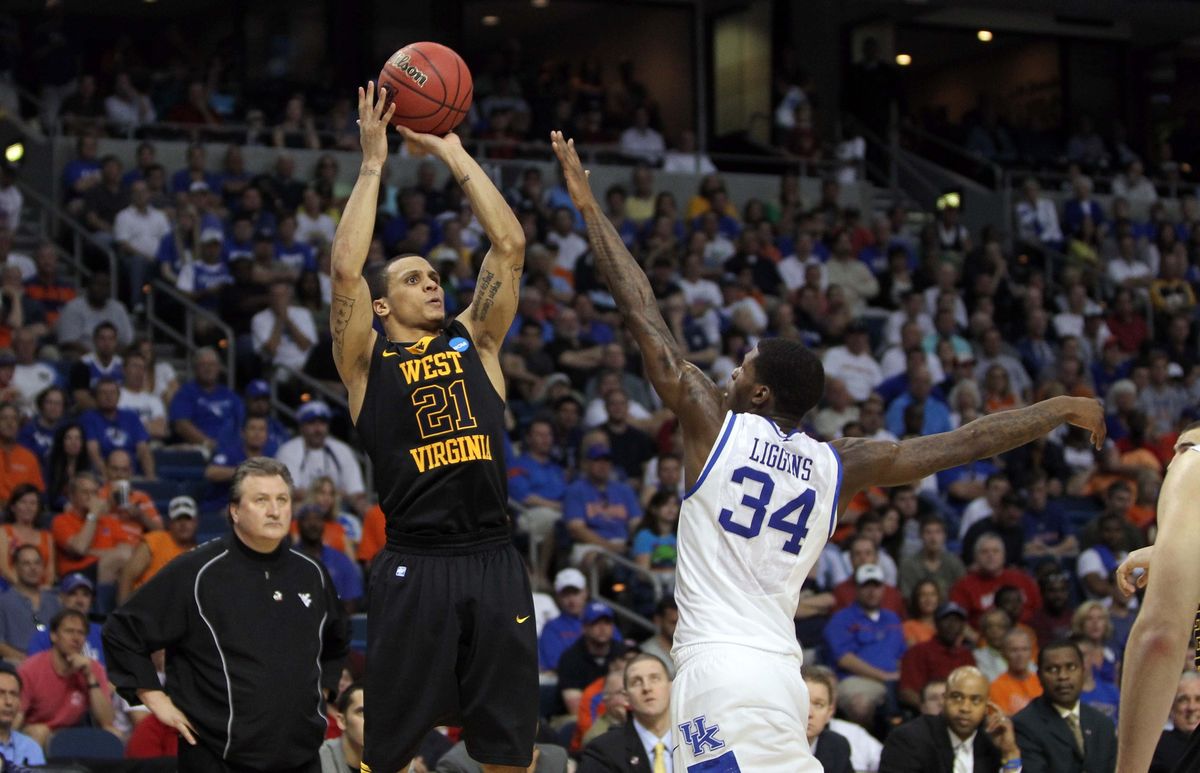
Mazzulla was a regular rotation piece at West Virginia for five years (four plus an injury-ended junior campaign). He earned 2009-10 All-Region honors. He even helped the Mountaineers take down John Wall and DeMarcus Cousins in the 2010 NCAA Tournament.
By all accounts, Mazzulla was a phenomenal basketball player. A defensive menace. A true pest on the basketball court. But there's one thing he could never really do: Shoot the ball.
In his four (and some change) seasons of college ball, Mazzulla attempted 92 3-pointers. He made 27 of them. That's 29.3%.
So, it's more than a bit ironic that his Boston Celtics have now become one of the preeminent faces of the NBA's 3-point revolution. Obviously, Stephen Curry and the Golden State Warriors popularized the trend. But Mazzulla's Celtics have taken things to another level.
Mazzulla took over as head coach of the Celtics in 2022-23. His four seasons in charge rank first (2024-25), second (2022-23), third (2023-24), and fifth (2025-26) all-time in regard to total 3-pointers attempted by an NBA team.
The only team that breaks up the Celtics' chance at owning the top four is the 2017-18 Houston Rockets. Only six teams have ever attempted over 3,500 threes in a single season. The Mazzulla Celtics account for four of them, including a whopping 3,955 attempts in 2024-25. For context, second place (2022-23) clocks in at 3,492.
This style of basketball has drawn plenty of criticism. Many fans hate how 3-pointers have taken over the game. I would hazard a guess that around 40% of the people reading this are doing so in disgust.
Yet the Mazzulla Celtics also own four of the top five all-time slots in total 3-pointers made. And Boston has won at least 55 games in each of those seasons.
Just for some context -- since 55 wins may get lost on some Celtics fans who are used to greatness -- there have been 222 55-win seasons in NBA history. Out of 1,723 possible seasons. That's 12.9%. It's hard to win 55 games.
© Kim Klement
Joe Mazzulla
Regardless, objectively speaking, the 3-point shot has helped the Celtics win games. That doesn't mean it's perfect. Boston could certainly stand to improve its other ways of scoring. Have some backup options. Becoming too reliant is dangerous, and the Celtics have dealt with that reality for the past two seasons.
But still, the 3-ball has helped Boston become one of the most stable teams at the top for the last four years (and beyond). But where does it come from? Obviously, Mazzulla's basketball philosophy involves the 3-point shot, but he's not a shooter himself. How have the Celtics gotten so good at shooting? How do all their players improve? How does 3-point development help other areas of the game?
"That'd be a good question for Craig," Mazzulla said before practice on Tuesday. "He's better at that than I am. I have no idea. I couldn't shoot it, and I got a ton of reps up all the time."
Craig Luschenat is the Celtics' head of player development. He's from Andover, Massachusetts, and spent a few seasons with the Maine Celtics before moving to Boston as a player development coach. He was promoted in 2024, midway through Mazzulla's tenure.
If you look on social media, you'll see Luschenat in a thousand clips. For years, he primarily worked with Payton Pritchard and Sam Hauser. "My first couple years, I worked with DJ [MacLeay], and then from year three until this season, it was working with Craig." That puts the timeline at around 2023 to the present day for Hauser.
When the Celtics drafted Baylor Scheierman, he joined that group. Shooting workouts. Four-person film sessions in a side room at The Auerbach Center. Constant 3-point development.
After shooting 31.7% from deep in his rookie campaign (albeit in just 31 appearances), Scheierman jumped to 39.9% on 3.2 attempts last year in 77 appearances.
But Luschenat isn't working with those guys anymore. Hauser is working with Da'Sean Butler and Ron Harper Jr., Pritchard with God Shammgod Jr. and Mike Conley, and Scheierman with Tyler Lashbrook and Hugo Gonzalez. Everyone has moved on.
Luschenat's new assignment? The rookies. Dillon Mitchell and Chris Cenac. They have officially entered 3-point shooting school. Celtics shooting school.
Obviously, Luschenat does more than 3-point workouts. Mitchell and Cenac aren't taking 1,000 threes a day and then going home.
"Craig works with them on more than just shooting," Mazzulla said. "I think it's a developmental piece, really a skill-acquisition piece, and I think he does a great job of, that goes beyond shooting. So, the other stuff that they're working on is additionally. Dillon's ability to be a matchup situation to where he can kind of handle, or he can play off the ball, or his screening is really important.
"And I think you've seen Chris really playing alongside a five, playing by himself, being a great shot-blocker in pick-and-roll versus being a shot-blocker in help. It's just two different situations. So, I think just with different situations where we think they could be impactful for us, kind of simulating and working on those. And Craig does a good job of that."
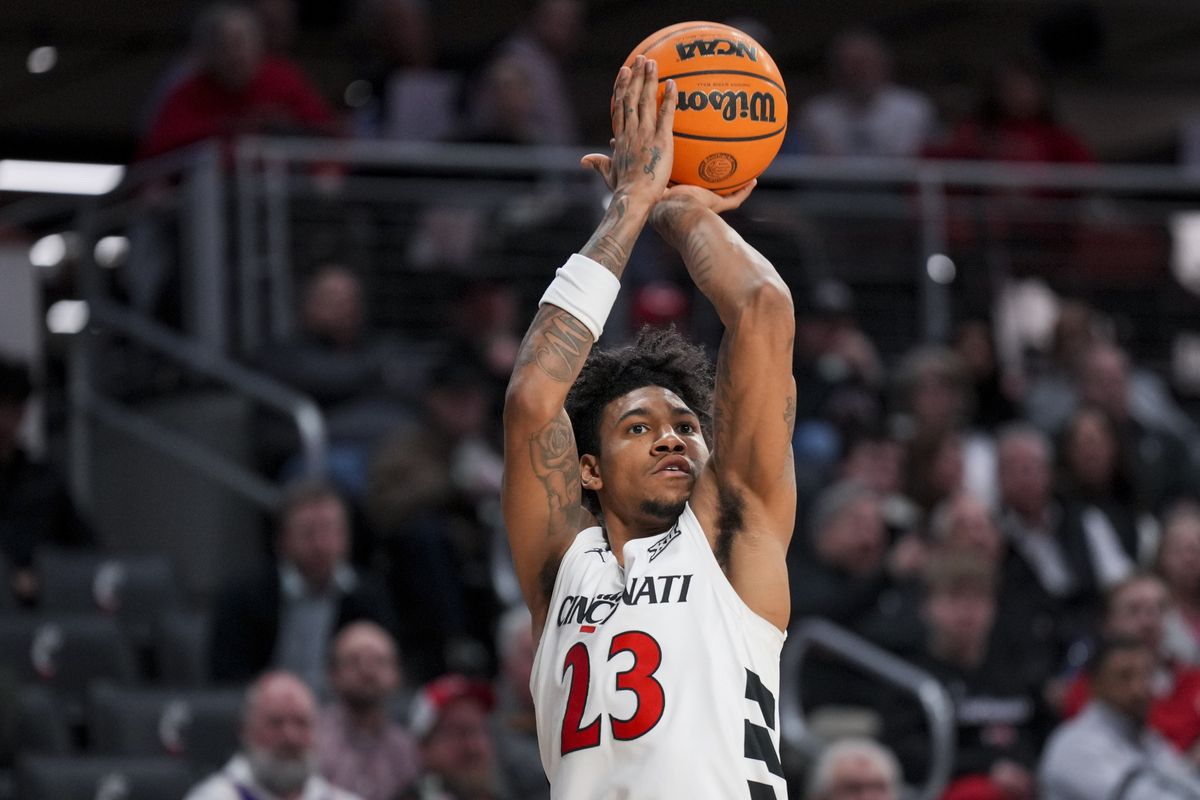
But the 3-ball has certainly been a focal point for the two youngsters. In his lone season at Houston, Cenac (19 years old) shot 33.3% from deep on 2.4 attempts a night. Mitchell (23) shot 1-for-15 from deep at St. John's last season.
© Aaron Doster
Dillon Mitchell
Neither will be entering the NBA as a bona fide shooter. If anything, both are on the opposite end of the spectrum. Add even a below-average jumper to Mitchell's game, and he may have been a first-round pick. Anything more, and you could be looking at a lottery-level talent.
Now, every day at practice, they're out there shooting. "It's been really good," Mitchell said. "And I think the biggest thing is just the consistency of it. Every day, no matter what's going on, we make sure to get our work in. Even on long days, we try to get something in, whether it's 15 minutes. But it's been really good, just working on the fundamentals, working on the form, shooting on the way up, just the confidence. But it's been good. It's been consistent."
Obviously, Luschenat is not a one-man team. Anything but. Boston has built out one of the most impressive, skill-diverse coaching staffs in the NBA. And they come from everywhere.
Butler played with Mazzulla at West Virginia. Shammgod is Fairmont State's all-time leader in assists and steals. Lashbrook built his way up through the film room and was the head coach in Maine for one season. He and MacLeay, a four-year player for Bucknell, interviewed for head-coaching positions this summer.
Tony Dobbins won three DPOY awards in France's top league, and he was a finalist for a head-coaching spot this offseason. Phil Pressey played for the Celtics and is heading into his second year leading Maine. Matt Reynolds has been in Boston for 11 years and heads up the team's coach's challenge process.
Sam Cassell is a one-time All-Star and three-time NBA Champion. Nana Foulland played three years of international basketball after an award-studded four-year career at Bucknell. Ross McMains is a former NZNBL Coach of the Year. Steve Tchiengang was a four-year rotation player at Vanderbilt. Amile Jefferson played at Duke with Jayson Tatum. Alex Merg links Boston's analytics department with the coaching staff.
NBA players. High-level college guys. International award-winners. A wide array of coaching backgrounds. If you want perspective on an area of basketball, the Celtics' coaching staff likely has it.
Luschenat may work closest with the 3-point shooters, but everyone has a hand in development. For Hauser, it was MacLeay who started the process.
"So, I think early on, D-Mac just stressed, to get on the floor, you're gonna have to obviously make shots," Hauser said. "How can you become a better shooter, even though you're already a good shooter? So I think that's something Craig really kind of took to the next level was shooting from different footwork, shooting from different ranges. I'm coming off a screen to my left, to my right. So, he's pretty good at switching things up each and every day to help you become a better shooter, even when you think you might already have that kind of figured out."
That last tidbit is the most interesting. Different footwork. Different ranges. Switching things up. Part of the reason the Celtics are such a great shooting team is that they don't let their shooters stay comfortable in practice.
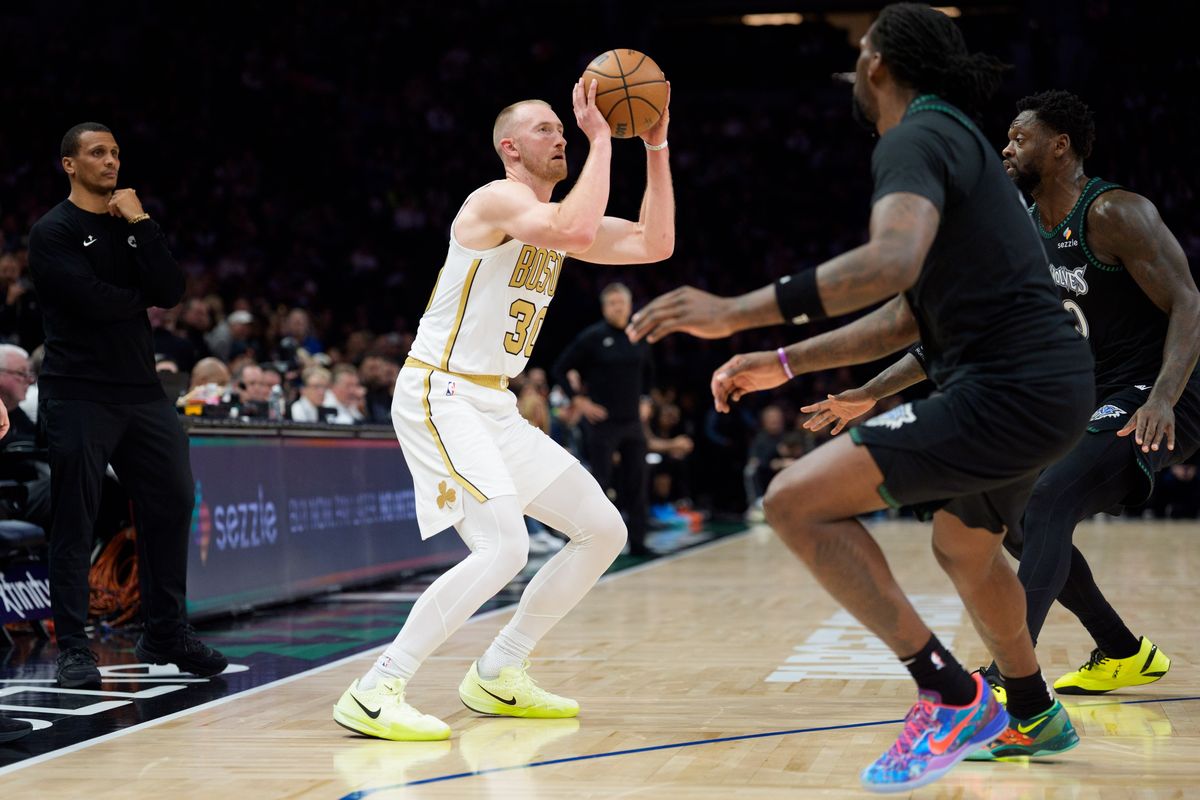
"When you're in a game, how often are you going to get the same shot? Like the same exact shot twice in a row? It's pretty much never," Hauser said. "So, that's kind of what our workouts were tailored towards was like, how can we shoot a different a different shot every single shot?"
© Matt Blewett
Sam Hauser
Hauser will sprint around the 3-point line and attempt shots on the move. Before practice on Tuesday morning, Butler had him