
BRIGHTON -- Media Day is always a bit awkward. Reporters sit in a room for hours as the Boston Celtics hoist player after player onto the podium at the front of the room.
On Monday afternoon, Brad Stevens was first. Joe Mazzulla followed. Then came a long lineup of players. It's quite the endeavor, and most of the answers feel a bit more media-trained than usual.
Post-game, players are feeding off the adrenaline rush of the game. The locker room allows for more of a conversation and less question-peppering. Even scrums are a bit more informational, as the lack of a stage and microphone creates a less formal environment.
Think about it. The Celtics have been in the gym all summer. They haven't stopped doing their jobs, and reporters haven't stopped theirs, either. The interactions just halted. So, when Media Day comes around, players have already had months to think about and prepare their answers.
Most questions are relatively generic, because that's what the schtick is. What have you been up to this summer? What's it been like hanging out with new teammates? How are things going to look in the post-Jaylen Brown world? Okay, that last one is pretty specific to this year's situation.
It's hard to glean much from Media Day, just like it's hard to get much information from an introductory press conference. Everything feels so corporate. So predictable. So planned.
In a way, it's a perfect chance to knock the question-asking rust off. Because with how media-ready the players are, it can be difficult to get an answer that actually digs deep. That actually reveals something in the realm of the unknown. And that should always be the goal: To learn something.
So, I went into Media Day with one goal in mind: Figure out as much as possible about what these Celtics will look like on the court. But what began as a quest to learn about basketball slowly shifted into a blend of on-court expectations and team mindset.
The Celtics are famously tight-lipped. Stevens gives great answers, but he's always subtly playing the game. Mazzulla plays the game in the open. Most players lean on their media training and rarely share much about what's going on behind the scenes.
But if you read between the lines, Media Day provided more information than usual. More than just Mitchell Robinson's delightful personality finally being unveiled to the Celtics faithful.
First was Stevens. Assessing the link between the financial world and the on-court world in decision-making. He talked about the same short-term versus long-term debacle that he mentioned in his post-Brown trade presser, but he also dropped a gem:
"It's not just who you bring in; it's also what guys can step into new roles and what guys can do to take the next step in their ability to impact [winning]," Stevens said. "And oftentimes that happens because you're younger and you get better; sometimes it happens because there's movement within the roster that allows for more opportunity.”
What does this reveal? What "unknown" does this actually provide a deeper look into? It connects to the Brown trade and the other moves Boston made this summer.
Clearly, Boston sees more in its players than the outside world. 'Sometimes, there's movement within the roster that allows for more opportunity' is Stevens-speak for 'We believe we have players capable of doing more than their past roles have entailed.'
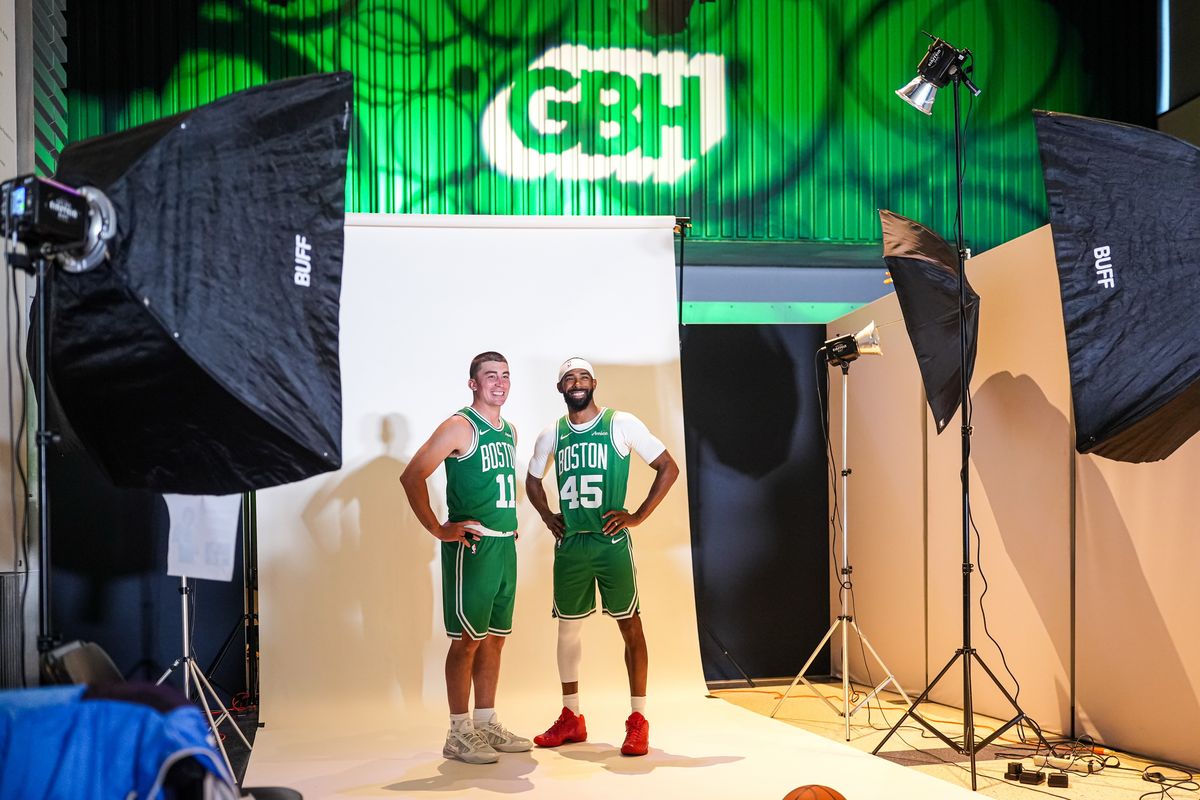
© David Butler II
Payton Pritchard and Mike Conley
Payton Pritchard could take on a larger role. As could the young wing group: Baylor Scheierman, Hugo Gonzalez, Jordan Walsh, and Ron Harper Jr. The Celtics see something in their depth. They think they can do more than they've already been doing.
And perhaps just as importantly, they don't just see depth as an advantage, but rather an unavoidable necessity. If you want to win in today's NBA, you need depth.
"I think that most coaches would tell you, especially when I was in college, would be like, 'I'm good with seven or eight guys, and we can figure out how to navigate it with the rest,' Stevens said. "But that's just not the way you can win in this league. So, I'm really interested to see how the depth not only is utilized as an advantage, but is also like, there's going to have to be some sacrificing at that level, for guys that have tasted a little bit of success at different times throughout the year."
Every single player on the Celtics' roster is going to get a chance to play. That's how Boston rolled last year, and that's how it's going to roll heading into this season. The Celtics truly roll 16 deep right now.
Only five can be on the court at a time. Usually, only around 10-12 in a game, and even that's stretching it. So the Celtics' staff has from now until October 20 to figure out how to most effectively utilize those 16 (soon to be 17) players.
"How can we take advantage of the strengths and the talent that we have?" Mazzulla said. "How can we take advantage of the offseason and the work that the guys have put in to become better players, and turn that into an offensive and a defensive philosophy? I don't know that I have that answer on day one. I think your team naturally grows, and you're always learning about your team.
"And so, I think that's the point of training camp. Is, by the end of training camp, can we have a clear establishment of what our identity is as a team and what we look like on both ends of the floor? And then develop new ones as the season goes on based on the challenges that the season presents.”
It's impossible to know how a team will