
It's been a contentious summer in the Boston Celtics world. Major changes were made. Jaylen Brown is a Philadelphia 76er. LeBron James joined him shortly after, rubbing salt in the wound.
And all of that came just months after the Celtics blew a 3-1 lead to those same Sixers. Needless to say, the organization's future was called into question. Yet, in reality, Boston's plan is simple.
All the stats, projections, and numbers in the world cannot erase the sting of trading a guy like Brown. But when you take a step back and push emotions aside for a moment, it becomes clear: The Celtics are diving head-first into Mazzulla Ball.
For some, that may sound like a nightmare. A barrage of 3-point shots chucked from five feet behind the arc with Joe Mazzulla grinning like The Joker on the sideline. That's the reputation Mazzulla Ball has garnered over the past few years.
However, while an affinity for the 3-ball and analytically sound basketball has remained, Mazzulla has adjusted how he's played a lot based on his roster. The 2024 Championship Celtics played much differently than the 2026 squad, stripped down by the second apron.
Boston cannot repeat its 2024 style because building a team with that array of talent is no longer possible under the current CBA. It's too expensive. So, instead, Boston seems to be trying to form an upgraded version of last year's team. One that doubles down on everything that worked, while cutting out some of the things that didn't.
In 2024, the Celtics' offense was very iso-heavy. Jayson Tatum and Brown picking on mismatches, kicking out to open shooters. The Celtics wanted to capitalize on their talent advantage as much as possible. Jrue Holiday and Kristaps Porzingis post-ups. Holiday and Al Horford in the corner. Porzingis pick-and-pop threes.
Defensively, it was similar. The Celtics didn't send much help. They lived with one-on-one matchups because they trusted their defensive personnel. They didn't want to take risks because they felt they had an inherent advantage on defense, so doing so would only give opponents more room to succeed.
Last year, Boston didn't have those luxuries. The Celtics' massive payroll was slashed, forcing young players and unproven guys into larger roles. So, Mazzulla and his staff adjusted accordingly.
On offense, they set a ton of screens. Neemias Queta and Luka Garza flew around like madmen trying to help create space. Offensive rebounding became a major focus because Boston had guys who could crash the boards. And perhaps most importantly, the Celtics were very stingy with the basketball. Turnovers were the enemy.
Meanwhile, on defense, the Celtics took more risks. Without the Holiday, Horford, Porzingis, and Luke Kornet-led foundation, they had to get creative. Mazzulla encouraged his guys to try to force more turnovers, helping over in spots where they may not have in years past.
That's Mazzulla Ball. That's the style the 2026-27 Celtics are going to try to replicate. The 2024 Celtics are gone. A thing of the past. The 2026 Celtics set the blueprint. And now, the 2027 Celtics are trying to maximize said blueprint.
© Petre Thomas
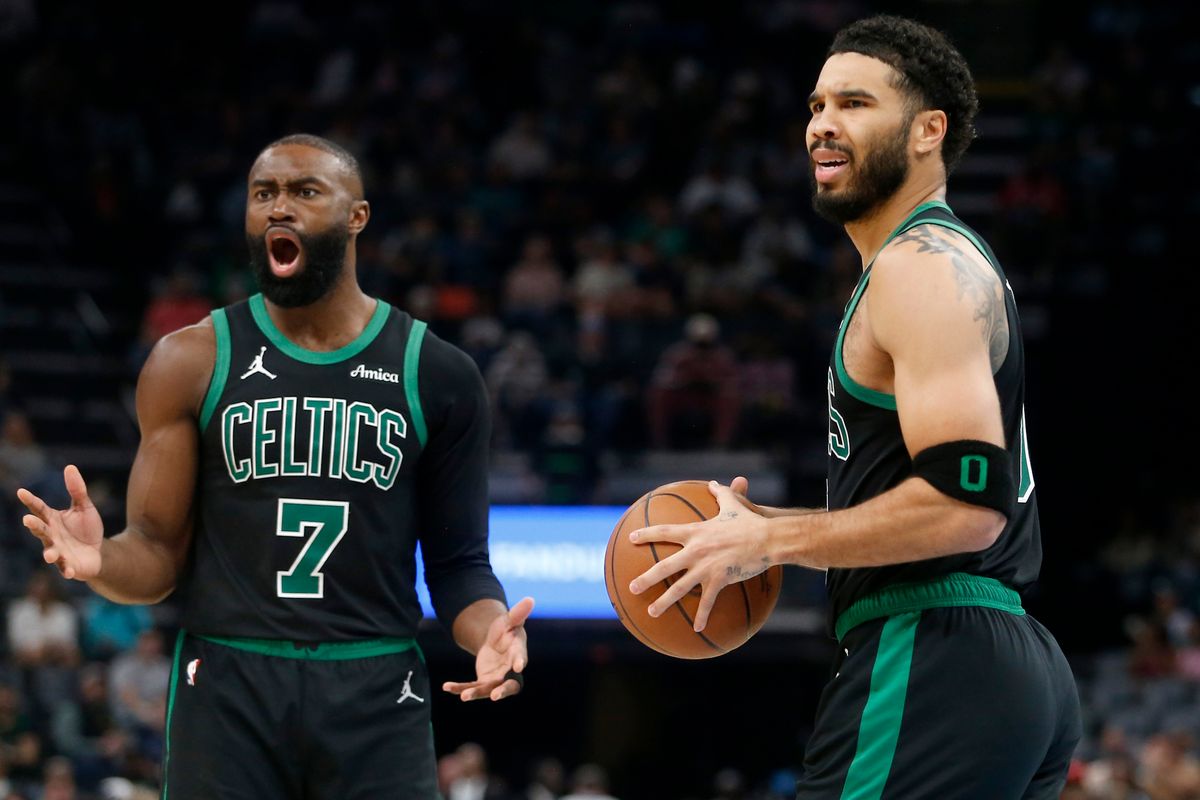
Jaylen Brown and Jayson Tatum
Brown is one of the best basketball players in the world. An elite bucket-getter and impressive point-of-attack defender when he locks in, his skills are perfectly built to be at the forefront of a highly competitive basketball team.
Last year, that's what the Celtics needed. With Tatum sidelined, they needed a guy who could spearhead the offense. A guy who could put the ball in the basket and create space for others.
But at his core, Brown is not a Mazzulla Ball player. Because most of the major goals of Mazzulla Ball are not strengths in Brown's game. They're weaknesses.
Trading Brown was partially salary-related. Boston probably didn't want to extend him. But with Tatum back in full force, the Celtics are already going to have a high-usage guy. Having two could work if both were turnover-conscious, possession-additive, elite offensive creators. Brown does not check those boxes. Thus, the full-on shift into Mazzulla Ball.
Databallr is a great website for tracking various advanced stats. Though they aren't the end-all, be-all, when paired with actual statistics, they paint a pretty clear image.
For the sake of a fuller picture, let's look at some crucial Mazzulla-Ball stats from the past two years (since Tatum missed most of this past season, and not including Brown's opportunity to play with the elite spacing of Holiday, Porzingis, and Horford would be disingenuous).
Turnovers are the name of the game. On one end, not turning it over, and on the other, forcing them. It's a core principle of Mazzulla Ball.
Tatum and Brown rank fairly similarly when it comes to creating turnovers. Per Databaller's own stats (which account for more than just steals recorded by NBA.com), both have averaged 1.6 takeaways per game for the last two years. Tatum has a stop percentage of 2.1%, while Brown is at 2.0%. (Stop percentage, per Databallr, "totals the plays that most clearly end possessions for the defense: steals, offensive fouls drawn, and blocks that the defense recovers. It is a high-level finish-the-possession stat.")
The same can be said for their rFTOV (relative forced turnovers per 100 possessions), which is just how many turnovers they force per 100 possessions compared to league average. Tatum is at -0.3, Brown at -0.2. By the raw counting stats, Tatum has averaged 1.6 stocks (steals + blocks) for the last two years, and Brown has averaged 1.4.
But the other end is where Tatum separates himself. Tatum's 2.8 turnovers per game are better than Brown's 3.1, and considering Brown's number jumped to 3.6 when played in a higher-usage role, it's a fairly large gap.
The real difference comes in non-passing turnovers, however. Turnovers committed not in the act of passing (i.e., bad-pass turnovers, stolen-pass turnovers, etc.). Here is the stat, once again, as defined by Databallr:
"sTOV%: Non-passing turnovers as a share of scoring attempts. sTOV% isolates turnovers from scoring actions — travels, offensive fouls, lost handles — as opposed to bad passes. It measures how often a player gives the ball away while trying to score."
Over the last two years, Tatum's sTOV% is 6.5%, which ranks in the 44th percentile in the NBA. Not great. For comparison, Shai Gilgeous-Alexander's 4.4% is in the 92nd percentile. As for Brown, he's at 9.4%. That's in the ninth percentile. Brown turns the ball over a lot in bad spots.
For Mazzulla Ball, that's a nightmare. It's not necessarily about creating as many possessions as possible. Boston ranked dead last in total possessions last season by a mile. But rather, it's about controlling possessions. Having more than the opponent. The Celtics did a great job of that, and coughing up the ball in bad spots is counterintuitive.
So, where does the revamp come into play? Tatum being healthy and Brown being gone isn't enough of a change to actually maximize Mazzulla-Ball, possession-maxxing style. Correct. Enter Paul George and Mitchell Robinson.
© Wendell Cruz
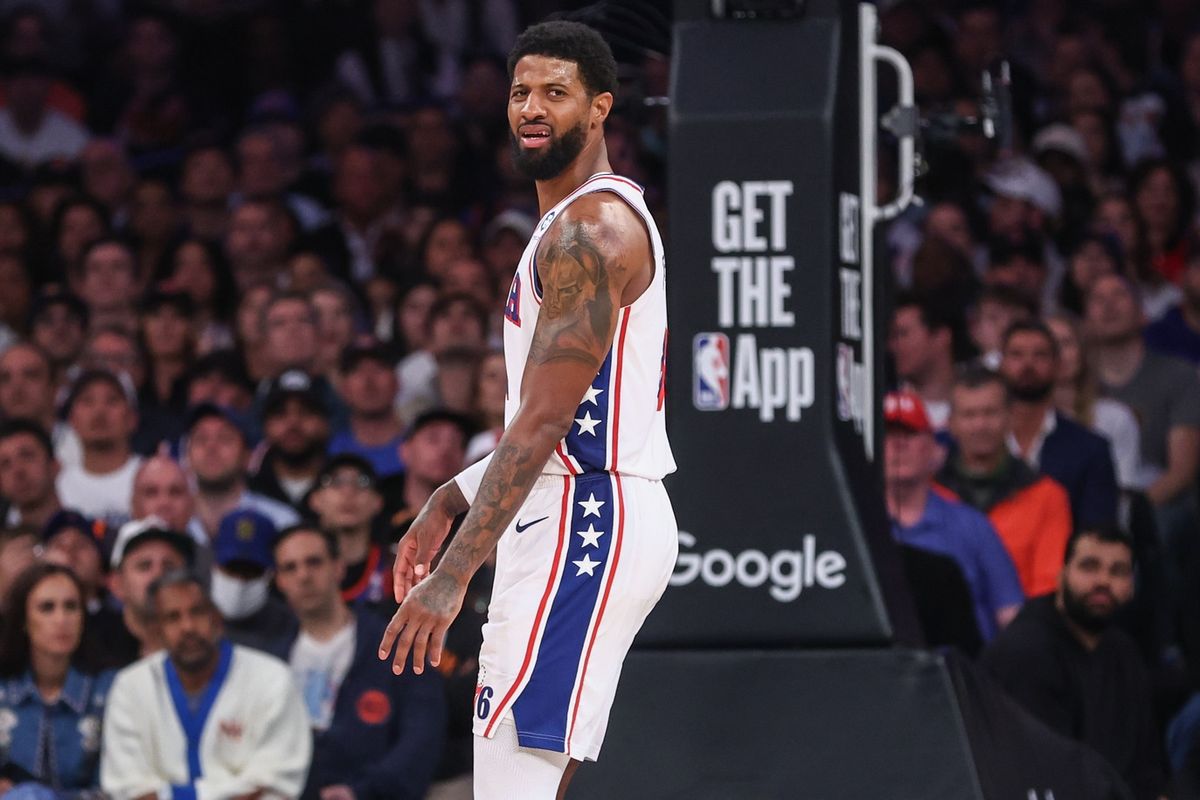
Paul George
George is not Brown. He never will be. But when it comes to maximizing the Mazzulla-Ball requirements? He's elite.
First off, let's start on the offensive end. Over the last two years, George has a sTOV% of 6.4%. Nearly the same as Tatum's. His passing turnover percentage is at 14.7%, which is a bit steep, but overall, he takes care of the ball well.
Plus, though possessions are the focus, 3-point shooting matters. And with the ball in Tatum's hands so often, having elite floor-spacing around him will be crucial. George provides that.
He's shot 37.5% from deep range over the last two years. Last year, he was one of the best catch-and-shoot 3-point guys in the NBA. Among the 271 players who attempted at least 100 catch-and-shoot threes last year, George ranked 41st. He shot 41.7% on 168 attempts in 37 games. Brown shot 33.1% on 181 attempts in 71 games. For context, Payton Pritchard shot 41.6%.
But the biggest advocate for George's seamless fit into Mazzulla Ball lies on the defensive end. Despite being 36 years old, he's still been a very impactful defensive player, especially when it comes to forcing turnovers.
The takeaways? Tatum and Brown's 1.6? George's number over the last two years is 2.7. That's in the 97th percentile of all NBA players.
George has also averaged 6.2 deflections per game over the last two years (96th percentile). For Tatum, the number is 2.9, and for Brown, 2.6. His stop percentage? 3.5%. That's in the 93rd percentile. And George's rFTOV is 1.1, which is also in the 96th percentile.
When it comes to forcing turnovers and creating havoc on the defensive end, George is one of the best in the league. His mere presence on defense should help the Celtics force turnovers, earning themselves a better possession advantage.
Obviously, George needs to be on the court to be impactful. He's only appeared in 78 games over the course of the last two seasons. Certainly not ideal. The same goes for Robinson and his 108 appearances in the last three seasons. But his ability to generate possessions is just as impressive as George's.
© Geoff Burke
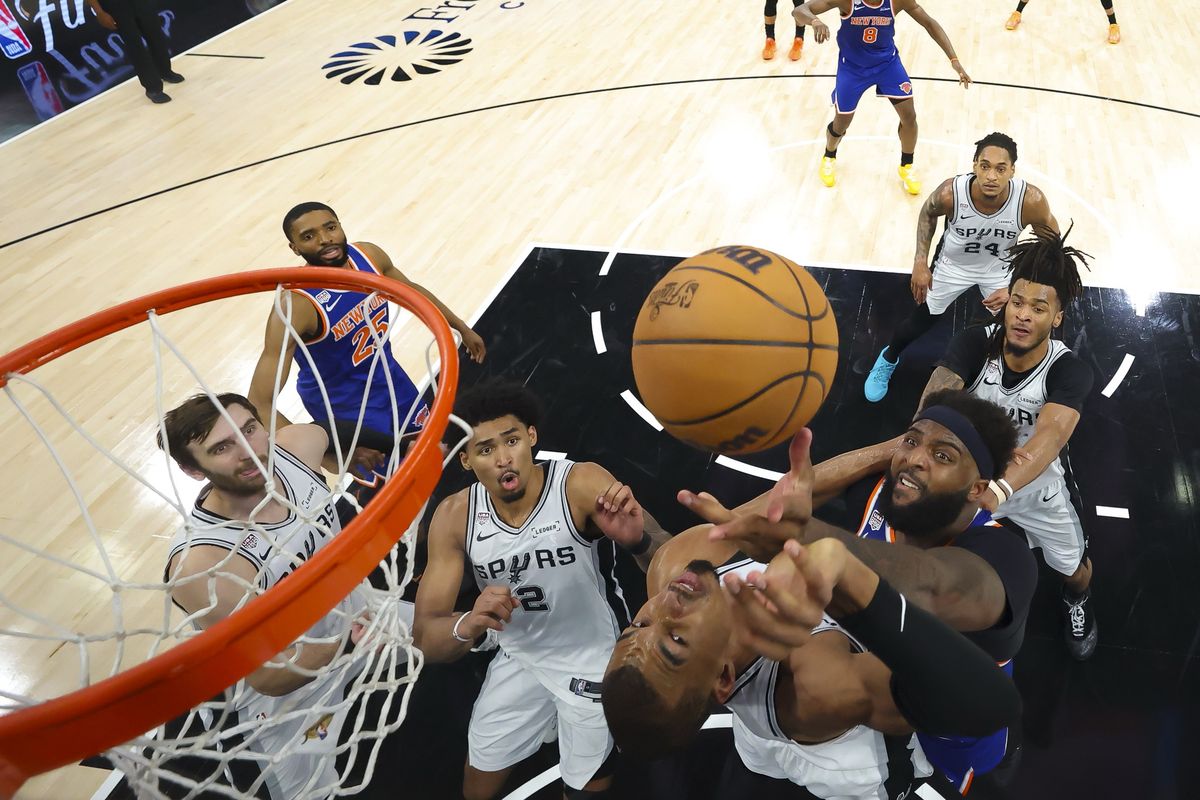
Mitchell Robinson fighting on the glass
Last season, the Celtics pulled down 12.5 offensive rebounds per contest, which ranked seventh in the league. They also averaged 29.8 offensive rebound chances, which was fourth in the league. Boston crashed. A lot.
So what did they do this summer? They went out and signed Robinson -- one of the best offensive rebounders in the NBA.
Robinson averaged 4.2 offensive rebounds per game last season, which ranked second in the NBA behind only Donovan Clingan (4.5). And he did it while the New York Knicks were load-managing him in anticipation of the postseason.
Per 100 possessions, Robinson grabbed 10.6 offensive rebounds per game. Second-most? Clint Capela at 8.6. Clingan was third at 7.9. Robinson grabbed two more offensive rebounds per 100 possessions than the next-best guy. The gap between Robinson and Capela at No. 2 was larger than Capela and the 11th-ranked player (Robert Williams, 6.7).
For context, the Celtics' best offensive rebounder last year (per 100 possessions) was Luka Garza at 7.1. Queta was right behind him at 6.0, and after that was Jordan Walsh at 3.5.
Robinson is an absolute menace on the glass. He's a possession-creating machine. Every offensive rebound he pulls down will be another chance for the Celtics to score, and another chance the other team won't have to score. That's what Mazzulla Ball is all about.
© Bill Streicher
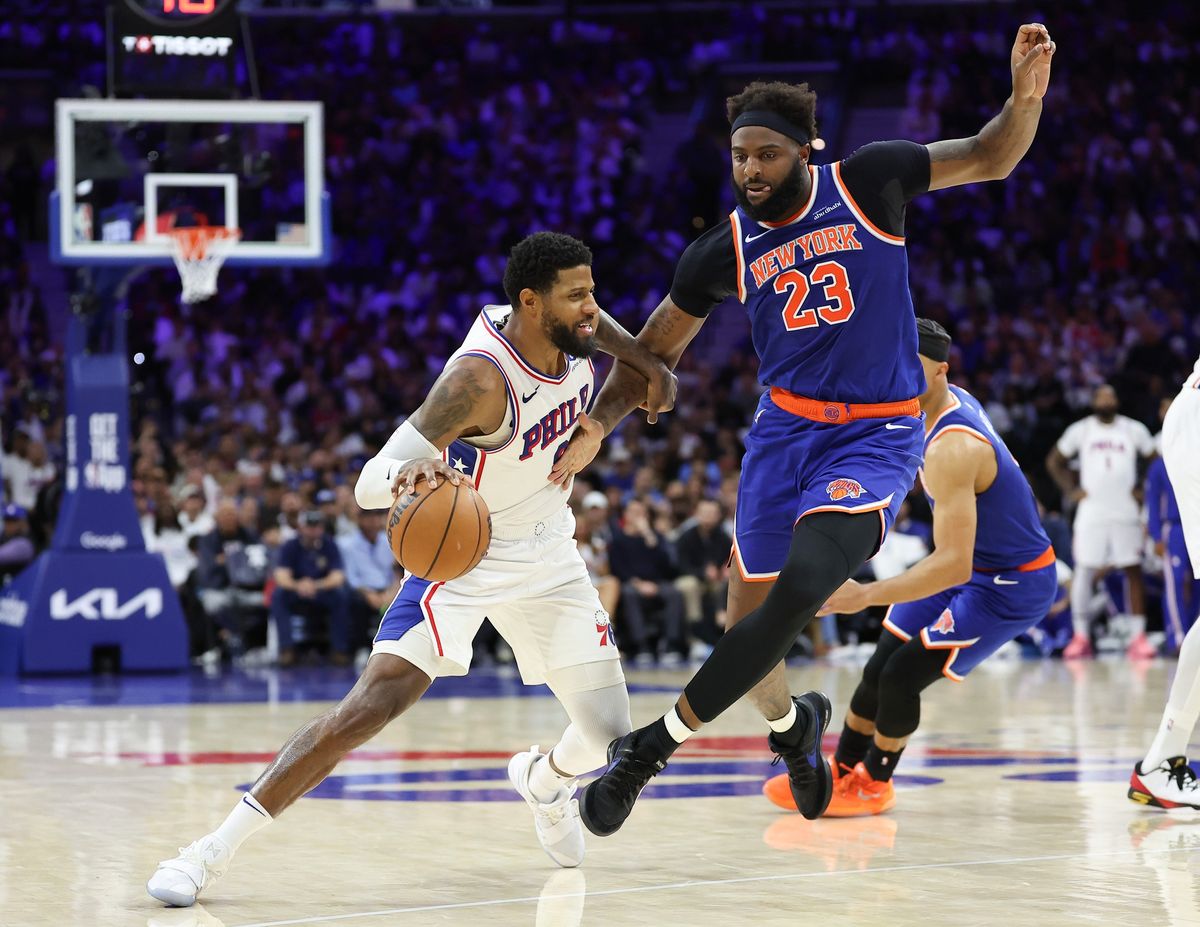
Paul George and Mitchell Robinson
The point of this isn't to compare Brown to Tatum, nor Brown to George, for the sake of proving one is "better" than the other. Brown was an All-NBA player last season. He finished sixth in MVP voting. He's one of the best players in the NBA.
But building within the confines of the current CBA requires adjustments. It requires hard decisions. The days of Boston building high-salaried teams like the 2024 title squad are over.
In their place is what seems to be a new strategy. A commitment to the style that helped them win last season. But with one key difference.
Last summer, the Celtics stripped down their roster. From there, it was up to Mazzulla and his staff to figure out how to win. What they settled on was a possession-first style of basketball. Maximize possessions, win games. The roster was put together first, and the style followed.
This summer, they had the style in place. They know how they want to play, and they know that they want Tatum running the show. With that in mind, they adjusted.
Rather than having two ball-dominant players, neither amazing at possession-maxxing, they settled on one. One who is a better playmaker and overall creator. That meant trading Brown, despite the public ramifications and relentless scrutiny.
Now, around Tatum, they have a bunch of guys who are elite at maximizing possession. George's ability to force turnovers. Robinson's otherworldly offensive rebounding. Pritchard's low-turnover ball-handling and elite floor-spacing. White's presence as a defensive anchor and the hope that his 3-point shot will find him again.
Sam Hauser's spacing. Hugo Gonzalez, Baylor Scheierman, Jordan Walsh, and Ron Harper Jr.'s defensive tenacity and commitment to crashing. Every single piece of the roster fits Mazzulla Ball to a T.
Will it work? That much cannot be determined until October. Numbers only get you so far. On-court production must lead the way. But the Celtics are all-in.