
For the first time in a long time, it feels like the Boston Celtics' roster is a relative mystery. Even when they inevitably shook things up in 2023 -- trading for Jrue Holiday and Kristaps Porzingis -- those moves were out of nowhere. Few saw them coming.
This summer, the whole world knows changes are coming.
But even beyond the Jaylen Brown of it all, the Celtics need more. They need to figure out what they want their roster to look like next season. Who has the ball in their hands? Who gets bench minutes? Who starts at the center position? The guard position? All are questions needing answers.
Let's start with some recent news, though. According to Shams Charania of ESPN, the Celtics will re-sign Ron Harper Jr. to a three-year, $9-million contract. That is an absolute steal for the Celtics.
Harper didn't play much last season, but when he was on the court, his impact was everywhere. He can guard. He can shoot. He can dribble. He can playmake. He can rebound. He's the type of player every team should want to get its hands on. By the final year of his contract, he's going to be due a massive payday. Expect Harper to play a big-time role off the bench for the Celtics for the next few years.
Beyond that, who starts?
This is a divisive one, but Payton Pritchard should be the lead guard in Boston.
When he was on the court last season, good things happened. His self-creation was elite, his playmaking was underrated, and his paint scoring (non-restricted area) was the third-most efficient in the league, behind only Nikola Jokic and Kevin Durant.
Perhaps it won't be quite as drastic, but if given the ball enough to do so, a Jalen Brunson-esque leap could be in Pritchard's immediate future. He's that talented a scorer.
Pritchard, Jayson Tatum, and Derrick White are starting-lineup locks. Barring a White trade, he'll be in that first five. Unless the Celtics trade Brown for primarily draft capital, whoever they get back for him will probably slot in at the three or four. A guy like Trey Murphy III, Shaedon Sharpe, or even Michael Porter Jr.
That leaves the center position. Again, outside of the reality where Boston trades for a significant center upgrade, Neemias Queta will probably return as the full-time starter. Getting him better support will be crucial, but he earned the starting job.
The bench will be the most intriguing part of Boston's summer. Harper is going to be crucial. The same goes for Sam Hauser, Hugo Gonzalez, and Baylor Scheierman, unless they are moved. Jordan Walsh should play quality minutes, but if Harper and Gonzalez leapfrog him, that could change. The same goes for Luka Garza and whoever the Celtics sign as big-man support.
If I had to put an official prediction out there right now, this would be it:
PG: Pritchard, Harper, (Trade acquisition/signing)
SG: White, Scheierman
SF: (Trade acquisition/signing), Gonzalez
PF: Tatum, Hauser, Walsh
C: Queta, (Trade acquisition/signing), Garza
That leaves rookies Chris Cenac and Dillon Mitchell (perhaps on a two-way contract) largely getting DNPs, as well as Amari Williams.
© Sam Sharpe
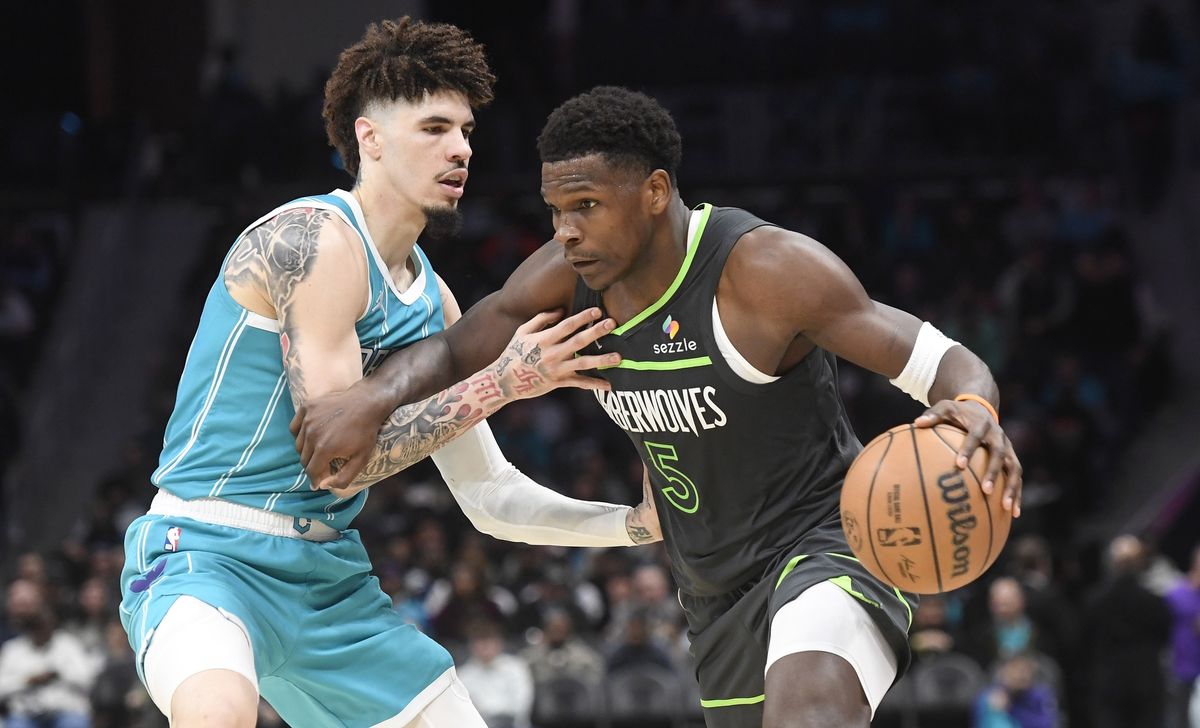
LaMelo Ball and Anthony Edwards
1. The LaMelo Ball trade
Wow. What a blockbuster to begin the post-Giannis Antetokounmpo summer.
The Charlotte Hornets shipped LaMelo Ball to the Minnesota Timberwolves in exchange for Naz Reid, a 2033 unprotected first-round pick, first-round pick swaps in 2028, 2029, and 2030, and second-round picks in 2029, 2030, and 2032.
Quite the haul. Except, is it?
There are some key details to understand about those first-round pick swaps, outlined here by Dylan Jackson of SportCLT:
Here are the pick swaps the Hornets received in the Timberwolves deal for LaMelo Ball:
— Dylan Jackson (@djdotmp4) June 25, 2026
2028: Hornets get more favorable of CLT/MIN
2029: Hornets already owned the least favorable of the UTA/CLE/MIN picks straight up. I think the Hornets will now be entitled to swap their own…
With an important clarification from Jackpotting Around's Art Cumming here:
You are incorrect on the 2029 pick swap.
— Art Cummings (@ArtTakesNote) June 25, 2026
CHA didn’t own the least favorable of UTA/MIN/CLE straight up. The 1-5 portion on MIN is protected.
All they added in 2029 was in the slim chance MIN ends up 1-5, CHA can swap their own first with that pick.
In that scenario they then… https://t.co/eFONTy1mUO
So, while on paper the Hornets got a ton of draft capital back in the deal, only one of the swaps will definitely be useful. And that's only if the Wolves are worse than the Hornets in 2028. That means, in theory, if things don't break Charlotte's way, their haul for Ball could end up being one unprotected first-round pick, three second-rounders, and Reid.
That's a lot less favorable.
Charlotte was just starting to build something. Their surge down the stretch of the regular season last year was special. They were one of the best teams in the NBA.
And they just traded their best player.
The Hornets almost immediately re-signed Coby White to a three-year, $74-million contract. He'll be Charlotte's lead man next year.
On paper, giving up Ball is dangerous for Charlotte. But running out a starting lineup of White, Kon Knueppel, Brandon Miller, Naz Reid, and a new power forward could be interesting.
As for the Timberwolves, this trade was a major gamble. They are effectively gambling the Anthony Edwards era on Ball. If Ball doesn't work out, Minnesota doesn't have much flexibility to do anything else.
But I do think I like the move. Ball's playmaking is elite. His 3-point shooting is valuable. And the Wolves' defensive infrastructure will be great for Ball.
I like Ball for Minnesota.
2. Thunder adjusting their financials
The Oklahoma City Thunder entered the offseason with a chance to get under the second apron, and it looks like they are going to succeed in that quest. They traded Aaron Wiggins to the Atlanta Hawks and Isaiah Joe to the Detroit Pistons in effective salary dumps. Afterward, they replaced Isaiah Hartenstein's 2026-27 team option with a new, three-year, $75 million extension.
Now, they are just over $10 million below the second apron, but still have to figure out what to do with Lu Dort and Kenrich Williams, who have team options.
It's unclear whether or not they will decide to bring back Dort and Williams, but even without them, the Thunder will be in a great spot in terms of depth.
© Kirby Lee
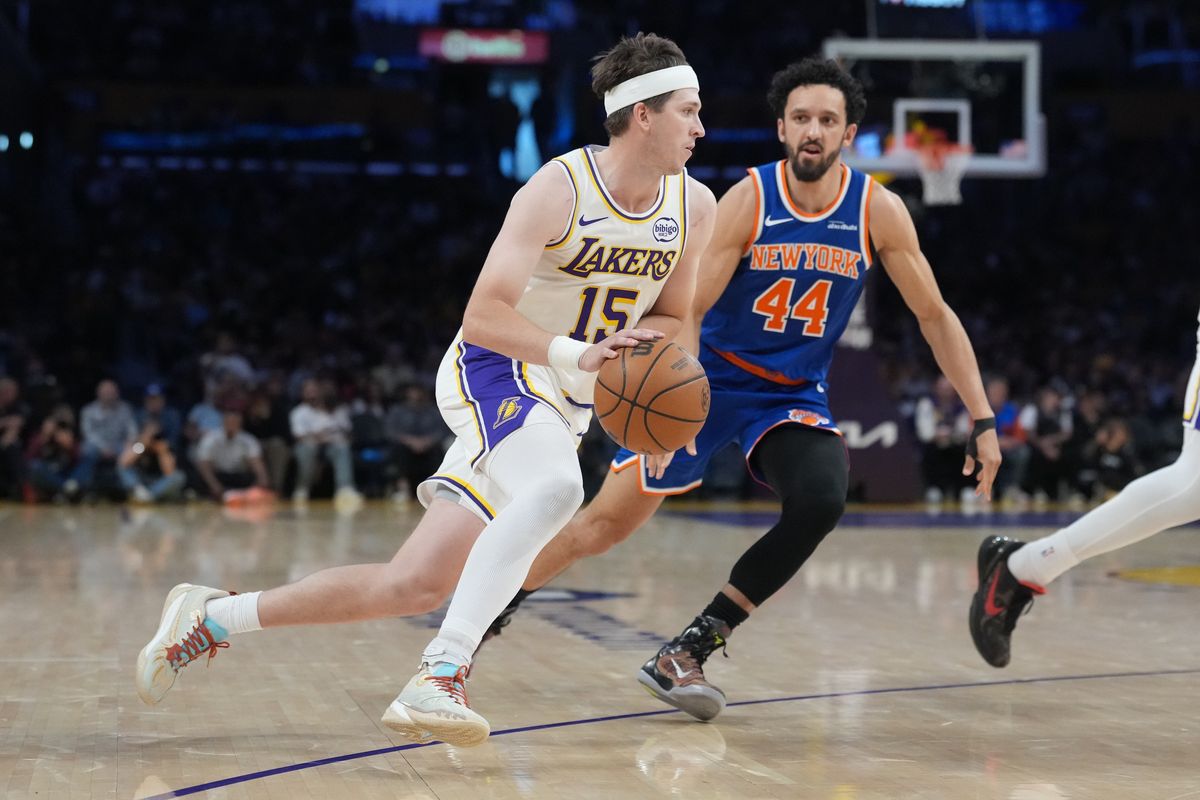
Austin Reaves and Landry Shamet
3. Austin Reaves re-signs
At first, it seemed like Austin Reaves was going to hit the open market. The Detroit Pistons were going to show interest. As were the Brooklyn Nets. The offer from the Los Angeles Lakers stood at around $30 million per year. But Reaves wasn't biting. And the Lakers couldn't lose him. So, they put on a show, per Charania. Reaves' favorite country music. Pillows embroidered with his 'A.R.' initials. And a significant bump in salary.
Four years, $185 million.
Reaves signed the deal.
"Great relief," a source close to Reaves described to ESPN as his emotions in the moment. "He wants to be a Laker for life and there's nothing more important to him than trying to win one for that city."
Now, Reaves and Luka Doncic are set to be the backcourt of LA's future.
4. Suns bringing back depth
As teams have been allowed to negotiate with their own free agents, the Phoenix Suns have been busy.
First, they re-signed Collin Gillespie to a four-year, $48-million deal. Next up was Jordan Goodwin, who inked a three-year, $19 million deal. Then, last came Mark Williams. He signed a three-year, $38 million contract.
Led by new head coach Jordan Ott, the Suns outperformed expectations last year, earning a trip to the NBA Playoffs as the No. 8 seed.
Now, they'll seemingly be running it back with a very similar core.
5. Knicks bringing back depth (and losing some?)
Much like the Suns, the New York Knicks -- fresh off an NBA Championship) quickly went to work this summer.
They signed new cult hero Jose Alvarado to a three-year, roughly $14 million contract. Meanwhile, they also brought back standout rookie Mohamed Diawara to a multiyear deal worth around $10 million.
Unfortunately for New York, it doesn't sound as though it will have the same luck retaining Mitchell Robinson.
Robinson is expected to leave in free agency this summer. The Celtics have even supposedly shown some interest in his services.
His departure will leave the Knicks looking for a new backup big man for Karl-Anthony Towns. And they still have to worry about retaining unrestricted free agent Landry Shamet.