
The Celtics are, very often, their own worst enemy.
That's probably true of every team only winning between 40-50% of their games. The difference between the Celtics being 5-7 and 7-5 is probably a handful of plays that they simply haven't been able to execute.
It's actually one of Joe Mazzulla's favorite things to say after every game. There are 10-15 plays per game that need to be fixed somehow, regardless of whether they win or lose. Against the Sixers, it was little pockets of offensive execution that, had they gone smoothly, could have pulled the Celtics out of some rough shooting stretches and extended scoring droughts.
Take, for example, this play mid-way through the first quarter.
Derrick White gets an incredible block on a very Derrick White play and the Celtics have an opportunity to get out in transition, but they fumble the pass like relay partners dropping the baton in a 4x100 relay.
The Celtics margin for error is nowhere near what it has been in the past, so mistakes like this can't happen. According to Synergy Sports, the Celtics pushed the ball 41 times against the Sixers but only scored 1.083 points per possession. If that was their transition average for the season, they'd rank slightly better than the Lakers, who are 25th in the NBA.
But Boston is 27th at 1.045 PPP, partly because of plays like that, and also plays like this;
Great effort by VJ Edgecombe to get back and block that shot. At the same time, this is a situation where Boston should score:
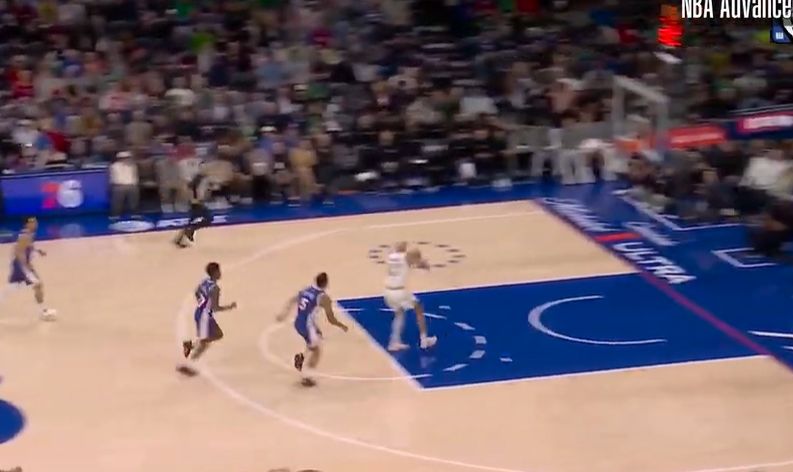
Jordan Walsh is long and athletic enough to catch this pass, take his two steps, and lay it in. He took four steps and a dribble after catching a long pass, in stride, in the paint. That's a big two points, especially in a second quarter that went as poorly as it did for Boston.
A few plays later, this happened:
Bad luck? Maybe. But this is a situation where the Celtics NEED to score.
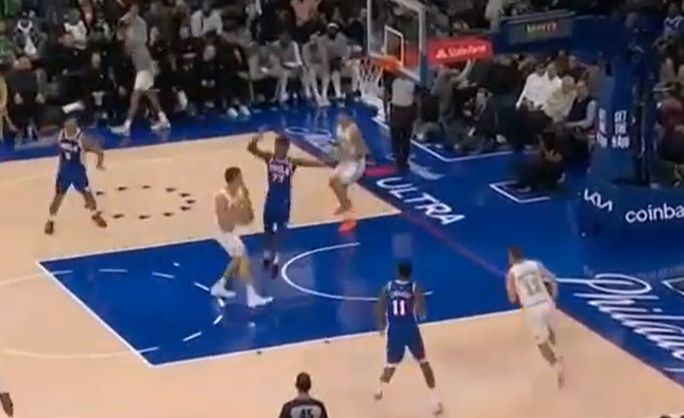
This is about Luka Garza seeing the floor and recognition. Payton Pritchard is cutting and the passing lane to him is blatantly open. Pritchard is a great passer and is comfortable in those spots, so the play should have gone to him. He could have given it right back or dropped a bounce pass to Hugo Gonzalez there for a clean look.
It's a 3-on-2 ... but really a 3-on-1 for a brief instant. Not finishing there hurts the Celtics because these aren't opportunities that present themselves often. A 3-on-1 in a half court set is rare. The good teams know how to finish plays like this.
"(It's) just little stuff, little possessions that, throughout the game, we have to be better at," Jaylen Brown told reporters after the loss. "Rebounds, layups, little stuff, transition opportunities, stuff that you got to take advantage of that we didn't tonight."
The Celtics had plenty of those plays that will undoubtedly be part of the Wednesday film session. They probably missed Neemias Queta on a handful of rolls, but he is also prone to undisciplined plays.
This is a perfect opportunity for Queta to create for his team. The catch in short roll should lead to either a 3-point attempt by Pritchard or a corner 3 by Walsh. But Queta's biggest weakness, his inability to fully control his body once it's in motion, bites him at this moment.
When he takes his two steps and gets to this point ...
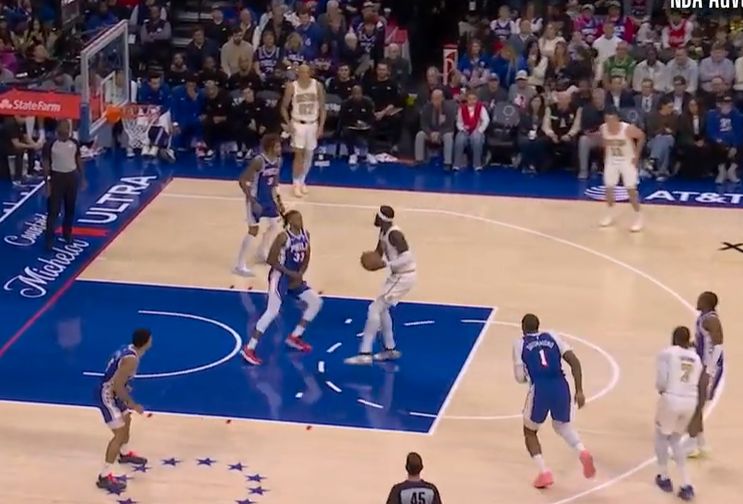
... he needs to be planted and in control of his body so he can swing it to Pritchard.
This should be another step in Queta's development. He needs to read the floor and be in control. He is maybe 80% of the way to where he needs to be, but that extra 20% is what got him the offensive foul.
On the positive side, we can celebrate that the Celtics got into these positions at all. White's block, the kick-ahead to Walsh, the creation of a significant half court advantage, and a rolling big collapsing the defense and recognizing a wide-open 3-pont shooter are all good things the Celtics created. They're not THAT far away from where they need to be.
At the same time, almost getting there but failing feels more frustrating than not getting close at all. It's a version of the classic discussion of whether you'd prefer your team to get blown out or lose a close game. The close games, like this one, hurt more.
The Celtics are creating advantages, but they are then failing to cash in. They are 12 games into this season, and considering their circumstances, this isn't a bad place to be. These are all things that can be learned and corrected.
But they definitely need to be corrected. These kinds of plays are what we should be watching for as the season goes on to determine whether the Celtics are improving. The players who are able to execute these plays are the ones who will be part of the team next season, when the Celtics, they hope, will be contenders again. The guys who can see these plays, process them, and correct them in short order are the keepers.
"It's just the process of understanding where we could get better," Mazzulla said. "We always talk about those plays that we could be better at throughout the whole game, and then just executing down there. So just have to have the mindset of where we can get better, and when we're in that situation again, execute."