The expectations for the 2022-23 Boston Celtics have shifted quite a bit. This past season was supposed to be an evaluation season to determine how the team would proceed for a chance to get to the Finals and win a championship.
Well, now they’ve gotten there, and even though they failed, they got pretty close to winning the whole thing. It’s clear that under Ime Udoka, the Celtics have a formula for winning with the current personnel, and that this summer will be all about adding the right pieces to support the current structure.
But that can mean a lot of things. The current structure is basically Jayson Tatum and Jaylen Brown as your two main guys, and then the right pieces around them. This means there's no need to scrap team depth to go the three star route, especially since it’s become pretty clear that unless the three stars all fit together perfectly from a positional standpoint and all are willing to sacrifice, then that plan is a perilous one.
There's a temptation to run it back because they got within two games of a championship, but each season is a new book in the NBA anthology. Plot lines carry over but there are new twists and turns. Every player is now free to go add to his game as he sees fit. The Celtics can send players home with some level of directive, but each player is on his own, and the level to which they improve their game won’t be known until they return.
Take Grant Williams, for example. He was a completely different player coming into this past season, adding more consistent 3-point shooting and improved perimeter defense to his game. That was unexpected. When the Celtics convene for training camp in a few months, they could be bringing in a bunch of new players even if the nameplates above the lockers barely change.
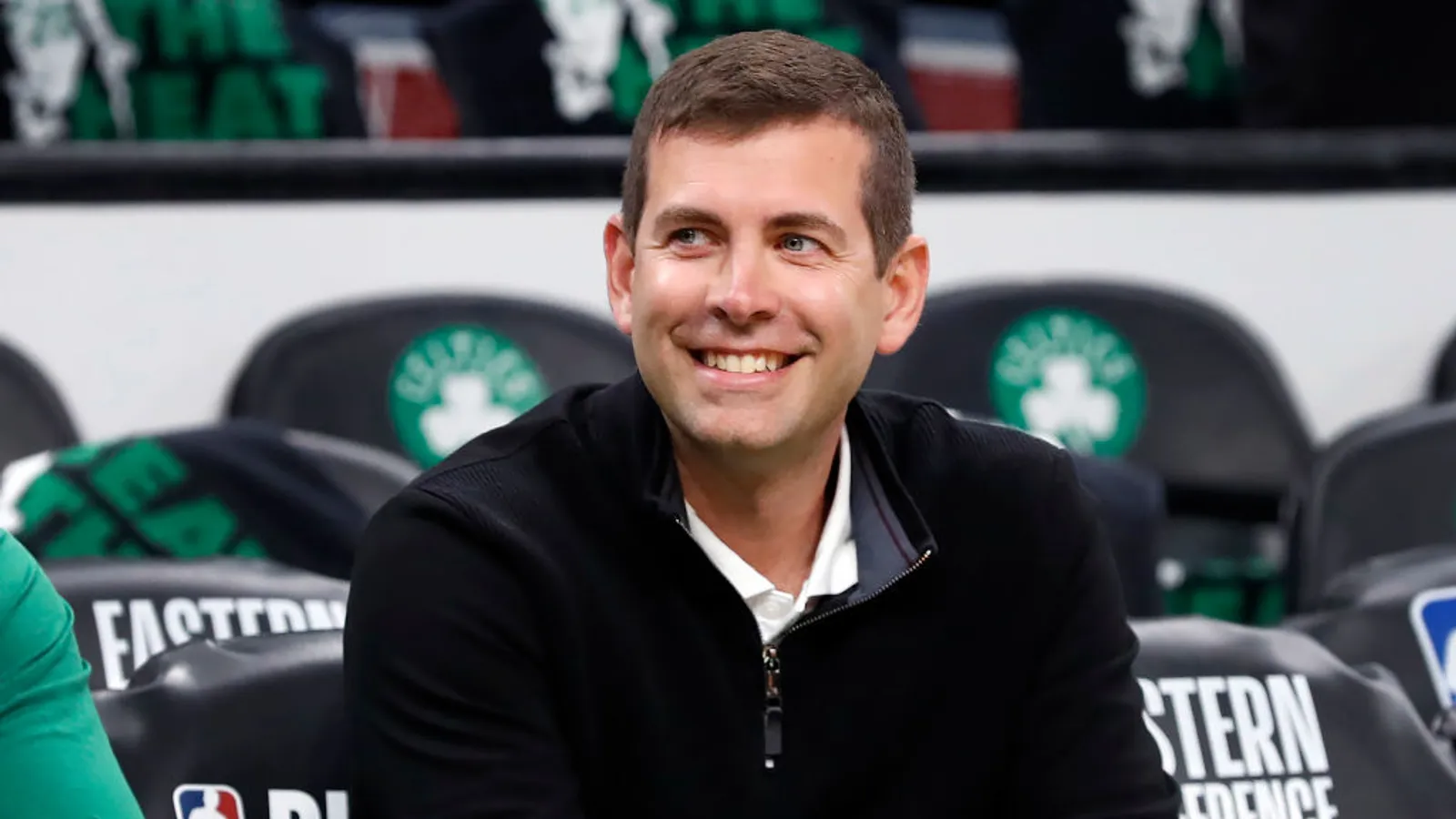
So here’s a look at the team, the questions it faces, and the tools at Brad Stevens’ disposal to make necessary changes.
THE QUESTIONS
How will they improve individually? This is the biggest, simplest one. Every player on the roster, minus maybe 36-year-old Al Horford, has something to add to his game. And even Horford, really, has a big adjustment to make as he enters what could end up being his final season in the NBA. Everyone from Tatum down to Sam Hauser has major steps forward to take. How will this disappointment of losing to the Warriors fuel them? What will each guy add to his repertoire? I’ll save the laundry list of individual questions for their own separate evaluation pieces, but the most impactful element to coming back and contending for a championship is individual improvement from all of the players on the roster.
What’s Udoka’s preferred offensive style? There's a lot of talk about the kind of point guard Boston needs, but the bigger question is what kind of offense is Udoka hoping to really run with this group? He put the ball in Tatum and Brown’s hands a lot, but was that out of necessity because of the current personnel, or is it something he plans on bringing back with tweaks?
This is a hugely important question, because it sets up the offseason for Stevens. The Celtics don’t have to worry about their defense, but how Udoka wants to run his offense versus how he’s had to run it might be two different things.
That, more than “they need a point guard,” is the actual question about how the team will be constructed moving forward. Because if the team will run through Tatum and Brown a majority of the time, then the goal will be to add more dependable shooting around them. If the offense will be run through a traditional point guard setup, then they can ask themselves if Marcus Smart gives them enough of what they're looking for in the long run, and how they want to structure their starter/backup roles.
How much fear is there of health issues? Brown has had recurring hamstring issues. Robert Williams has had recurring issues in his lower body. Horford is 36 and coming off a season where he played more than 2,800 combined minutes. How worried Stevens and the Celtics are of recurring injuries will influence what moves they make. Williams fought through the knee issue valiantly, and he played more minutes and more games by a lot this past season. Still, he always feels like an awkward landing away from missing time. Brown has to find a way to manage that hamstring issue. And Horford will have to be handled a little differently next season.
A lot of that stuff seems like just normal “we’ll deal with it if it happens” kind of stuff. But if the Celtics fear that those are inevitabilities, then they’ll prioritize some added help to deal with the absences.
THE ROSTER
Untouchables: Jason Tatum ($30.3 million), Jaylen Brown ($28.7 million)
Celtics will listen if a team calls, but teams will have to overpay in a deal: Marcus Smart ($17.2 million), Derrick White ($16.8 million), Robert Williams ($10.9 million),
Tradeable, but unlikely: Al Horford ($26.5 million)
Tradeable: Daniel Theis ($8.6 million), Grant Williams ($4.3 million), Aaron Nesmith ($3.6 million), Payton Pritchard ($2.2 million)
Extension eligible: Brown, Grant Williams
Non-guaranteed deals: Nik Stauskas ($2.2 million), Juwan Morgan ($1.8 million), Malik Fitts ($1.7 million), Sam Hauser ($1.5 million)
ROSTER BUILDING TOOLS
Taxpayer Mid-Level Exception: $6.3 million. -- This is money Boston can spend on any free agent. They can offer it to one person or split it to pay multiple free agents.
Traded Player Exceptions: A quick recap on what the TPE is: It’s essentially a coupon for one year that can only be used to acquire a player or players into a fixed amount of money equal to the outgoing salary of a player. These are created in a few different instances, but mainly when a player is traded to a team with cap space, where salary matching rules don’t apply, or when a team acquires a player with a TPE of their own.
IMPORTANT REMINDER/DISCLAIMER: TPEs CANNOT BE COMBINED. This is not money that can be spent on a free agent. It is basically the delayed completion of a trade between two teams where one team has a year to use the exception or lose it.
- $17,142,857: Created in the Evan Fournier trade. It expires July 18
- $6,907,815: Juancho Hernangomez trade. Expires January 19
- $5,890,000: Dennis Schröder trade: Expires February 10
- $2,161,152: Bol Bol trade: Expires February 10
- $1,910,860: PJ Dozier trade: Expires February 10
- $1,782,621: Bruno Fernando trade: Expires February 10
- $1,440,549: Tristan Thompson trade. $8,280,351 was already used to acquire Theis. The remainder expires July 7.
- $500,000: Moses Brown trade: Expires June 27
DRAFT PICKS
- 2022: Second round pick (#53)
- 2023-2027: Celtics own all their own first round picks
- 2023: Second round draft pick incoming from Houston, Dallas or Miami (It’s complicated. They're getting a second rounder from one of these teams but which one depends on too much to explain)
- 2023: Second round draft pick incoming from Portland.
- 2023: Second round draft pick outgoing to Charlotte or Washington.
- 2024: Second round draft pick outgoing to Charlotte.
- 2025: Second round draft pick outgoing to Oklahoma City or Orlando.
- 2026: Second round draft pick outgoing to Memphis.
- 2027: Second round draft pick outgoing to Orlando
- 2028: San Antonio owns right to swap first round picks (Derrick White trade)
- 2028: Second round draft pick outgoing to Orlando.
- If you’re interested in all the weird parameters about who is getting which pick and why, you can visit RealGM’s future drafts detailed page. It’s confusing, so don’t say I didn’t warn you. RealGM’s future drafts detailed
WHAT BOSTON CAN’T DO
The Celtics cannot do anything that will trigger the hard cap. That happens one of three ways:
- Acquiring a player via sign-and-trade (they are allowed to sign-and-trade their own free agents, though)
- Using more than the Taxpayer MLE
- Using the bi-annual exception (A smaller exception, approx $4 million)
The projected cap for next season is $122 million. The tax line is projected to be $149 million, and the hard-cap line (apron) is projected to be $155 million. As of right now, Boston is already over the apron, so they will not be allowed to make any of those moves anyway. Should they clear some space, they’d cripple themselves by triggering the hard cap, making it impossible to use a TPE at the trade deadline. They're just not going to do it, so keep that in mind when you’re playing around with player acquisition ideas.
WHAT TO EXPECT
Boston will be aggressive with its Taxpayer MLE, going after guys who might normally be out of that range hoping to tempt them with visions of a championship ring. The Bruce Browns of the world can probably expect more than $6.3 million, but you never know what a player’s motivation is and someone like Brown can gamble on something like a one- or two-year deal to be a key player on a championship team, and then hit the market as a 27-year-old with championship experience in 2025-26 when a new CBA will kick in with a LOT more money for teams to spend.
That's going to be the sales pitch, anyway. Boston will target versatile defenders who can shoot and hope to temp one via free agency.
They can then start using first-round picks and salaries to explore the trade market. The Celtics really have no use for any players drafted in the low 20s over the next few years, so they shouldn’t be afraid to part with one or two of those to facilitate a deal either using an exception or aggregating salaries. Boston is allowed to be within 125% of outgoing salaries plus $100,000, so sending Theis and Nesmith out, for example, is approximately $12.5 million in outgoing salary but they could take back about $15.7 million.
So let’s hypothetically say they wanted to target Kentavious Caldwell-Pope and Washington was willing to take those players, Boston could take back his $14-million salary that way and use the TPE to acquire a second player in that similar price range.
Wings will be the priority, I think, with an eye out for a third big who fits what Udoka is looking for. I’m less inclined to believe a more traditional point guard is a priority. I don’t think Boston’s turnover issues were the function of not having some kind of pass-first point guard that everyone seems to want but no one seems to be able to name.
Boston will want to build out its bench to give Udoka four or five good options for the upcoming season. The short turnaround should weigh heavily into the offseason calculus, so the team will need to have reliable perimeter players that are able to keep Tatum and Brown’s minutes in the low 30s to start the season, and a big that can step in to give Horford nights off and also let Robert Williams ease his way into a bigger workload later in the year.
This is maybe Boston’s most critical offseason in a decade. The Celtics are now poised to be long-term contenders with cornerstones still not quite hitting their prime. Stevens has the tools at his disposal, and probably some smart ideas beyond my comprehension. The city is expecting this team to be a fixture in the Finals now, but it needs more pieces to make that happen.