
The Phoenix Suns and Milwaukee Bucks face off in Game 1 of the NBA Finals tonight in a series that most people didn’t predict (and if you did, then let’s get together so you can pick my Mega Millions numbers for me).
Each team has a unique story about its roster construction and how they got to this point, and each has lessons the Boston Celtics and Celtics fans can learn about the team. Here are a few.
PATIENCE
You can run down each team’s roster and find a few examples of players who have developed at different rates. We can start at the top of Milwaukee’s roster and Giannis Antetokounmpo, who looked like this when he was drafted 15th overall in 2013.
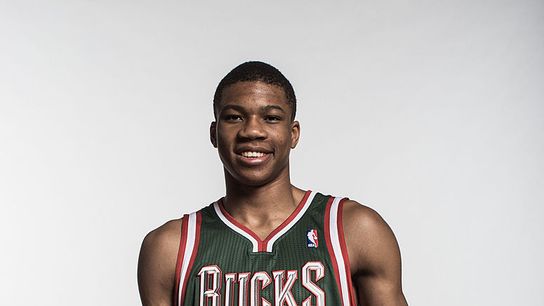 Getty Images
He made his debut before turning 19 years old, and as expected, he looked like a young, lanky project at first. There wasn’t much in his rookie year that suggested letting him drop to 15 was a mistake.
Today, he looks like this:
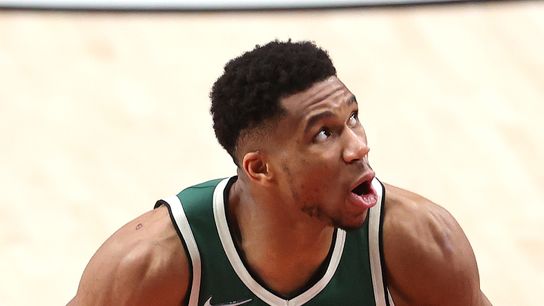 Getty Images
He made his first All-Star game in this fourth season at age 22, the first season he averaged more than 20 points per game. He went from shooting 41.4% his rookie year to 52.1% in his fourth year. It took a lot of hard work for him to reach that MVP level, but Antetokounmpo was willing to do it.
So, too, is Jayson Tatum, who hasn’t quite packed on the same amount of bulk at Antetokounmpo but it’s close. Also, each of Tatum’s first four seasons has outpaced Antetokounmpo’s as far as production, which is a nice sign of things potentially to come. But the lesson here is that not everyone jumps into the NBA right away and is a LeBron James-like phenom. Tatum still has rough edges to smooth out in his game which Celtics fans hope will lead to Giannis-like jumps into the MVP conversation.
Jaylen Brown is the other “pillar” and his year-to-year progression has been even more amazing. Brown’s inclusion in rumors for players has been the fuel for people who say Danny Ainge got gun shy about making big trades, but he’s grown closer to matching those players every season.
And it’s not just the stars, either. E’Twaun Moore and Abdel Nader becoming contributors for Phoenix shows there is patience to be had with the role players on Boston’s bench. It’s still too early to tell what kind of players Romeo Langford and Aaron Nesmith will become, no matter how convinced you are.
Patience has been a key for these teams, either in developing their own stars, or in the progression of the role players making contributions for them. Boston has young players with deficiencies in their game and young stars who are still figuring certain things out. Patience can only last so long in professional sports, but we’re seeing it pay off in the Finals.
MASTERING THE MID-RANGE
There is a misconception that analytics demands that mid-range shots be tossed in the trash, and that anyone succeeding at those shots is tossing a middle finger towards the nerds. So let’s start by setting the record straight.
Analytics tells us that mid-range shots are inefficient, and they need to be hit at a rate few players reach to be effective. THAT’S why they’re shunned. It’s because a player who hits 34 out of 100 3-pointers scores 102 points while a player hitting 50-100 from mid-range scores 100, and the league has very few player who do that, so the analytic say ditch the mid-range and either go all the way to the rim, or stay behind the 3-point line.
Of course, that rule doesn’t apply to the few players who are hitting half their mid-range shots, like Kevin Durant or Chris Paul.
We’ve seen Durant carry an injury-riddled Nets team with those shots and Paul use it to close out the Los Angeles Clippers. Every defense knows the hierarchy of shots is layup/free throw/3-pointer, so most defenses are built to stop those shots in that order.
Drop pick-and-roll coverage was developed for this purpose. The concept of dropping a big man way into the lane, chasing the ball handler over the top of the screen, and forcing him into a mid-range shot is at the heart of what the Milwaukee Bucks do defensively. It has been successful, so teams copy that and dare opponents to beat them from 15 feet.
It will be interesting to see how Milwaukee adjusts to the one player who can, indeed, do that. It will also be interesting to see how the Celtics approach their stretch runs against this type of coverage because they have one guy who did hit from the mid-range at 50% last season (Jaylen Brown), and one guy who simply does not (Jayson Tatum).
The difference between the two is the type of mid-range shot they take. Brown is usually against a retreating defense trying to keep him from the rim. He’s normally turning a corner and attacking moving towards the basket.
Tatum is generally fading away, starting with his back to the basket and spinning into a shot to avoid a close defender. Tatum’s best season from the mid-range was his rookie year, when he hit just over 41%. Since then, he’s been hovering at about 38%. Even during his epic scoring binge in the playoffs, he still shot under 36% from that area.
Efficiency numbers will still rule the roost in the NBA, and players still need to get to the rim and the line first. Good shooters like Tatum and Brown should focus on a heavy dose of 3-pointers as well, but both need to prepare themselves for how the postseason changes the style of play. Brown is more equipped for this at the moment. Tatum needs to make a bigger adjustment.
Which brings me to...
SACRIFICE
Giannis Antetokounmpo won two straight MVP’s but he changed his game around this year because he saw it wasn’t giving his team its best chance at playoff success. Mike Budenholzer and his staff told Antetokounmpo he needed to be more of a screener and that they’d change the alignment of their offense to include a player in the baseline “dunker’s spot,” and he went along with the plan.
He could have easily made a stink about it and crowed about being a two-time MVP, but he adjusted to the team instead of making them adjust to him.
Tatum’s next step will likely involve a similar kind of sacrifice, especially when it comes to his ineffective mid-range game. In fact, that’s where my offensive focus on him would be this offseason.
It’ll be tough to wean him off his favorite shot, but unless he can find a way to hit those fadeaways at better than 38%, he has to do something different.
It’s not just Tatum, though. It’s going to be up to Brown to join Tatum in making sure they’re giving up certain shots next season in order to raise the level of play across the board. Their teammates need to know they’re trusted to take the open shot when the ball goes their way. If they’re not, then the offense will devolve into a game of hot potato as nervous teammates try to get the ball back to their stars.
There will be time to take over, but there is sacrifice necessary from the guys at the top to lift up the rest of the team. It’s a message Ime Udoka can relay very clearly from his days in San Antonio with Tim Duncan, Manu Ginobili, and Tony Parker.
We know exactly how last season went, but there is plenty to work with on this Celtics roster. Overreacting to a weird season would be a mistake. These teams in the Finals have proven there is value to being patient, sacrificing, and even working on basketball’s taboo shot. The Celtics can learn a thing or three from these teams, and use those lessons to make a deep run of their own next season.
These topics were discussed on the latest Locked On Celtics podcast, which you can subscribe to on your favorite podcast app or watch on YouTube.